
Dense Wavelength Division Multiplexing Dwdm Transceiver We
Search optical fiber, connectivity, cable management and network infrastructure references.
-
Dense Wavelength Division Multiplexing Wavelength Table
Dense wavelength-division multiplexing (DWDM) refers originally to optical signals multiplexed within the 1550 nm band so as to leverage the capabilities (and cost) of EDFAs, which are effective for wavelengths between approximately 1525–1565 nm (C band), or 1570–1610 nm (L...
[PDF Version]
-
Wavelength Division Multiplexing Principle word
In fiber-optic communications, wavelength-division multiplexing (WDM) is a technology which multiplexes a number of optical carrier signals onto a single optical fiber by using different wavelengths (i. WDM allows communication in both the directions in the fiber cable. The...
-
Wavelength Division Multiplexing Equipment Losses
Wavelength multiplexers can be used in submarine cables, to extend the lifetime of fiber cables, and reduce the cost of all land-based long distance communications links.
-
In optical wavelength division multiplexing systems
In fiber-optic communications, wavelength-division multiplexing (WDM) is a technology which multiplexes a number of optical carrier signals onto a single optical fiber by using different wavelengths (i. The "basie" transmission rate of SONET is 64 kbps for supporting voice...
-
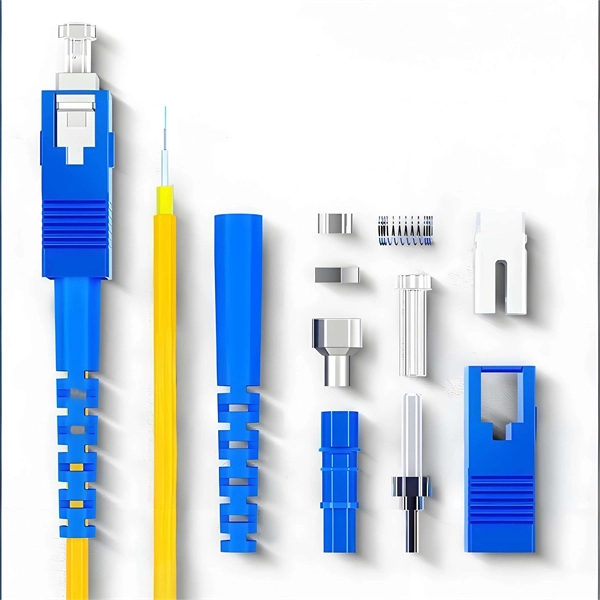
L-band optical transmission wavelength division multiplexing
Dense wavelength-division multiplexing (DWDM) refers originally to optical signals multiplexed within the 1550 nm band so as to leverage the capabilities (and cost) of EDFAs, which are effective for wavelengths between approximately 1525–1565 nm (C band), or 1570–1610 nm (L...
[PDF Version]
-
Adjusting and Testing the Wavelength Division Multiplexing Network Management System
This paper discusses some critical aspects of WDM system design, including channel spacing, signal attenuation, dispersion compensation, nonlinear effects, and polarization challenges. Single-mode optical fiber communication has evolved to improve network reach (distance)...
[PDF Version]
-
Telecommunications Wavelength Division Multiplexing Technology
In fiber-optic communications, wavelength-division multiplexing (WDM) is a technology which multiplexes a number of optical carrier signals onto a single optical fiber by using different wavelengths (i. Each data stream is carried on a unique wavelength (or channel)...
[PDF Version]
Explore the next connection
- Principle of Relay Protection Current Relay
- Customized New Distribution Box Manufacturer
- Dual-port optical module principle
- Working Principle of Silicon Photonics Module
- Andorra Fiber Optic Cable Rewinding Machine
- Comoros Iron Cable Management Stand
- Features of Maltese Trough-Type Cable Trays
- Uruguay Corrosion-Resistant Cable Trays
- Why do patch panels use flexible core wire boards