KENHARDT OPTICALNetworks across Africa Talk through a project
Fiber systems / Technical reading Optical reference library

Dual-port optical module principle

Inside this technical reference
Source context

AI source overview

A dual-port optical module converts electrical signals into optical signals and vice versa through two independent optical channels, enabling simultaneous bidirectional or multi-channel data transmission. Core FunctionalityDual-port optical modules operate at the physical layer of the OSI model, bridging electrical devices and optical fiber networks. Each port contains a transmitter (TOSA) and a receiver (ROSA).

The transmitter converts incoming electrical signals into modulated optical signals using a laser diode (LD) or LED, while the receiver converts incoming optical signals back into electrical signals using a photodetector diode followed by a preamplifier for signal conditioning.

Dual-

Port Design

The dual-port configuration allows two independent optical channels within a single module. This can be implemented in two ways: Bidirectional (BiDi) operation: Each port transmits and receives on different wavelengths over a single fiber, enabling full-duplex communication without additional fibers. Parallel operation: Each port uses separate fibers for transmission and reception, allowing higher aggregate bandwidth and redundancy.

The dual-port design is particularly useful in data centers, high-speed networks, and telecom systems, where simultaneous multi-channel communication improves throughput and reliability.

Internal Components

Transmitter Optical Sub-

Assembly (TOSA): Converts electrical signals to optical signals. Includes a laser diode, monitoring photodiode, driver circuits, and housing. An Automatic Power Control (APC) circuit ensures stable optical output.

Receiver Optical Sub-

Assembly (ROSA): Converts optical signals back to electrical signals. Includes a photodiode, preamplifier, and limiting amplifier for signal integrity. Control and Diagnostic Circuits: Monitor parameters like transmitted/received optical power, laser bias current, and temperature, often via Digital Diagnostic Monitoring (DDM) compliant with SFF-8472 standards.

Signal Conversion Process

Transmission (Tx): Electrical signals enter the module, are processed by driver chips, and modulate the laser diode to emit optical signals at the required data rate. Propagation: Optical signals travel through fiber to the receiving end. Reception (Rx): The photodetector converts optical signals back to electrical signals, which are amplified and output to the host device.

Dual-

Port Coordination: Each port operates independently, allowing simultaneous data flow in both directions or across multiple channels.

Performance Considerations

Key performance metrics include: Average optical power: Intensity of transmitted light, influenced by the proportion of logical "1"s in the data stream. Extinction ratio: Ratio of optical power for "1" vs "0" signals, indicating signal clarity. Bit rate support: Typically ranges from hundreds of Mbps to multiple Gbps per port.

Wavelength stability: Critical for BiDi dual-port modules to avoid crosstalk. In summary, a dual-port optical module extends the standard optical module design by providing two independent optical channels, enabling higher throughput, redundancy, and bidirectional communication while maintaining the core electro-optical conversion principles.

Research context

Reference summary

There have been multiple variants of the electrical interface of optical modules that have been used over the years. The earliest forms of optical modules had an analog electrical interface. In the transmit direction, the optical module would directly drive the laser or LED with the analog signal coming from the front system card.

In the receive direction, the module would directly drive the receive electrical interface with the o.

Additional context

Source notes

There have been multiple variants of the electrical interface of optical modules that have been used over the years.
The earliest forms of optical modules had an analog electrical interface. In the transmit direction, the optical module would directly drive the laser or LED with the analog signal coming from the front system card. In the receive direction, the module would directly drive the receive electrical interface with the o…

From reference to enquiry

Questions for your project

Use these editorial prompts alongside the linked excerpts. They identify items to confirm for your project.

Detailed reading / connection to installation

Fiber connection and distribution references
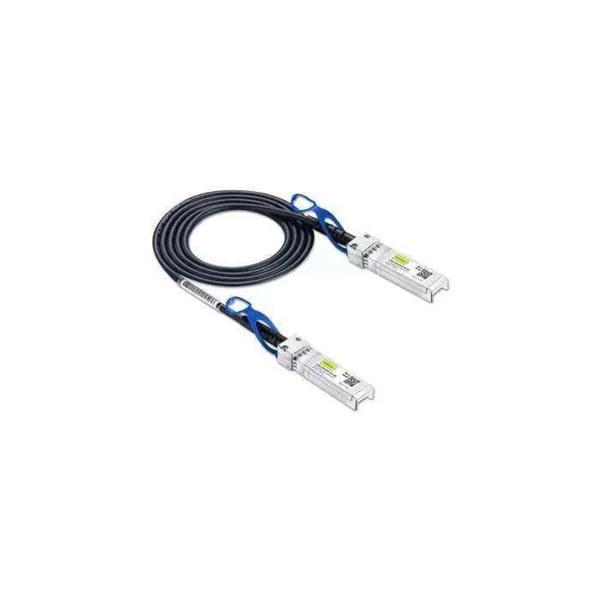
Dual-port optical module principle
Equipment illustration / verify against the selected product

Optical Module Working Principle | SFP Transceiver Technical Guide

Learn the complete working principle of optical modules (SFP transceivers), including TOSA/ROSA components, laser types, temperature compensation, and more. Weunion''s high

Optical module

OverviewElectrical Interface TypesOptical modulation and multiplexing typesIn-module componentsElectrical cable equivalentFront panel optical module MSAsOn-Board Optical module MSAsUsers of Optical Modules

There have been multiple variants of the electrical interface of optical modules that have been used over the years. The earliest forms of optical modules had an analog NRZ electrical interface. In the transmit direction, the optical module would directly drive the laser or LED with the analog signal coming from the front system card. In the receive direction, the module would directly drive the receive electrical interface with the o

Understanding Optical Modules: Working Principles, Structures, and

Explore the working principles, structures, and performance metrics of optical modules, essential components of optical fiber communication systems. Learn about key indicators such as

The Most Comprehensive Guide Of Optical Modules

Explore the ultimate guide to optical modules. Learn types, functions, performance metrics & how to choose the right module for your fiber network.

Directional Couplers: Their Operation and Application

Ever get confused about the differences between directional, bi-directional and dual-directional couplers? Here''s everything you need to know about the different coupler types, their

Understanding BIDI SFP Optical Transceiver Modules

The working principle of a BIDI optical module is that it uses a filter (filtering out unwanted center wavelengths) to simultaneously transmit one wavelength of optical signal and receive another.

Understand Coherent Optical Modulation

This document describes the basic principles of coherent optical modulation schemes used in Dense Wavelength Division Multiplexed (DWDM) networks.

Differences Between Dual Fiber SFP and Simplex SFP Modules

Dual fiber SFP modules are the commonly used 1G SFP module type. They operate on a bidirectional transmission mechanism and have two distinct channels or ports for transmission and reception of data.

What Is an Optical Module and Its FAQs (V300)

As an important part of fiber-optic communication, an optical module is a photoelectric converter which converts electrical signals into optical signals and vice versa. An optical module

Fundamentals of an Optical Module

As an important part of fiber-optic communication, an optical module is a photoelectric converter which converts electrical signals into optical signals and vice versa. An optical module works at the physical

What is the basic principle of an optical module? | Sopto

Transmitting: The optical signal input module of a certain code rate is converted into an electrical signal by the photodetecting diode, and the electrical signal of the corresponding bit rate is

Home | Advanced Energy

The study introduces a unified p* parameter that correlates gas effects with deposition rate and optical properties, offering a predictive path to more uniform,

The Difference Between Single/Dual Fiber and

As fiber optic networks continue to evolve, selecting the right optical transceiver becomes increasingly important. Whether you''re designing a short

Optical module

An optical module is a typically hot-pluggable optical transceiver used in high-bandwidth data communications applications. Optical modules typically have an electrical interface on the side that

What is an Optical Module?

Explore the world of optical link modules, essential components in optical fiber communication. Learn about the different types of optical link modules, their functions, packaging, and key technical

An N-Port Universal Multimode Optical Router Supporting Mode

In this paper, we design a multimode optical router (MDM-OR) model and analyze its indicators. Above all, we propose a novel multimode switching element and design an N-port

Features and Applications of the 100G QSFP28 Multimode Modules

Discover the key features and applications of 100G QSFP28 Multimode optical transceiver modules in the context of cloud computing and 5G networks. Learn how these modules streamline

Understanding Optical Modules: A Comprehensive Guide

Optical Module Basics: Understanding the Core ConceptsOptical modules are compact devices that convert electrical signals into optical signals and vice versa. They are used in fiber optic

Related Video Reference

This video was associated with the source search result. Verify technical details against current product documentation and project requirements.

Make the connection clear

Share the fiber interfaces, termination capacity, cable route and evidence required for handover.

Send a project brief