KENHARDT OPTICALNetworks across Africa Talk through a project
Fiber systems / Technical reading Optical reference library

Using optical splitters for surveillance

Inside this technical reference
Source context

AI source overview

Optical splitters enable a single fiber optic line to distribute video signals to multiple surveillance cameras or monitoring points efficiently, without requiring active electronics.

Role in Surveillance Networks

Optical splitters are passive devices that divide a single optical signal into multiple outputs or combine multiple signals into one, allowing a single fiber to serve multiple endpoints. In surveillance installations, this means that one fiber from a central monitoring station or video server can feed multiple cameras, reducing the need for separate fiber runs to each camera and lowering infrastructure costs.

Advantages for Surveillance Systems

Cost Efficiency: By splitting a single fiber to multiple cameras, optical splitters reduce the amount of cabling and associated installation costs. Passive Operation: Splitters do not require power, making them reliable and low-maintenance, which is ideal for outdoor or remote camera deployments. Flexible Deployment: Splitters can be installed in centralized locations (e.g., server rooms or control centers) or distributed locations (e.g., outdoor cabinets or pedestals near camera clusters), depending on network design and fiber availability.

Scalability: High split ratios (e.g., 1x8, 1x32, or 1x64) allow a single fiber to serve many cameras, supporting future expansion without additional fiber installation. Types of SplittersPLC (Planar Lightwave Circuit) Splitters: Provide uniform signal distribution across multiple outputs, suitable for high-channel surveillance networks where consistent video quality is critical.

FB

T (Fused Biconical Taper) Splitters: Often used for smaller networks with fewer cameras; they are simpler and lower cost but less uniform in signal distribution.

Installation Considerations

Insertion Loss: Each split reduces signal strength; higher split ratios increase loss, which may require optical amplifiers or careful planning of fiber distances. Environmental Protection: Outdoor splitters should be housed in weatherproof enclosures or cabinets to withstand temperature variations and moisture. Network Architecture: Centralized splitting allows easier reconfiguration of camera assignments, while distributed splitting is more permanent but can reduce fiber usage on the backbone.

Practical ApplicationsCCTV and IP Camera Networks: Distribute video from a central NVR or video server to multiple cameras in large facilities, campuses, or city-wide surveillance systems. Remote Monitoring: Optical splitters enable long-distance fiber runs to remote camera sites without active repeaters, maintaining high-quality video transmission. Integration with PONs: In modern smart city or enterprise deployments, splitters can integrate surveillance cameras into existing FTTH or PON infrastructure, sharing fibers with other services like data and voice.

In summary, optical splitters are essential for efficient, scalable, and cost-effective surveillance installations, allowing multiple cameras to be served by a single fiber while maintaining signal quality and reliability. Proper selection of splitter type, split ratio, and installation location is critical to optimize performance and future-proof the network.

Research context

Reference summary

Optical Splitters and Submarine Cable Tapping: The Underwater The ingenious misuse of optical splitters transforms a benign component into a potent tool fo.

From reference to enquiry

Questions for your project

Use these editorial prompts alongside the linked excerpts. They identify items to confirm for your project.

Detailed reading / connection to installation

Fiber connection and distribution references
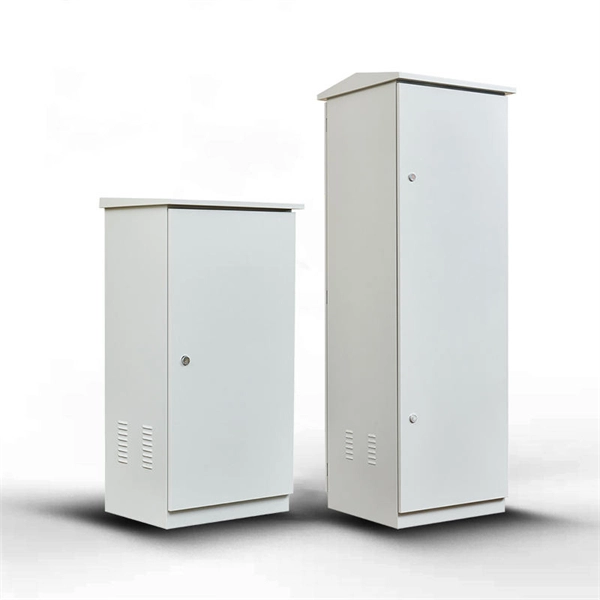
Using optical splitters for surveillance
Equipment illustration / verify against the selected product

Optical Splitters and Submarine Cable Tapping: The Underwater

The ingenious misuse of optical splitters transforms a benign component into a potent tool for clandestine surveillance of submarine cables. The primary advantage of this method lies in its

Comprehensive Guide to Optical Splitters

An optical splitter is a crucial passive fiber optic device that splits and combines optical signals. It can distribute the optical energy transmitted through a single fiber to two or more fibers in a

The application of PON (Passive Optical Network)

PON technology uses optical fiber as the transmission medium and utilizes passive optical splitters to share the bandwidth of a single optical fiber

Key Considerations for Using Fiber Optic Splitters in Large Networks

This article delves into the key considerations for using fiber optic splitters in large networks, ensuring that your deployment achieves maximum efficiency and reliability.

Fiber Optic Splitter: How It Works & Types Guide

This guide demystifies fiber optic splitters, explaining their design, operating principles, types, key specifications, and real-world applications.

Introduction to Passive Optical Network Splitter Architectures

This involves having 2 or more splitter combinations to arrive at the target split ratio. A classic example is the use of a 1x4 and 1x8 splitter to comprise a 1x32 final ratio.

Optical Splitters for Central Office/Headend

Find out how the incorporation of fiber-optic splitters reduces the number of fibers in the network—decreasing both the footprint and investment cost of network rollouts.

PASSIVE OPTICAL SPLITTER

A Passive Optical Network (PON) is a fiber optic technology utilizing point-to-multipoint topology and optical splitters to deliver data from a single transmission point to multiple user endpoints.

Fiber-optic splitter

It is an optical fiber tandem device with many input and output terminals, especially applicable to a passive optical network (EPON, GPON, BPON, FTTX, FTTH etc.) to connect the main distribution

How Do Fiber Optic Splitters Work, and What Are Their

Explore the workings of fiber optic splitters, their technical specifications, and wide-ranging industrial applications in this informative,

The Working Principle and Application Scenarios of Fiber Optic Splitters

The working principle of fiber optic splitters is based on optical coupling and splitting . When a light signal enters the splitter, it is divided into multiple outputs through interference effects or

Optical Splitters Demystified: The Silent Heroes Powering Your FTTH

📄 FBT vs. PLC Splitters: Choosing the Right Type There are two main manufacturing technologies for optical splitters, each with its own advantages and ideal use cases. The choice

SC/APC 1x32 Fiber Optical Splitter 1:32 Fiber Optic Splitter Coupler

SC/APC 1x32 Fiber Optical Splitter 1:32 Fiber Optic Splitter Coupler Low Insertion Loss SC/APC Splitter for FTTH Network Description 1x32 Architecture: Professional 1 input to 32 output design for efficient

What Is Optical Splitter?

What are the Benefits of Using Optical Splitters? The utilization of splitters offers two significant benefits: Scalability Enhancement: Optical splitters contribute to the scalability of

Beam Splitter

A beam splitter is defined as an optical device that effects a linear transformation of fields presented at two input ports, producing output beams that are related to the input fields in a characteristic manner

Beyond the Fiber Cable: Understanding Optical Splitters

Optical splitters work by using different methods—such as fused biconical taper, planar waveguide technology, or optical switches—to divide the

Your Go-to Guide to Optical Splitter

The optical splitter is an optical power distribution device that splits one optical signal into multiple optical fiber signals to achieve multichannel transmission.

Optical Splitters

Field splitters are housed in the splice closures or near them in the vault/pedestals. If you are using a central office split, then you can house the splitters anywhere convenient, but be aware that there are

Make the connection clear

Share the fiber interfaces, termination capacity, cable route and evidence required for handover.

Send a project brief