KENHARDT OPTICALNetworks across Africa Talk through a project
Fiber systems / Technical reading Optical reference library

The Most Critical Issue in Fiber Optic Communication

Inside this technical reference
Source context

AI source overview

Fiber optic communication faces critical challenges such as signal attenuation, bending losses, connector contamination, and hardware failures, which require careful design, installation, and maintenance to ensure reliable performance.

Signal Attenuation and Losses

Attenuation, the reduction of light power as it travels through the fiber, is a primary concern in fiber optic communication. It can be caused by intrinsic factors like absorption due to impurities (e.g., hydroxyl ions causing the 1383nm water peak) and Rayleigh scattering, which is more pronounced at shorter wavelengths. Extrinsic factors include bending losses, splicing, and connector imperfections.

Microbends from cable tension or temperature changes can cause minor losses, while macrobends exceeding the fiber's minimum radius can result in significant signal degradation, sometimes exceeding 5dB per bend for single-mode fibers.

Connector and Splice Issues

Connectors and splices are common points of failure. Insertion loss occurs when light is partially blocked due to misalignment, cracks, or contamination on the fiber end-face. Even microscopic dust particles can scatter or absorb light, reducing signal strength.

Proper cleaning, alignment, and high-quality splicing techniques are essential to minimize these losses.

Physical Damage and Environmental Factors

Fiber cables are susceptible to cuts, crushing, or sharp bends, often caused during installation or maintenance. Environmental factors such as temperature extremes, moisture ingress, and mechanical stress can exacerbate these issues. Protective jackets and careful routing help mitigate physical damage, but monitoring and inspection remain critical.

Hardware and Configuration Challenges

Failures in transceivers, switches, or routers can disrupt communication. Misconfigurations, firmware bugs, or IP conflicts may also lead to intermittent connectivity or complete network outages. Regular maintenance, firmware updates, and proper network design are necessary to prevent these problems.

Dispersion and Bandwidth Limitations

Dispersion, including chromatic and modal dispersion, spreads light pulses over time, limiting the maximum transmission distance and data rate. Single-mode fibers reduce modal dispersion but still face chromatic dispersion, while multimode fibers are more prone to both. Advanced modulation schemes like PAM4 can help increase bandwidth but require precise control to avoid signal distortion.

Troubleshooting and Maintenance

Effective troubleshooting involves inspecting physical connections, testing signal strength with power meters or OTDRs, cleaning connectors, and verifying device functionality. Systematic approaches are essential to quickly identify and resolve issues, ensuring high network reliability and performance.

Summary

The most difficult issues in fiber optic communication arise from a combination of signal attenuation, bending losses, connector contamination, physical damage, hardware failures, and dispersion effects. Addressing these challenges requires careful fiber selection, proper installation, regular maintenance, and advanced troubleshooting techniques to maintain high-speed, reliable communication networks.

Research context

Reference summary

Fiber Optic Issues: Troubleshooting & Prevention TipsHowever, even the most advanced fiber systems are not immune to issues that can disrupt service—from s.

From reference to enquiry

Questions for your project

Use these editorial prompts alongside the linked excerpts. They identify items to confirm for your project.

Detailed reading / connection to installation

Fiber connection and distribution references
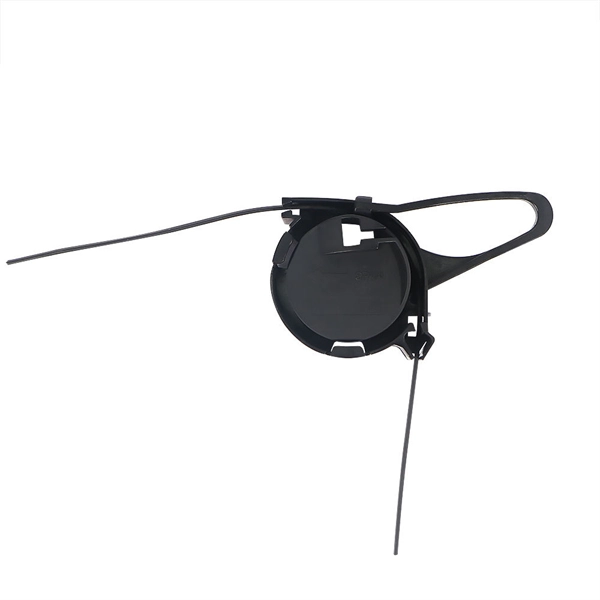
The Most Critical Issue in Fiber Optic Communication
Equipment illustration / verify against the selected product

Fiber Optic Issues: Troubleshooting & Prevention Tips

However, even the most advanced fiber systems are not immune to issues that can disrupt service—from signal degradation to physical damage. This guide dives deep into the most

Fiber Network Troubleshooting – Common Issues & Fixes

Learn how to troubleshoot fiber networks. Identify common issues like high loss, dirty connectors, and signal drops, with practical solutions for optical links.

FIBER OPTICS IN COMMUNICATION NETWORKS: TRENDS,

This review study explores the developments, issues, and prospects of fiber optic communication technologies that comprise current highspeed low delay networks, and the latest

What are the most common fiber optics problems?

Compared to copper-based Internet, fiber optic communications can accommodate noticeably higher data rates with lower loss levels in the transmission medium. Fiber optic systems,

Fiber Optic Troubleshooting Guide: Problems, Tools & Solutions

This guide offers practical steps to troubleshoot fiber optic cable issues, covering common problems, key tools, and preventive measures to ensure stable performance.

Photonics | Special Issue : Optical Fiber Communication: Challenges

Optical fiber communication plays a crucial role in modern telecommunications, underpinning the backbone of internet and communication networks worldwide. With the rapid growth of many new

Optical Fiber Communication: A Comprehensive Review

This robustness ensures uninterrupted transmission even in tough environments, making OFC a critical device in industries starting from telecommunications to aerospace. In conclusion, we embark on an

FIBER OPTICS IN COMMUNICATION NETWORKS: TRENDS

Fiber optics in communication networks played a significant role as far as raising transmission rates and expanding the network. New directions address the issues of scalability and

FIBER OPTICAL COMMUNICATIONS (R17A0418)

UNIT I general Optical Fiber communication system, advantages of optical fiber communications. Optical fiber wave guides- Introduction, Ray theory t ansmission, Total Interna Fiber materials, Fiber

Fiber Optic Cables: Advantages, Disadvantages, and

As the need for high-speed, secure data transmission increases, fiber optic cables have become a critical component in modern communication

Fiber-Optic Communication

Fiber optic communication The optical communication system is based on laser diodes as transmitters and photodetector as receiver. The fiber optic cable is constructed from five layers, core, cladding,

Challenges in Fiber Optic Installation: Identifying Common Issues in

Discover the insights into fiber optic installation and its impact on modern communication. This in-depth blog covers the stages of installation, challenges such as physical damage, signal loss,

Fiber Optics in Communication Networks: Trends

There are various sorts of optical communication networks . For instance, the most current optical signal technique-based code division multiple access networks .

Optical fiber

An optical fiber, or optical fibre, is a flexible glass or plastic fiber that can transmit light from one end to the other. Such fibers are widely used in fiber-optic

Fiber-optic communication

Modern fiber-optic communication systems generally include optical transmitters that convert electrical signals into optical signals, optical fiber cables to carry the signal, optical amplifiers, and optical

Fiber Optics: Understanding the Basics

Copper wire is about 13 times heavier. Fiber also is easier to install and requires less duct space. Applications Some of the major application areas of optical fibers are: • Communications — Voice,

Fiber Optic Issues: Troubleshooting & Prevention Tips

This guide dives deep into the most prevalent fiber optic network problems, their root causes, and actionable solutions. Whether you''re a network

Disaster resilience of optical networks: State of the art, challenges

For several decades, optical networks, due to their high capacity and long-distance transmission range, have been used as the major communication technology to serve network traffic,

Make the connection clear

Share the fiber interfaces, termination capacity, cable route and evidence required for handover.

Send a project brief