
The Europe Wavelength Division Multiplexer Module Market Report
Search optical fiber, connectivity, cable management and network infrastructure references.
-
2-channel wavelength division multiplexer
These WDMs are designed for combining or splitting two signals at 980 nm and 1060 nm and feature a ±5 nm bandwidth around the center wavelength of each channel. In fiber-optic communications, wavelength-division multiplexing (WDM) is a technology which multiplexes a number of...
-
Fiber Wavelength Division Multiplexing Module
Normal WDM (sometimes called BWDM) uses the two normal wavelengths 1310 and 1550 nm on one fiber. Dense WDM (DWDM) uses the C-Band (1530 nm-1565 nm) transmission window but with. In fiber-optic communications, wavelength-division multiplexing (WDM) is a technology which...
-
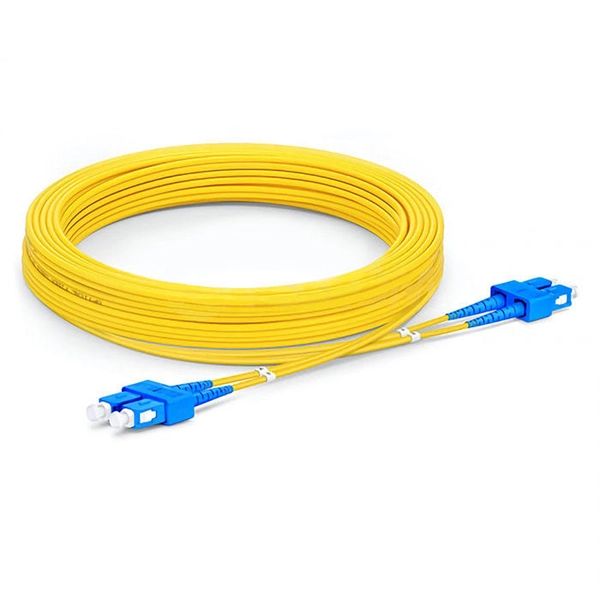
Fiber type for wavelength division multiplexer
Fiber Bragg gratings (FBG): These can be used in combination with optical circulators to filter out specific wavelengths. This technique enables bidirectional communications over a. Wavelength division multiplexing (WDM) is a technology for increasing the transmission...
-
Coarse wavelength division multiplexer receives and transmits light
CWDM uses a multiplexer to divide the light wavelengths into different channels, each carrying a separate data stream. The channels are combined and transmitted over a single fibre optic cable. At the receiving end, a demultiplexer separates the wavelengths into the original...
-

Single-fiber 4-channel wavelength division multiplexer
The Single Fiber 4 Channel Compact CWDM Mux Demux Module is a high-performance Coarse Wavelength Division Multiplexing (CWDM) device that utilizes single-fiber bidirectional transmission technology to multiplex and demultiplex four different wavelengths (typically in the...
[PDF Version]
-

Specific Wavelength Division Multiplexer
In fiber-optic communications, wavelength-division multiplexing (WDM) is a technology which multiplexes a number of optical carrier signals onto a single optical fiber by using different wavelengths (i.e., colors) of laser light. This technique enables bidirectional...
[PDF Version]