
Fiber Optic Transmission
Search optical fiber, connectivity, cable management and network infrastructure references.
-
Fiber Optic Broadband Transmission
Fiber optic cables are essential components in modern data transmission infrastructure. They support high-speed, interference-resistant communication and are particularly effective in applications that require high bandwidth, low latency, and strong signal integrity. It...
[PDF Version]
-
Can a fiber optic splitter select the transmission path
There is no selection via fiber jumper to a group, or geography of addresses. These are most often housed in closures or pedestals. Exploring further, there are diferent sub-characterizations of both “Centralized and Distributed” splits that are illustrated for your review...
[PDF Version]
-
Principles of Fiber Optic Transmission in Telecommunications
Fiber optic cables transmit data by converting electrical signals into optical signals, using a process called signal modulation. Modulation techniques, such as amplitude modulation (AM),frequency modulation (FM), or phase modulation (PM), are applied to encode data onto the...
[PDF Version]
-
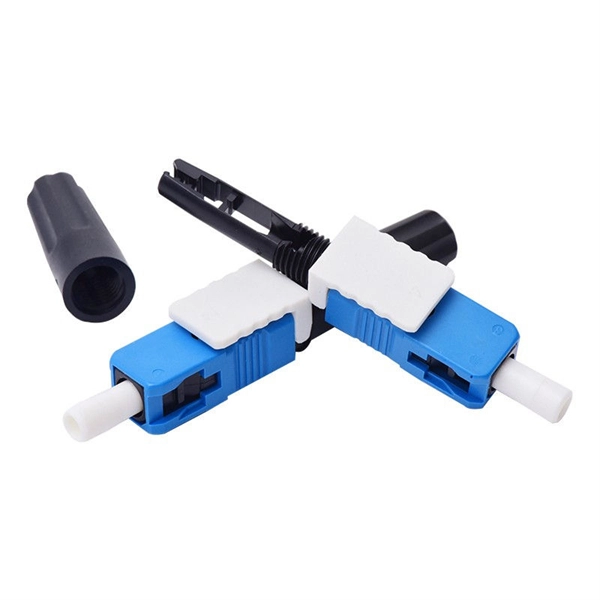
Fiber optic cold connector for light transmission
A fiber fast connector, also known as a mechanical splice or cold connector, is a field-installable connector that terminates fiber optic cables without requiring a fusion splicer. This comprehensive guide covers SC/APC vs SC/UPC fast connectors, selection criteria...
-
PLC system uses fiber optic cable for transmission and reception
A PLC communication fiber cable is a critical component in industrial automation and control systems, enabling high-speed, reliable data transmission between programmable logic controllers (PLCs), sensors, HMIs, and other networked devices. As automation systems evolve toward...
[PDF Version]