
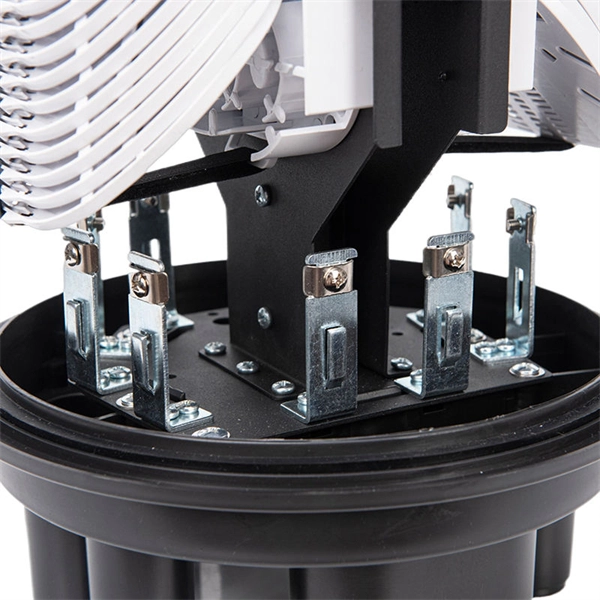
Fiber connection and distribution references
Bus Protection Theory
Differential protection provides high speed fault-clearing necessary for critical busbars such as transmission busbars, or distribution busbars where arc flash hazards are a concern.
Busbar Differential Protection Scheme
Busbar Differential Protection Definition: Busbar differential protection is a scheme that quickly isolates faults by comparing currents entering and leaving the busbar using Kirchoff''s current
Busbars: Electrical Types, Sizing & Design Guide
Busbars sit inside the power system protection scheme. Overcurrent devices protect conductors and equipment from overloads and faults, while relay
Understanding Low Impedance and High Impedance Busbar
Protecting these busbars from faults is essential to ensure grid stability and prevent widespread outages. Two primary protection schemes are employed: high impedance and low
Top Busbar Protection Issues That Worry Protection Engineers
High impedance busbar protection is widely used due to its simplicity and inherent through-fault stability during CT saturation. In the case of CT saturation caused by high through-fault
Busbar Differential Protection: Working, Settings & Testing
Busbar differential protection is the primary method for detecting and isolating faults within the busbar zone of electrical substations using Kirchhoff''s current law principle. This protection
Busbar Protection : Definition, Protection Schemes and Its Testing
The article has provided an explanation of what is busbar protection, various types of protection schemes, and how the testing of busbars is done. With all these concepts, also consider a few
Principles and schemes of busbar and breaker protection in MV/HV
Busbar protection must be able to detect and trip only the faulty part of the busbar system. It also must be secure against maloperation due to auxiliary contact failure, human mistakes
Bus Bar Protection Schemes Overview | PDF
This document discusses busbar protection schemes for electrical substations. It describes various busbar arrangements including single, double main, main and transfer, one and a half breaker, and
The General Principles of Busbar Protection in Transmission and Sub
There are several protection schemes that can be used for busbar protection, including differential protection, overcurrent protection, and distance protection.
Bus Protection Theory
Protection of the busbar may be complicated and varies with the topology of the bus. Many busbars connect all circuits to one common segment of busbar. The complication for these buses is simply
High Voltage Busbar Protection
Even though the likelihood of a short circuit is greater, the risk of widespread damage is lower. In principle, busbar protection is needed when the system protection does not protect the busbars, or
A Guide to Electrical Busbars: Common Uses & Design
Get answers for advantages and common uses for electric busbars, types of busbars, and how simulation tools complement the design process.
Technical Application Papers No.11 Guidelines to the construction of a
In each test, the incoming circuit and the busbars are lo-aded to their rated current and as many outgoing circuits in a group are loaded to their rated current as necessary to distribute the incoming
The essentials of LV/MV/HV substation bus overcurrent and
The substation bus may have many different arrangements depending on the requirements for continuity of service requirements for the bus and essential feeders supplied from
Busbar Protection
18.9.2 Busbar Protection Busbars are frequently left without protection because it is very rare to have faults, especially metal-clad switchgear, and it is protected by backup protection, it can be protected
Busbar Protection : Definition, Protection Schemes and Its Testing
What is Busbar Protection : Types & Its Testing Before knowing the concept of busbar protection, let us first know what a busbar is. So, a busbar is the electric one which is stated as either a single or array
IEC 61439 Busbar Standard: A Guide to Low-Voltage
This standard covers busbars used for low-voltage assemblies, power distribution, photovoltaic power systems, and electrical energy control. The IEC
Related Video Reference
This video was associated with the source search result. Verify technical details against current product documentation and project requirements.