
Fiber connection and distribution references
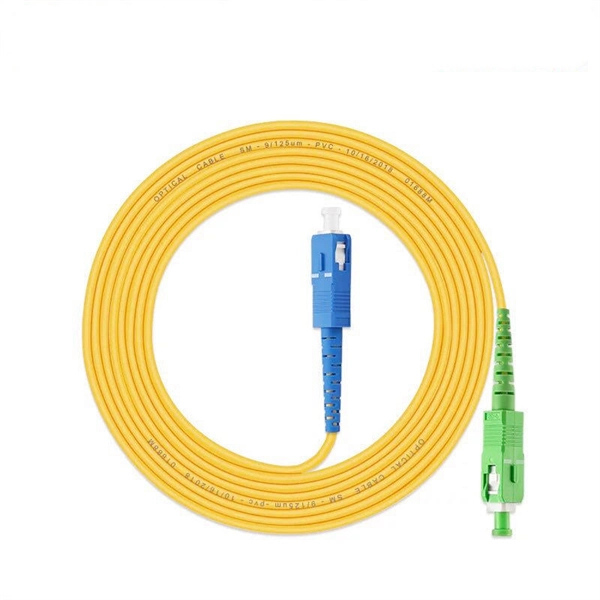
Types of Optical Fibers: Single-Mode vs. Multimode, Applications and
Types of optical fibers, their applications and future trends is the topic of this blog article. Optical fibers are among the most transformative technologies in modern photonics, quietly enabling
Multimode Fiber Data Sheet
This fiber is a laser-optimized, bend-insensitive, graded-index multimode fiber designed for transmission speeds of 10 Gb/s and beyond. OM5 is backwards compatible with OM4 and supports single
OM1 vs OM2 vs OM3 vs OM4 vs OM5 Multimode Fiber
Compare OM1, OM2, OM3, OM4, and OM5 multimode fiber specs, distances, bandwidth, and applications. Essential guide for data center fiber
Multimode Fiber Cable Types: OM1/OM2/OM3/OM4/OM5 Compared
Compare all five multimode fiber grades — OM1 through OM5 — with full specs, bandwidth, distance limits, and real-world data center use cases. Learn which grade fits your
Multimode Fiber Types: OM1 vs OM2 vs OM3 vs OM4
There are several types of multimode fibers classified by the ISO 11801 standard, including OM1, OM2, OM3, OM4, and the recently released
Multi-mode optical fiber
Multi-mode optical fiber is a type of optical fiber mostly used for communication over short distances, such as within a building or on a campus. Multi-mode links can
What Is Multimode Fiber? OM Grades, Distance, and Cost
Multimode fiber is classified into five standard grades, labeled OM1 through OM5. The grades reflect increasing bandwidth capacity, which directly determines how fast and how far data
Multimode Fiber Types: OM1 vs OM2 vs OM3 vs OM4
A complete guide to multimode fiber types OM1, OM2, OM3, OM4, and OM5. Compare speed, distance, bandwidth, and applications, and learn how
Multimode Fiber Optic Cable Types: OM1 vs OM2 vs
For short to medium distance high speed data transport, multimode fiber optic cables are popular in data centers, enterprise networks and campus
Multimode Fiber Types: OM1 vs OM2 vs OM3 vs OM4
Identified by ISO 11801 standard, multimode fiber optic cables can be classified into OM1 fiber, OM2 fiber, OM3 fiber, OM4 fiber and newly released
Step Index vs Graded Index Fiber: Single Mode and
Explore the differences between single mode step index fiber and multimode graded index fiber, focusing on refractive index and light path characteristics.
Fiber Optic Cable Types (Video)
There are three generic types of fiber as distinguished by their mode characteristics and physical properties: the first fiber type is single mode, also called
Multimode Fiber and Multimode Fiber Optic Cable Tutorial
One type is step-index multimode fiber and the other type is graded-index multimode fiber. The following illustration shows the differences between these two types of
Graded Index Fiber : Working, Differences and Its
We know that multimode fiber is also known as step-index fiber, where the function of the radial position is the refractive index i.e, it is stable in some areas &
Multimode Graded Index Fiber: What It Is And Why You
Comparing to traditional multimode fiber, graded-index multimode can accept higher bandwidth without signal confusion. Graded-index multimode fiber is being
What is Graded-Index Fiber? Definition, Graded-Index
Graded Index fiber is another type of optical fiber in which the refractive index of the core is non-uniform. This non-uniformity is present because the refractive index
Step-Index Multimode Fiber vs Graded-Index Multimode
Step-Index Multimode Fiber vs Graded-Index Multimode Fiber: A Comparative Analysis Multimode fiber optic cables are widely used in short
Multi-Mode Fibers
Graded-index multimode (GI/MM) fibers are engineered to reduce signal distortion by smoothly varying the refractive index across the core, enabling better performance over longer distances. Two different
Related Video Reference
This video was associated with the source search result. Verify technical details against current product documentation and project requirements.