
Fiber connection and distribution references
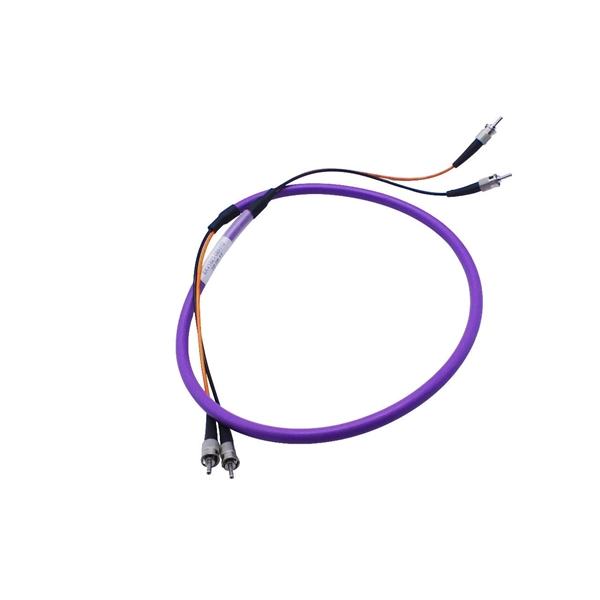
What is TX/RX and A/B in a Fiber Media Converter?
TX (Transmit) sends data from a device (like a router) over a fiber-optic network. RX (Receive) receives data from the fiber-optic network and sends it to an Ethernet device (like a
What Does Tx And Rx Mean in Fiber Media Converter,
Learn the exact meaning of TX and RX in fiber media converters. Discover the differences between dual fiber and single fiber (BiDi) pairing, troubleshooting
Understanding TX and RX Power in Fiber Optic Systems
Some MMF setups use 1300nm optics, offering TX levels of -5 to -1 dBm and RX ranges down to -14 dBm, supporting distances up to 2 kilometers. Tip: Always clean your fiber connectors.
Fiber Optic Tip of the Day: Understanding TX & RX Power-Industry
In multi-mode fiber, especially with 850nm optics (like SX modules), TX power typically ranges from -9 to -3 dBm, and RX can receive down to -17 dBm. These links are ideal for short
What is tx and rx in fiber?
In fiber optics, TX and RX refer to the transmission and reception of data over a fiber optic cable. TX stands for Transmit, which is the process of sending data signals from one device to another using
Troubleshooting Fiber Optic Connections: Ensuring Proper TX and RX
In fiber optic communication, data is transmitted over two strands of fiber: one for transmitting (TX) and one for receiving (RX). For successful communication, the TX on one device
Uncovering TX and RX Vital Functions in Fiber Optic Converter Media
TX (Transmit) refers to sending data from one device to another through fiber optic media. Meanwhile, RX (Receive) is receiving data from other devices through fiber optic media.
Fiber Optic Tip of the Day: Understanding TX & RX Power
This is exactly how fiber optic communication works. 📡 TX (Transmit Power) = how much light the transmitter sends 📷 RX (Receive Power) = how much light the receiver accepts Measured in...
Troubleshooting Fiber Optic Connections: Ensuring Proper TX and RX
Fiber optic cables are widely used in modern networks for their high-speed data transmission capabilities and resistance to electromagnetic interference. However, like any other
Mastering Fiber Polarity: 6 Rules for Reliable Optical Networks
Fiber Polarity operations are critical in fiber optic communication, ensuring proper signal transmission between transmitters and receivers. Misaligned polarity can lead to communication
Basics of Fiber Optics
In fiber optic communications, single mode and multimode fiber constructions are used depending on the application. In multimode fiber (Figure 5), light travels through the fiber following different light paths
OPTICAL FIBER COMMUNICATION
Fibre Optics Material Choice? H.H.Hopkins and N.S.Kapnay in 1950''s used cladding fiber: Good image properties demonstrated for 75 cm long fiber [Nature 173, 39 (1954)]. Application found use in
Diagrammatical Representation of Optical Fiber Communication
Download scientific diagram | Diagrammatical Representation of Optical Fiber Communication System from publication: Experimental Analysis of Cable Distance Effect on Signal Attenuation in
Fiber Optic Circuit – Transmitter and Receiver
Designing a Simple Fiber Optic System Operational Waveform Fiber Optic Transmitter Circuit Fiber Optic Receiver Circuit On the other hand fiber optic links, whether used for audio or
How to Understand Tx Power and Rx Power of a Fiber Transceiver?
Tx Power and Rx Power of a Fiber Transceiver First, let''s understand the most two important factors of the fiber optic transceiver: Tx power and Rx power. The optical Tx power is the
(a) The diagram of coherent optical fiber communication system; (b) Tx
Nonlinear frequency division multiplexing (NFDM), as a possible technique to overcome the limit imposed by Kerr nonlinearity in conventional coherent optical communication systems, has attracted
Hybrid of Multiple (TX/RX) FSO/Fiber Optic
Optical wireless communication is considered an alternative approach to complete the deployment of fiber optic cable networks in case of
Fiber Polarity: Everything you Need to Know
A fiber-optic link can function only if Tx on one end is connected to Rx on the other, and vice versa; this is accomplished by creating a fiber polarity flip that swaps Tx for Rx at some point in
Related Video Reference
This video was associated with the source search result. Verify technical details against current product documentation and project requirements.