
Fiber connection and distribution references
Novel three-level architecture for broadband fiber-optic networks
This paper presents a novel three-level architecture model for broadband fiber-optic networks. The proposed model exploits the advantages (protocol transparency, reduced cost, infrastructure
Fiber Optic Network Design. The third episode of the Fiber
The third episode of the Fiber Optic Network Design & Topology series explains the logic behind the three‑layer architecture used in modern fiber networks. It shows how the Access,
Fiber Optic Network Design – Layered Architecture
Understanding the three-layer network design model: Access, Distribution, and Core layers. Silent Visual Concept — Part of the Fiber Optic Network Topology Series.
Ultimate Guide to Understanding the 3 Main Layers of
Fiber optic cables are made of three parts: the core, cladding, and coating. The core carries light to send data, while the cladding keeps it on track.
The Layers of Optical Transport Network: Core, Aggregation, and
The optical network layers, comprising the access, aggregation, and core layers, represent a holistic framework for efficient and robust data transmission. The access layer serves as
Fiber Optic Communication Networks | Springer Nature Link
Section 13.1 defines basic terminology and general network concepts, discusses the concept of network layering, and describes fiber optic network topologies. Section 13.2 illustrates the
Fiber-Optic Communication Systems | Wiley eBooks | IEEE Xplore
Now, the Fourth Edition continues this trusted resource''s tradition of providing the most comprehensive FOCS coverage by incorporating the recent advances in the field, emphasizing both the physical
Fiber-Optic Communication
Fig. 1.2.1 shows the block diagram of the simplest fiber-optic communication system, which includes an optical transmitter, an optical receiver, and a transmission optical fiber.
Architecture of Fiber Optic Network Explained
This architecture is typically segmented into three primary layers: the core network, the distribution network, and the access network, each playing a distinct and critical role in delivering data from its
Fiber-Optic Communication
Fiber optic communication The optical communication system is based on laser diodes as transmitters and photodetector as receiver. The fiber optic cable is constructed from five layers, core, cladding,
Vacancies
A postdoctoral researcher on optimizing synchromodal transport networks for construction logistics Personal type: Scientific staff Field of expertise: Postdoctorate Organisation: Department of Industrial
IJERT – International Journal of Engineering Research
International Journal of Engineering Research & Technology is a peer-reviewed, open access and multidisciplinary engineering, technology and science journal
We are Nokia | Nokia
1977 Connecting Chicago The first Bell System optical telephone communication system is installed under the streets of Chicago, each
Optical transport network
ITU-T defines an optical transport network as a set of optical network elements (ONE) connected by optical fiber links, able to provide functionality of transport, multiplexing, switching, management,
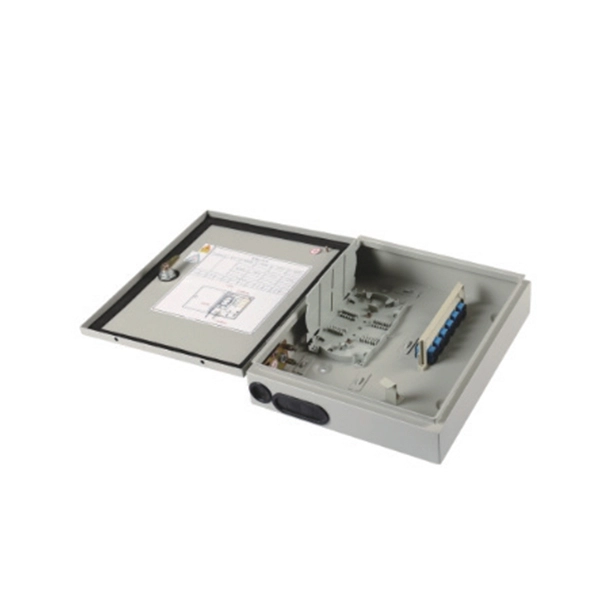
Fiber Optic “Big Three”: Termination Box, Distribution Box & ODF
Author: Hayden Introduction In FTTH, FTTB, and other fiber access networks, terms such as Fiber Optic Termination Box, Fiber Distribution Box (FDB), and ODF (Optical Distribution Frame)
NYT Connections archive
Every NYT Connections puzzle ever published is listed here, organised by date, with all four category groups and their sixteen words. The NYT only offers the current day''s puzzle for free,
Fiber Optic Patch Cables: The Complete 2026 Buyer''s
Confused by LC, SC, MPO, UPC, and APC? This complete fiber optic patch cable guide covers connector types, single-mode vs multimode,
AI-Ready Networking & Secure Cloud Solutions
Power your business with our global fiber network. We provide secure networking, edge cloud and AI-ready infrastructure to connect people, data and
Related Video Reference
This video was associated with the source search result. Verify technical details against current product documentation and project requirements.