KENHARDT OPTICALNetworks across Africa Talk through a project
Fiber systems / Technical reading Optical reference library

The fiber optic sensor keeps jumping

Inside this technical reference
Source context

AI source overview

A fiber optic sensor that keeps jumping is usually caused by physical damage, connector contamination, misalignment, or environmental factors affecting the fiber link. Common Causes1. Physical Damage or Bends: Sharp bends, kinks, or microbends in the fiber cable can cause intermittent signal loss, leading to jumping readings.

Inspect the entire cable path for visible damage or stress points and replace any compromised sections. 2. Connector Contamination or Misalignment: Dust, fingerprints, or oil on connector end faces can create high insertion loss and unstable signals.

Even a slightly loose or misaligned connector can cause fluctuations. Clean connectors with lint-free wipes and isopropyl alcohol, and ensure they are fully seated. 3.

Faulty Hardware: Sensors, transceivers, or media converters may be malfunctioning. Swapping the sensor or transceiver with a known-good unit can help isolate the problem. 4.

Environmental Factors: Temperature extremes, moisture, or vibration can affect fiber performance. Ensure the sensor and fiber are installed in a stable environment and protected from mechanical stress. 5.

Excessive Connections or Poor Cable Management: Too many connectors in a channel or strained cables can increase insertion loss and cause signal instability. Check the network design and reduce unnecessary connections if possible.

Troubleshooting Steps

Inspect and Clean: Examine all fiber cables and connectors for damage or contamination. Clean connectors thoroughly. Check Connections: Ensure all connectors are properly seated and aligned.

Test Signal Strength: Use an optical power meter or OTDR to measure signal loss. Values outside the recommended range (-15 dBm to -30 dBm) indicate issues. Swap Components: Replace suspect transceivers, sensors, or cables with known-good units to isolate the faulty component.

Restart Devices: Reboot any connected switches, routers, or media converters to clear temporary glitches. Firmware and Configuration: Ensure all devices are running the latest firmware and check for configuration errors that could affect sensor readings. When to Call a ProfessionalIf the sensor continues to jump after cleaning, testing, and replacing components, it may indicate a deeper issue such as a broken fiber splice, internal sensor fault, or design-related insertion loss.

Contact the manufacturer or a certified fiber optic technician for advanced diagnostics. By systematically following these steps, you can identify the root cause of the jumping sensor and restore stable operation.

Research context

Reference summary

White Paper: Troubleshooting Fiber Very simple to use, this single-ended optical fault finder uses technology similar to an OTDR, sending a laser light pul.

From reference to enquiry

Questions for your project

Use these editorial prompts alongside the linked excerpts. They identify items to confirm for your project.

Detailed reading / connection to installation

Fiber connection and distribution references
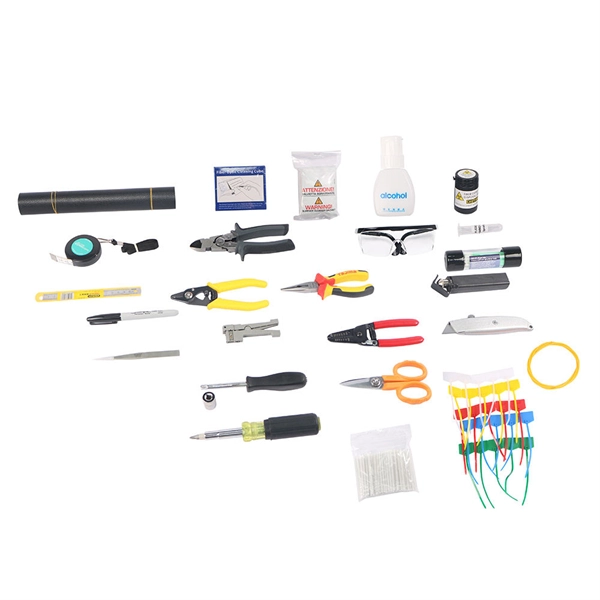
The fiber optic sensor keeps jumping
Equipment illustration / verify against the selected product

White Paper: Troubleshooting Fiber

Very simple to use, this single-ended optical fault finder uses technology similar to an OTDR, sending a laser light pulse through the fiber and measuring the power

Troubleshooting Fiber

Worn or damaged latching mechanisms on connectors or adapters are sometimes the culprit. Within the link itself, the fiber may have experienced microbends or macrobends, or it could have been

High accuracy 1D-CNN demodulation algorithm for fiber-optic Fabry

Abstract Fiber-optic Fabry–Perot (F-P) sensors are commonly demodulated using spectral interferometric techniques to measure the optical path difference (OPD). However, spurious jumps in

Troubleshooting Optical Fiber Sensors in the Field

In this article, we will discuss some common methods and tips to troubleshoot optical fiber sensors in the field. Find expert answers in this collaborative article

Fiber Optic Troubleshooting and Monitoring

A fiber optic tracer is a low power troubleshooting tool that uses a LED source to inject light into the fiber to provide tracing of the light in the fibers. If the light does not shine through the fibers, first, make

Common Fiber Optic Cable Problems And How To Troubleshoot Them

A well-built fiber link rarely fails, but when it does the symptoms can be short, confusing, and expensive to chase. This guide lists the actual, field-proven problems technicians encounter most often and

Fiber Optic Troubleshooting Guide: Problems, Tools & Solutions

This guide offers practical steps to troubleshoot fiber optic cable issues, covering common problems, key tools, and preventive measures to ensure stable performance.

How to Troubleshoot Fiber Optic Sensors for Curing Composites

Learn some of the most effective ways to troubleshoot fiber optic sensors for composite material curing, based on the sensor type, problem source, and tools and methods.

Troubleshooting Fiber Optic Sensor

If the second fiber does not illuminate, illuminates dimly or illuminates white, the fiber may be broken and need to be replaced. However, continue to check for other issues.

Fiber-optic sensor

A fiber-optic sensor is a sensor that uses optical fiber either as the sensing element ("intrinsic sensors"), or as a means of relaying signals from a remote sensor to the electronics that process the signals

Common faults of fiber jumping line

Indoor fiber optic jump lines are widely used in telecommunications networks to connect different equipment, such as switches, routers, and patch panels. They are critical components in the

Toward Eliminating Signal Demodulation Jumps in Optical Fiber

Fiber optic Fabry-Perot sensors are commonly interrogated by spectral interferometric measurement of optical path difference (OPD). Spurious jumps in sensor output, previously attributed

White Paper: Troubleshooting Fiber

After permanent link testing, which doesn''t include the fiber jumpers and is considered best practice for new installations, subsequent channel testing might

Fiber Sensors

Optical fiber is comprised of a central core with a high refractive index surrounded by cladding with a low refractive index. When light enters the core, repetitive total internal reflection at the boundary of the

Fiber Optic Sensor | Precision, Speed & Electrodynamics

Explore the world of Fiber Optic Sensors: their principles, types, applications in precision measurement, speed, electrodynamics, and future

Fiber Optic Sensor

Fiber optic sensors are defined as devices that utilize optical fibers to measure a variety of stimuli, including mechanical, thermal, electromagnetic, radiation, chemical, and flow characteristics. They

Optical Fiber Sensors: Working Principle, Applications, and Limitations

Brief theory of sensing principle, fabrication method, applications, advantages and disadvantages of the different fiber-optic sensors, are addressed. Recent progress in numerous

Spurious jumps in wavelength tracking of fiber-optic Fabry–Perot

Wavelength tracking is a commonly used method for demodulating fiber-optic Fabry–Perot interferometric sensors due to its high resolution and straightforward implementation. We report the

Related Video Reference

This video was associated with the source search result. Verify technical details against current product documentation and project requirements.

6 questions about “The fiber optic sensor keeps jumping”

How can one identify a broken fiber optic cable?

To identify a broken fiber optic cable, start by performing a visual inspection for any physical signs of damage, such as bends, cracks, or breaks...

What methods are used to test fiber optic cables without a tester?

There are several methods to test fiber optic cables without a tester. One method is using a visual fault locator (VFL), as mentioned earlier, to v...

What are the causes of intermittent fiber optic connections?

Intermittent fiber optic connections can be caused by a variety of factors, including: Poorly terminated connectors or splices that result in unsta...

How does end face contamination impact fiber optic performance?

End face contamination negatively impacts fiber optic performance by increasing signal loss, reflection, and scattering. Contaminants such as dirt,...

What factors contribute to fiber optic degradation?

Fiber optic degradation can be caused by several factors, such as: Physical stress on the cable, including bending, twisting, or crushing, which ma...

How can I resolve issues when my fiber internet is not functioning?

When your fiber internet is not functioning, follow these steps to resolve the issue: Verify that all connections are secure and properly seated, i...

Make the connection clear

Share the fiber interfaces, termination capacity, cable route and evidence required for handover.

Send a project brief