
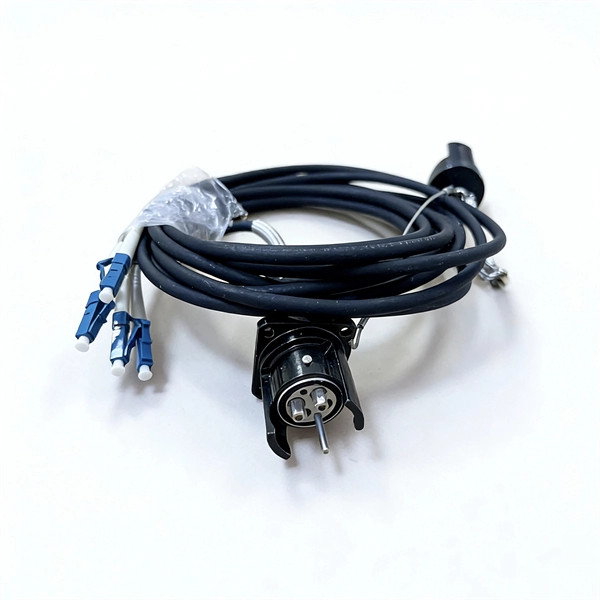
Fiber connection and distribution references
Societal and technology trend report
Next, this framework is applied to two representative line-protection schemes – line distance protection and line differential protection – for quantitative evaluation under PEDG conditions.
SCHEMATIC REPRESENTATION OF POWER SYSTEM RELAYING
Prepared by Working Group I5 Working Group Assignment presentation of protection and control relaying. The report will identify methodology behind these practices, present issues
Relay protection for power-electronics-dominated power grids:
Recognizing the dire need for advanced relay protection, this report presents a comprehensive analysis of the evolving landscape. It outlines technical challenges, potential innovative solutions, equipment
Power System Protective Relays: Principles & Practices
Abstract: Protective relays and devices have been developed over 100 years ago to provide “last line” of defense for the electrical systems. They are intended to quickly identify a fault and isolate it so the
Role of Protective Relaying in the Smart Grid
It outlines the definition, attributes, and benefits of a Smart Grid. The role that protective relays can play in implementing Smart Grid functionality and the impact that a Smart Grid design may have on
Role of Protective Relaying in the Smart Grid
Incorporate extensive measurements, rapid communications, centralized advanced diagnostics, and feedback control that quickly returns the system to a stable state after interruptions or disturbances
Modern Power System Protective Relaying
This Modern Power System Protective Relaying training course has been designed to provide a clear and perfect understanding of power system protection schemes and devices, including protection
(PDF) Role of Protective Relaying in the Smart Grid
The role that protective relays can play in implementing Smart Grid functionality and the impact that a Smart Grid design may have on modern protective relays is discussed.
Fundamentals of Modern Protective Relaying
A primary motor protective element of the motor protection relay is the thermal overload element and this is accomplished through motor thermal image modeling. This model must account for thermal
POWER SYSTEM PROTECTION
Busbar Protection Relay: Busbar protection relays monitor the health of electrical busbars in substations. They detect faults such as short circuits and phase-to-phase faults on the busbars.
Basic Theories of Power System Relay Protection
This chapter first introduces the basic theories of power system relay protection, summarizes the functions and basic requirements of relay protection, and illustrates the basic principles of relay
6 different types of relaying schemes to protect the EHV and UHV
For more difficult relaying applications, such as EHV lines using series capacitors in the line, some companies always use two sets of solid-state relays to provide the protection systems.
Protective Relaying Principles and Applications
Protective Relaying Principles and Applications The article provides an overview of protective relaying principles and their applications for high-voltage power system components. It covers the protection
New development in relay protection for smart grid
This series of papers report on relay protection strategies that satisfy the demands of a strong smart grid. These strategies include ultra-high-speed transient-based fault discrimination, new
SCHEMATIC REPRESENTATION OF POWER SYSTEM RELAYING
Working Group Assignment Report on common practices in the representation of protection and control relaying. The report will identify methodology behind these practices, present
Research on Relay Protection Technology Based on Smart Grid
Smart grid is a new direction for the development of my country''s power industry. Relay protection, as the first line of defines to ensure the safe operation of the power grid, needs to actively adapt to the
State-of-the-art in the industrial implementation of protective relay
This aids readers to become familiar with the principles used by most common protective relays. Moreover, a review and comparison between different relay manufacturers is also provided to
Anti Interference Technology of Relay Protection System in Large
Abstract: Relay protection plays an important role in the safe and stable operation of the large power grid, which can prevent the collapse of the power grid caused by the failure of the power system and