
Fiber connection and distribution references
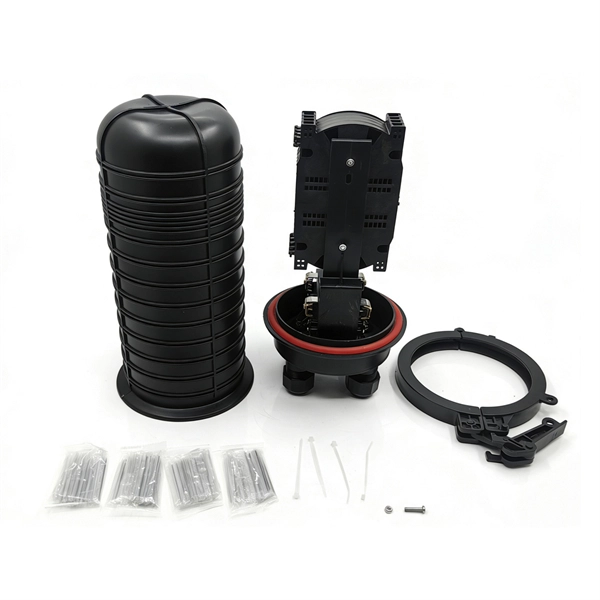
FOA Standard For Installing Fiber Optic Cable Plants
This standard describes procedures for installing and testing cabling networks that use fiber optic cables and related components to carry signals for communications, security, control and similar purposes.
Standards and regulations in FTTH networks
This international standard provides recommendations for general cabling systems, including testing requirements for installations in data centers and commercial buildings.
Standard for Installing and Testing Fiber Optics
Unless directed by the owner or other agency that unused cables are reserved for future use, remove abandoned optical fiber cable (cable that is not terminated at equipment other than a connector and
The FOA Reference For Fiber Optics
Assuming the design is completed, we''re looking at the process of physically installing and completing the network, turning the design into an operating system. This chapter covers preparing for the
ANSI/TIA-568.3-E: Optical Fiber Cabling and Components Standard
Scope: This Standard specifies performance, transmission, and test and measurement requirements for premises optical fiber cable, connectors, connecting hardware, and patch cords.
The Fiber Optic Association, Inc.
This document covers fiber optic cabling installed indoors (premises installations) with the addition of outside plant (OSP) applications involved in campus installations where the fiber optic cabling
FOA Publishes Standard for Installing Fiber-Optic Cable Plants
The Fiber Optic Association (FOA) recently published a standard titled “FOA Standard For Installing Fiber Optic Cable Plants.” The standard replaces ANSI/NECA/FOA 301 Installing and Testing Fiber
Fiber Optic & Cable Standards Guide | FiberMania Standards
Published by the Telecommunications Industry Association (TIA), TIA-568.3-D sets the performance requirements and installation guidelines for optical fiber cabling systems, particularly in
ITU-T Rec. L.163 (11/2018) Criteria for optical fibre cable
This Recommendation also describes how to mitigate the considerable risks and/or issues to which the optical fibre cable may be exposed when infrastructures are minimal during installation, maintenance
OSP Design and Standards Overview
This document provides standards and guidelines for optical fiber cable infrastructure design, deployment, and construction. It addresses standards for fiber, cable, trenches, manholes, aerial
Physical layer
The transmission medium may be electrical or optical over optical fiber or a wireless communication link such as free-space optical communication or radio. Line
WORLD WIDE WEB JOURNAL Home
By clicking download, will open to start the export process. The process may take but once it finishes a file will be downloadable from your browser. You may continue to browse the DL while the export
ASTM International | ASTM
ASTM International offers resources for standards development and use worldwide according to individual country''s needs. 125 regional and national standards
FOA Standard For Installing Fiber Optic Cable Plants
The type of fiber optic cable and the fibers in the cable should be chosen appropriate for the type of communications system(s) being supported, the type of installation and the environment in which the
InstallGuide
This FOA Technical Bulletin describes recommended procedures for installing and testing cabling networks that use fiber optic cables and related components to carry signals for communications,
Fiber Optic Installation Requirements: Complete Guide
Learn the different fiber optic cable installation requirements with our expert guide to ensure optimal performance and durability in your network.
Overhead Fiber Optic Cable Installation: Requirements
In the realm of optical fiber deployment, overhead installation remains a critical method for rapid and cost-effective network expansion. As a leading
The FOA Reference For Fiber Optics -Outside Plant Construction
The old story about the most likely fiber optic communications system failure being caused by "backhoe fade" is not a joke – it happens every day. But it reminds us that digging safely is vitally important.