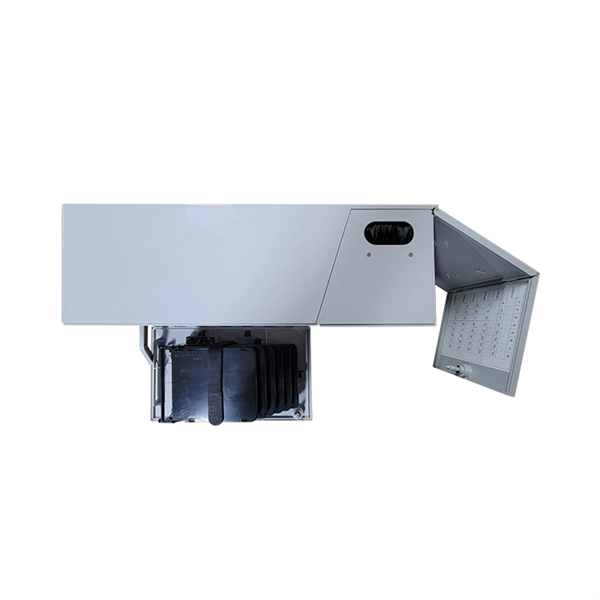
Splitter superimposed bandwidth refers to the shared bandwidth available to each subscriber in a PON, determined by the splitter ratio and the total capacity of the OLT port.
Understanding Splitter Bandwidth
In a Passive Optical Network (PON), a single Optical Line Terminal (OLT) port serves multiple Optical Network Terminals (ONTs) through an optical splitter. The splitter divides the optical signal among all connected users, meaning the total bandwidth of the OLT port is shared. For example, a GPON OLT port typically provides 2.
5 Gbps downstream, which is distributed among all users connected to a 1: 32 splitter. If all 32 users are active simultaneously, each user theoretically receives about 78 Mbps, though actual bandwidth may vary depending on usage patterns and contention ratios.
Split Ratios and Their Impact
Split ratios define how many outputs a single input fiber is divided into. Common ratios include 1: 2, 1: 4, 1: 8, 1: 16, 1: 32, and 1: 64, with higher ratios meaning more users share the same OLT port. Higher split ratios reduce the per-user bandwidth and increase insertion loss, which limits the maximum feasible distance between the OLT and ONTs.
For instance, a 1: 32 splitter introduces ~15 dB loss, supporting distances up to 20 km, while a 1: 64 splitter adds ~18 dB loss, limiting reach to 5–10 km. Centralized vs.
Cascaded Splitting
Splitter placement affects network design and bandwidth distribution: Centralized splitting: A large splitter (e.g., 1: 32 or 1: 64) is placed at the central office. Pros include simpler maintenance and fewer field splices, but it requires more feeder fibers. Cascaded splitting: Smaller splitters are deployed in stages (e.g., 1: 4 near the CO, then 1: 16 downstream), reducing feeder fiber count and improving coverage in less dense areas.
Bandwidth Considerations for High-
Demand Users
Even if some splitter ports are physically unused, the effective bandwidth can be saturated if active users demand high throughput, such as 4K streaming or enterprise applications. In such cases, the network may need to limit the number of active users per splitter or upgrade to higher-capacity PON standards like XGS-PON (10 Gbps) to maintain quality of service.
Summary
Splitter superimposed bandwidth is the per-user bandwidth after dividing the OLT port capacity among all splitter outputs. Higher split ratios increase sharing but reduce per-user bandwidth and optical reach. Splitter architecture (centralized vs. cascaded) affects fiber usage, deployment cost, and network scalability.
Network planning must consider user demand, distance, and optical budget to avoid saturation and ensure reliable service. By carefully selecting split ratios and architectures, network operators can balance cost, coverage, and bandwidth to optimize PON performance.