KENHARDT OPTICALNetworks across Africa Talk through a project
Fiber systems / Technical reading Optical reference library

Relay Protection Technical Supervision Standards

Inside this technical reference
Source context

AI source overview

Relay protection technical supervision is guided by international standards such as IEC 60255 and IEEE C37 series, emphasizing reliability, selectivity, speed, and proper coordination of protective relays.

International Standards and Functional Requirements

The IE

C 60255 series defines functional requirements for measuring relays and protection equipment used in electrical transmission and distribution systems.

The IE

C 60255-1xx standards specify minimum functional requirements, testing methodologies, and performance evaluation methods for relays, covering current, voltage, frequency, power, and other protection functions. These standards also address control, monitoring, and process interface functions, including automatic reclosing, fault location, teleprotection, and fault recording.

The IE

C 60255-181 standard, for example, focuses on frequency and ROCOF protection functions and has been adopted as a European standard (EN IEC 60255-181) in multiple countries, ensuring uniformity in relay evaluation and application.

The IEE

E C37 series provides guidance for protective relay applications, including transformers, generators, motors, capacitor banks, and utility-customer interconnections. Key standards include IEEE Std C37. 91 for relay calibration, IEEE Std C37.

101 for generator ground protection, and IEEE Std C37. 96 for AC motor protection. These standards emphasize reliability, security, speed, and coordination of protective devices.

Practical Supervision and Testing Guidelines

Technical supervision involves relay selection, setting, commissioning, and periodic testing. Protective relays must be reliable, sensitive, and fast, discriminating between faults requiring immediate action and conditions that allow delayed or no operation. Supervision includes: Functional testing of current, voltage, impedance, power, and frequency relays according to operating characteristics (definite time, inverse time, differential, overfluxing, etc.)Verification of trip, close, indication, and alarm circuits to ensure correct operation under fault conditionsStation battery checks to confirm sufficient energy for relay operation during AC supply interruptionsDocumentation and adherence to color codes, terminal connections, and device numbering for consistent maintenance and troubleshooting.

Emerging Trends and Challenges

Modern grids with renewable energy sources and inverter-based resources introduce challenges such as reduced fault currents, high-frequency transients, and low-inertia conditions, which can compromise conventional overcurrent and distance protection schemes. To address these, technical supervision standards are evolving to include: Digital and AI-based adaptive protectionIEC 61850 communication protocols for digital inputs/outputs and GOOSE messagingScenario-based testing and lifecycle supervision using digital twins and simulation toolsEnhanced coordination for distributed generation and low-inertia systems.

Summary

Relay protection technical supervision standards combine international functional standards (IEC 60255, IEEE C37), practical testing and commissioning procedures, and emerging digital methodologies. The primary objectives are to ensure reliability, selectivity, speed, and safety in isolating faults while maintaining system stability. Supervisors must integrate traditional relay testing with modern digital and AI-enabled approaches to meet the evolving requirements of power systems.

Research context

Reference summary

Trip circuit supervision relay The supervision relay TCS is designed for the supervision of trip circuits and other important control and monitoring circui.

From reference to enquiry

Questions for your project

Use these editorial prompts alongside the linked excerpts. They identify items to confirm for your project.

Detailed reading / connection to installation

Fiber connection and distribution references
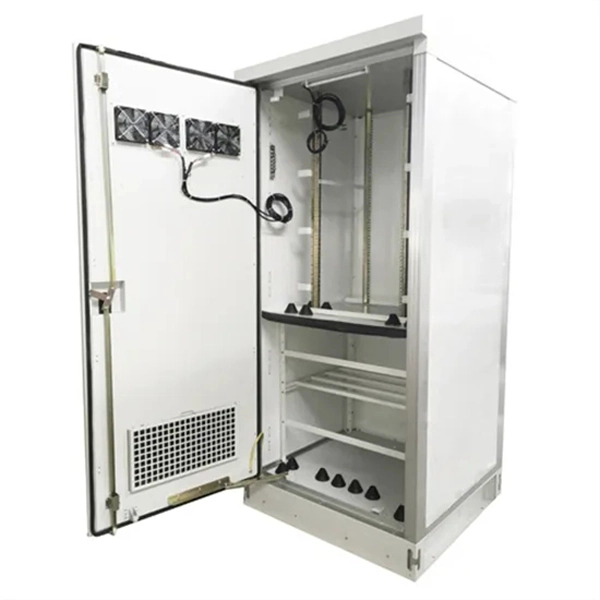
Relay Protection Technical Supervision Standards
Equipment illustration / verify against the selected product

Trip circuit supervision relay

The supervision relay TCS is designed for the supervision of trip circuits and other important control and monitoring circuits. Block diagram of the relay is shown in Fig. 1.

Power System Protective Relays: Principles & Practices

Abstract: Protective relays and devices have been developed over 100 years ago to provide “last line” of defense for the electrical systems. They are intended to quickly identify a fault and isolate it so the

MONITORING RELAY Trip circuit supervision relay TCS Product

Trip circuit supervision relay TCS Product Guide — Continuous supervision of critical circuits like breaker trip circuit and master trip relay coil independent of the position. — Table of contents

PC37.90/D1, Sept 2024

This standard establishes the service conditions, ratings (electrical, thermal, and mechanical), and testing requirements for relays, relay systems, and control devices used for the protection and control

Trip Circuit Supervision Relay: Working Principle, Applications

This comprehensive guide explores everything you need to know about trip circuit supervision relays, their working principles, applications, and why they''re essential for electrical

PRC-005-6

Identify which maintenance method (time-based, performance-based per PRC-005 Attachment A, or a combination) is used to address each Protection System, Automatic Reclosing, and Sudden

Practical handbook-for-relay-protection-engineers | PDF

It covers standard codes, wiring practices, and norms for protecting generators, transformers, and lines, and provides detailed information on relay characteristics and crycuit design.

HANDBOOK

Also principles of various protective relays and schemes including special protection schemes like differential, restricted, directional and distance relays are explained with sketches. The norms of

Operation, maintenance, and field test procedures for

Plant protection system functional testing Protective circuit functional testing, including lockout relay testing, must take place immediately upon

PC37.113/D3.5, Sept 2024

PC37.113/D3.5, Sept 2024 - IEEE Draft Guide for Protective Relay Applications to Transmission Lines Scope: Concepts and applications of AC transmission line protection are presented in this guide.

IEC Trend Report Relay protection for PEDGs:2025 | IEC

It highlights the urgent need for a paradigm shift in protection strategies to counter technical constraints, outdated standards, and deal with the rise of distributed generation. The report calls for strategic

Practical handbook-for-relay-protection-engineers | PDF

The handbook for protection engineers includes guidelines on protective circuitry, protective relay principles, and testing procedures for switchgear and relays. It covers standard codes, wiring

PC37.90/D1, Sept 2024

This standard establishes a common reproducible basis for designing and evaluating relays and relay systems. Scope: This standard establishes the service conditions, ratings (electrical, thermal, and

IEC 60255 1xx: Protection relay functional standards for all

In short, standards in the new IEC 60255-1xx series are relevant and important for everyone whose work involves relay protection systems, whatever their role in this wonderful

Basic protection relay knowledge

On the other hand, unselective protection operation in the extra high voltage network – i.e. at the national grid level- may endanger the stability of the whole power system, possibly leading to a

Relay standards

Relay standards Last updated on June 15th, 2013 Translate (Premium) Home / Download Center / Electrical Engineering Books and Technical Guides / Relay control and protection guides / Relay

PROTECTIVE RELAY TESTING

A comprehensive testing program should simulate fault and normal operating conditions of the relay. Acceptance testing, commissioning, and startup will include control power tests, current transformer

Installing and Maintaining Protective Relay Systems

Introduction Relay systems protect high-voltage equipment and transmission lines to ensure safe, stable systems. Although failure of a protective relay system may have severe local or regional impacts,

Related Video Reference

This video was associated with the source search result. Verify technical details against current product documentation and project requirements.

Make the connection clear

Share the fiber interfaces, termination capacity, cable route and evidence required for handover.

Send a project brief