
Fiber connection and distribution references
Maximizing electrical output and reducing heat-related
To optimize heat dissipation and efficiency, we introduce a hybrid nanofluid comprised of titanium oxide and silver nanoparticles dispersed in
Performance Enhancement of Hybrid-Type Full-Bridge DC/DC
To achieve high efficiency and power density, thermal management is crucial for buck-boost converters. This may involve the use of heat sinks or fans, which can increase the overall size and complexity of
DESIGN OF A DUAL ACTIVE BRIDGE DC-DC CONVERTER FOR
This paper focuses on a bidirectional dual active bridge (DAB) based dc/dc converter to fulfill the required function of regulating the battery bank energy and the DC bus voltage to confirm a stiff
In-Depth Design and Multiobjective Optimization of an Integrated
However, high-power transformers in dc–dc converters can result in high power losses and poor heat dissipation due to thick isolation materials. The three-phase LLC (3P-LLC) converter
Thermal Bridge Technology Crosses A Gap In Electronic Device Heat
Heat dissipation for electronic components traditionally has been accomplished in a variety of ways, including various styles of heat sinks, thermoelectric coolers, forced air systems and fans, and heat
Review of photovoltaic cooling methods to improve electrical efficiency
Some methods for dissipating heat, increasing power output, and prolonging system life include submersion, water channels, misting, and integrated cooling tubes. Sunlight evaporates
Junction Temperature Estimation Model of Power
Thermal coupling effects and dissipative boundary conditions are, firstly, analyzed in a three-dimensional finite element model. A coupling
Hybrid Modulation for Balancing Thermal Dissipation in Dual Active
An optimal modulation scheme that enables minimum conduction and copper losses is presented for a bidirectional dual active bridge (DAB) dc-dc converter.
Dual active bridge DC-DC converter in photovoltaic applications
The application is intended for the connection in parallel of an energy storage device, such as a battery, with photovoltaic (PV) cells, and then in series to the grid through another converter, but this time a
PCB Layout Tips to Improve Rectifier Heat Dissipation
Learn practical PCB layout techniques to optimize heat dissipation paths for standard rectifier bridges in power electronics design.
A Review of Heat Dissipation and Absorption
This review highlights significant observations and challenges associated with absorber design, mini/microchannels, polymer materials, phase
Thermal model of bidirectional DC/DC converter
Evgeni Malev The purpose of this article is to create and analyze a mathematical model of Isolated full-bridge bidirectional DC/DC converter for electric vehicle application. The article considers and
Novel heat dissipation design incorporating heat pipes for DC
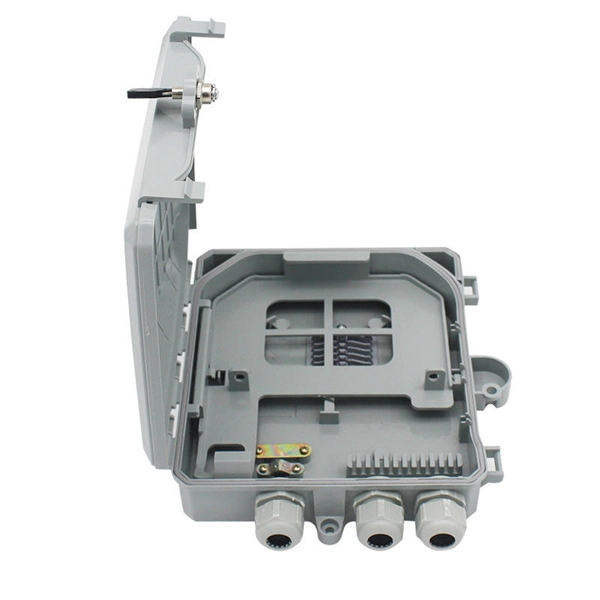
In a Photovoltaic (PV) system, heat is generated by an operating diode. Because DC combiner boxes are waterproof, dustproof, air tight and made of hea
AN5194, Power dissipation and thermal calculations for H-Bridge
1 Introduction NXP offers a wide assortment of integrated H-Bridge devices to drive brushed DC motors. In this application note, the MC34932 and MC33932 monolithic dual H-Bridge power integrated
Maximizing electrical output and reducing heat-related
Article Open access Published: 08 October 2023 Maximizing electrical output and reducing heat-related losses in photovoltaic thermal systems with a
Double-sided heat dissipation numerical modeling of an embedded
Thermal management has always played a significant role in power module design. Double-sided heat dissipation is more efficient at transferring heat than the traditional package.
Hybrid Modulation for Balancing Thermal Dissipation in Dual Active
The unified boundary trapezoidal modulation (TZM) control utilizing fixed duty cycle compensation and magnetizing current design for dual active bridge dc-dc converter is proposed in
(a) The electrical circuit of a photovoltaic full-bridge
The optimized design enables a maximum heat rejection capability of 225 W per single MOSFET package, an equivalent to 75 W/cm² heat flux dissipation using
Related Video Reference
This video was associated with the source search result. Verify technical details against current product documentation and project requirements.