
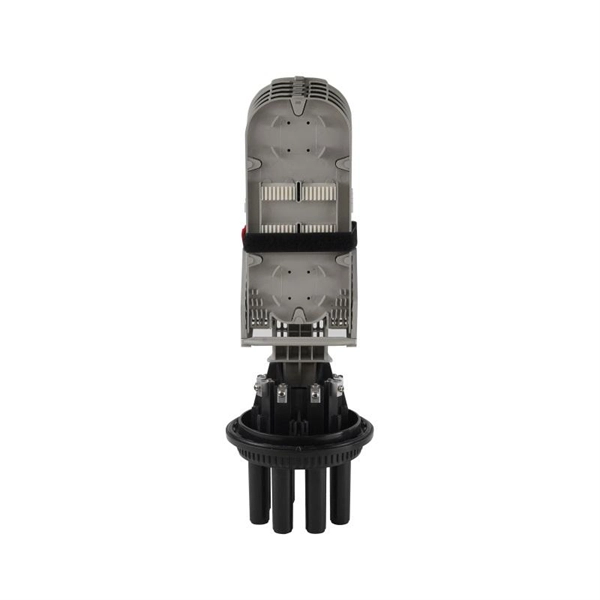
Fiber connection and distribution references
Optocouplers in Switching Power Supplies
Basic insulation is required in an optocoupler interface between a hazardous voltage circuit and a non-touchable extra low voltage (ELV) circuit. The most widely used insulation for optocouplers in switch
Using Opto Couplers
The main purpose of an optocoupler interface is to completely isolate the input circuit from the output circuit, which normally means there will be two completely
Optocoupler Tutorial and Optocoupler Application
This article explains how to correctly bias optocouplers—covering LED current, current transfer ratio (CTR), and phototransistor setup—to keep your
The Ultimate Optocouplers Guide: Isolation, Types, and
In a switch-mode power supply (SMPS), an optocoupler provides a feedback path from the high-voltage secondary side back to the primary-side
Optocouplers 101: A Comprehensive Guide for PCB
Triac and SCR Optocouplers: Designed for AC power control, these are perfect for switching high-voltage AC loads, such as in dimmer circuits or
Optocoupler Tutorial for Beginners
Optocouplers are very useful when you need to isolate different sections of a circuit, for example in power supply circuits to transfer signals
PC817 Optocoupler Module User Guide | Wiring & Setup
These PC817 optocoupler isolation modules provide a convenient, pre-built breakout board that handles the supporting circuitry for you. Each
Optocouplers Guide: Understanding Types,
Learn how optocouplers ensure electrical isolation and signal transfer in circuits. This guide covers their components, working principles, and
ANO007 | Understanding Phototransistor Optocouplers
This capacitance, together with the output bias resistor RC, forms a low-pass filter which limits the optocoupler bandwidth. This is also referred as a ''pole'' in control systems, and it is an important
Optocoupler Isolation in Power Supplies_Industry dynamics_Blog_
Optocoupler isolation in power systems refers to the use of optocouplers (optical couplers) to electrically isolate input and output circuits. This ensures no direct electrical connection between the high
Optocoupler Circuits | Nuts & Volts Magazine
Optocoupler devices are ideally suited for use in digital interfacing applications in which the input and output circuits are driven by different power supplies.
Design Tutorial: Power-supply optocoupler basics
An optocoupler-isolated power supply is often the safest and most practical way to go when it comes to performance and protection. Here''s the basics on today''s LED/photodetector
Optocouplers Guide: Understanding Types, Applications, and Circuit
You can use phototransistor optocouplers in applications like microprocessor input/output switching, signal isolation, and power supply regulation. For example, the 4n25 optocoupler is a
Everything You Need to Know About Optocouplers in Electronics
In that rare case, the AC power might touch the coil of the electromagnet inside the relay, which once again creates a path for AC to enter the DC network. This is where the optocoupler
What Is Optocoupler | Opto-coupler Working And Application
There are various types of circuits in digital communication systems, power supply systems,s, and other hardware systems designed using optocouplers by engineers because it make high sensitivity, for
3,4V 2,5A switching supply with optocoupler
This switching power supply is a much more elegant solution. On the Internet there are many schematics of switching power supplies with 3842, auxiliary transistors
Optocoupler feedback for a dual power supply and over current
Is there any way to add an optocoupler feedback to both +ve and -ve rails of the power supply? The circuit already has a feedback circuit, but its only for the +ve rail of the powersupply. So
Optocoupler
Optocoupler Designer''s Guide About This Designer''s Guide Agilent Technologies optocouplers can be used in an array of isolation applications ranging from power supply and motor control circuits to data
Related Video Reference
This video was associated with the source search result. Verify technical details against current product documentation and project requirements.