
Fiber connection and distribution references
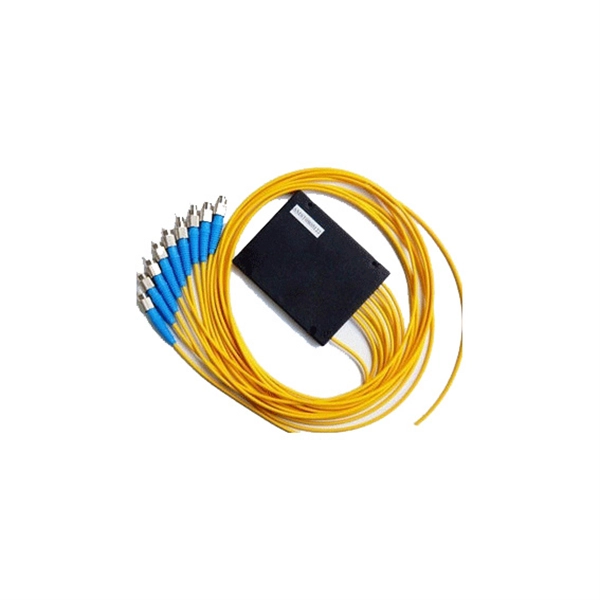
Wavelength Division Multiplexing – WDM, coarse,
It details the two main standards: coarse WDM (CWDM), with few channels and wide spacing for applications like metropolitan networks, and dense WDM
DWDM Modules | OEM Optical Communication Solutions | Corning
Corning''s Dense Wavelength Division Multiplexers (DWDMs) are integrated optical modules that combine, or multiplex, and separate, or demultiplex multiple optical signals of different wavelengths
Optical Components and Modules
The monitoring product family includes advanced modules such as OCM and OTDR, as well as simpler pigtail integrated PD, tap or WDM PD in single
Optically Multiplexed Systems: Wavelength Division Multiplexing
The chapter introduces the concept of optical multiplexing with special focus on wavelength division multiplexing. Other multiplexing methods are also briefly described highlighting
Wavelength division multiplexing
Our goal is to design an 8-channel WDM system with a comb laser as the input, cascaded ring modulators to modulate and multiplex the signals, and cascaded ring resonators to demultiplex.
Wavelength Division Multiplexers (WDM)
At MEETOPTICS, you can find and compare Wavelength Division Multiplexers (WDMs) for combining or splitting light at two different wavelengths. MEETOPTICS offers a variety of multiplexers with
SpectraMux® CWDM | OEM Optical Communication Solutions | Corning
Corning''s coarse wavelength division multiplexers (CWDMs) are integrated optical modules that mux or demux multiple optical signals of different wavelengths in a single fiber. Our CWDM products
WAVELENGTH-DIVISION MULTIPLEXING OPTICAL NETWORKS
In WDM systems, incoming optical signals are assigned specific wavelength and then multiplexed onto tbe fiber. Moreover, such systems are bit-rate- and protocol-independent, meaning that each
DWDM Module, Dense Wavelength Division Multiplexer Modules
GLSUN DWDM Module (dense wavelength division multiplexer) is an integrated optical module that multiplex and demultiplex multiple optical signals of different wavelengths in a single fiber. This
Fiber-optic communication
Wavelength-division multiplexing (WDM) is the technique of transmitting multiple channels of information through a single optical fiber by sending multiple light
Adtran: Adtran FSP 3000 from Adtran Networks
What the FSP 3000 actually does At its core, the Adtran FSP 3000 is a modular optical transport system designed for dense wavelength division multiplexing (DWDM), letting network operators run multiple
Optical module
An optical module is a typically hot-pluggable optical transceiver used in high-bandwidth data communications applications. Optical modules typically have an electrical interface on the side that
What Is an SFP and How It Works Explained
What is DWDM? (Dense Wavelength Division Multiplexing) What is Coarse Wavelength Division Multiplexing Technology All about the CablesAndKits New Premium Corning Fiber Cables Shop all
Optical Communication and Networking Equipment Market in Brazil
Brazil''s optical communication and networking equipment market encompasses a wide range of tangible products—fiber optic cables, optical transceivers, wavelength-division multiplexing
Method and system for selectable parallel optical fiber and wavelength
U.S. Patent Application US20190123829A1 for methods and systems for selectable parallel optical fiber and WDM operation may include an optoelectronic transceiver integrated in a
Network Fibre Optics: How Modern Optical Networks Work
Introduction to Network Fibre Optics Network fibre optics forms the backbone of modern internet, cloud computing, and telecommunications infrastructure across the UK and globally. Since
Optical transport network
This creates an optical virtual private network for each client signal. ITU-T defines an optical transport network as a set of optical network elements (ONE) connected by optical fiber links, able to provide
Dwdm System Market in the world | Report
This report covers the global market for Dense Wavelength Division Multiplexing (DWDM) systems, including optical networking equipment designed to increase bandwidth over existing fiber
Related Video Reference
This video was associated with the source search result. Verify technical details against current product documentation and project requirements.