
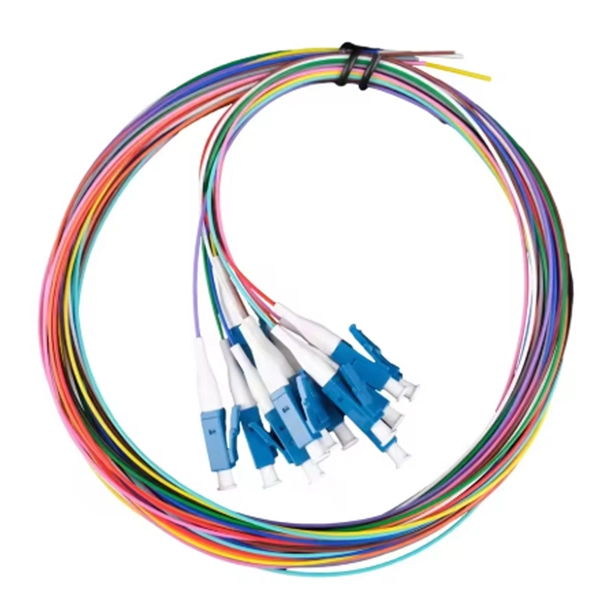
Fiber connection and distribution references
Join Two Fibers: Splicing, Coupler, Splice | Elfcam
Need to extend, repair or join two fibre optic cables? There are three main methods, each with its own advantages and limitations. This article
Fiber Optic Adapter/Coupler Tutorial
In this tutorial, we will explore the basics of fiber optic adapters, their types, installation process, considerations for choosing the right adapter, and
Can you connect 2 fiber optic cables together?
This article will guide you through the process of connecting two fiber optic cables, detailing the necessary tools, methods, and considerations to ensure a
How do you connect two fiber optic cables together?
Link aggregation provides benefits like increased bandwidth, redundancy, and load-balancing. That will ensure that one link can immediately switch to a second available link when it fails.
Optical attached cable
Optical attached cable (OPAC) is a type of fibre-optic cable that is installed by being attached to a host conductor along overhead power lines. The attachment
Fiber-optic cable
A fiber-optic cable, also known as an optical-fiber cable, is an assembly similar to an electrical cable but containing one or more optical fibers that are used to carry light.
Connect two Fiber Optic Cables using Patch Cord?
One way to inter connect AB and BC segments is by fusing a pair of required fiber cores. Another way is to put a switch at Location B and interconnect using SFP modules.
Four -end connection methods of butterfly -shaped
Butterfly-shaped optical fiber cables, also known as ribbon fiber optic cables, are a type of fiber optic cable that contains multiple fibers within a single
MPO Connectors Are Essential in Data Centers | Fluke Networks
Multi-fiber push on connectors, or MPOs for short, are fiber connectors comprised of multiple optical fibers. While defined as an array connector having more than 2 fibers, MPO Connectors are typically
The FOA Reference For Fiber Optics
Outside Plant Fiber Optic Cable Jump To: Fiber Optic Cable Construction Fiber Optic Cable Types Cable Design Criteria Choosing Cables Cable Types: (L>R):
Fiber Optics and Types
Fiber optic cables are used for long-distance and high-performance data networking. They are capable of transmitting data over longer distances and at higher bandwidths (data rates) than
The FOA Reference For Fiber Optics
All fiber optic applications are not the same. At the FOA, we''re mainly concerned with communications fiber optics - telco, CATV, LAN, industrial, etc., but fiber
How to Connect Multiple Ethernet Switches Using Fiber Optic Cables
If you have multiple Ethernet switches that need to be connected over long distances, fiber is obviously a preferred choice. Moreover, when it comes to bandwidth, no currently available
Fibre Optic Termination Techniques – Wray Castle
Multi-fiber connectors serve high-density applications: MPO/MTP: Rectangular connectors supporting 8-, 12-, 16-, and 24-fiber ribbons for 40G/100G/400G parallel optics and
How Anyone Can Splice Fiber Optic Cable | BroadbandSearch
Multiple fibers are organized into structured panels to improve efficiency, airflow, and cable management. Can You Splice a Fiber Optic Cable Without an Expensive Machine?
How does fiber optics work?
An easy-to-understand introduction to fiber optics (fibre optics), the different kinds of fiber optic cables, and how light travels down them.
Fiber Optic Color Code: The Ultimate TIA-598-C Guide
Master the TIA-598-C fiber optic color code standard. Read our complete guide and use our free interactive calculator to easily identify 1-144 core cables.
FasClamp Fiber Optic Cable Clamp System
FasClamp Fiber Optic Cable Clamp System Fasclamp is a fiber optic cable clamp that is used to secure the fiber cables and prevent movement while prepping and
Related Video Reference
This video was associated with the source search result. Verify technical details against current product documentation and project requirements.