
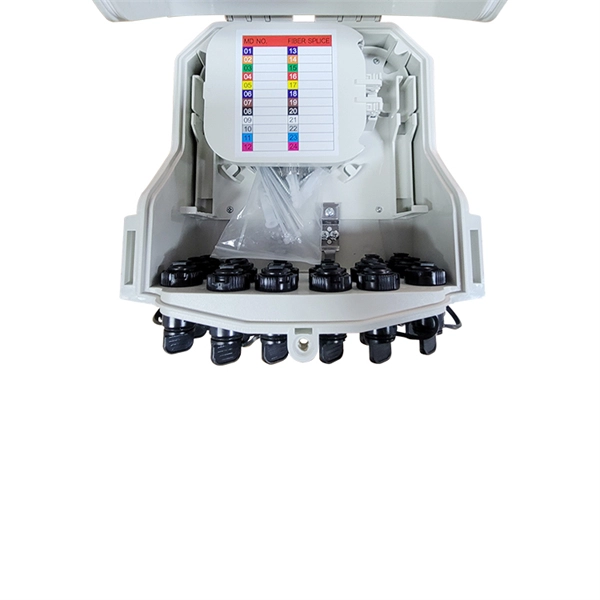
Fiber connection and distribution references
Relay Protection System Risk Management: Why Relays Fail
What are common relay protection system failure risks? Typical risks include EMI interference, poor grounding, overheating, communication network failures, and improper
Relay Technician: Conducting Relay System Risk Assessments
Explore expert strategies for conducting relay system risk assessments within electric power transmission, control, and distribution.
Power System Protective Relays: Principles & Practices
Abstract: Protective relays and devices have been developed over 100 years ago to provide “last line” of defense for the electrical systems. They are intended to quickly identify a fault and isolate it so the
Why Protection Relays Fail | Causes, Risks, and Prevention in Power
However, despite using high-quality relays and modern protection schemes, many plants still suffer from unexpected trips, missed faults, and repeated protection failures.
Managing the Risk of Protection Relay
Protection relays are essential to the task of transmitting electricity, without functional and compliant protection relays electricity infrastructure, electrical workers and the general public are at risk.
Relay Protection Hidden Fault Monitoring and Risk Analysis
This paper introduces the concept of relay protection of hidden faults, its characteristics, and then analyzes the detection, risk and the calculation method of the relay protection of hidden fault.
Societal and technology trend report
Lower reliability: Traditional protection assumes stable linear source models; it struggles with the dynamic nonlinear response of power electronic converter''s post-fault, increasing the risk of mis
Asset Management Plan Protection Relays
Protection relays play a significant role in keeping the network safe and reliable. Failure of these assets can lead to catastrophic consequences such as major damage to primary assets e.g., transformers.
Managing the Risk of Protection Relay Managing the Risk
Protection relays are essential to the task of transmitting electricity, without functional and compliant protection relays electricity infrastructure, electrical workers and the general public are at risk. The
Power supply risk assessment method for relay protection system faults
The effects of dominant faults, hidden misoperation and non-operation of the relay protection systems on the reduced power supply load power are analysed, and a probabilistic model
Why Protection Relays Fail | Causes, Risks, and Prevention in Power
Protection relays play a critical role in maintaining the safety, reliability, and stability of electrical power systems in industrial plants. From detecting short circuits to isolating abnormal
Installing and Maintaining Protective Relay Systems
Introduction Relay systems protect high-voltage equipment and transmission lines to ensure safe, stable systems. Although failure of a protective relay system may have severe local or regional impacts,
A review on adaptive power system protection schemes for future
Protection devices such as fuses and protective relays are widely used to identify and isolate faulty areas from operational networks. These devices operate at a pre-defined protection
Latest Press Releases
News provided by PR Newswire CREFC''s 2Q 2026 BOG Sentiment Index Steadies Near Baseline as CRE Finance Sentiment Moves from Shock to Caution NEW YORK, Mon, Jul 13 2026 8:15 AM NEW
Operation, maintenance, and field test procedures for
Plant protection system functional testing Protective circuit functional testing, including lockout relay testing, must take place immediately upon
A Complete Guide to Protective Relays and Their Role in Power
A protective relay is an intelligent device that senses abnormal electrical conditions, such as overcurrent, under-voltage, or frequency deviations. It initiates the operation of circuit breakers to
Protective Relaying Principles and Applications
Protective Relaying Principles and Applications The article provides an overview of protective relaying principles and their applications for high-voltage power system components. It covers the protection
A review on protective relays'' developments and trends
Protective relays are the decision-making devices in the protection scheme.These relays have undergone, through more than a century, important changes in their architecture, functionalities
Related Video Reference
This video was associated with the source search result. Verify technical details against current product documentation and project requirements.