
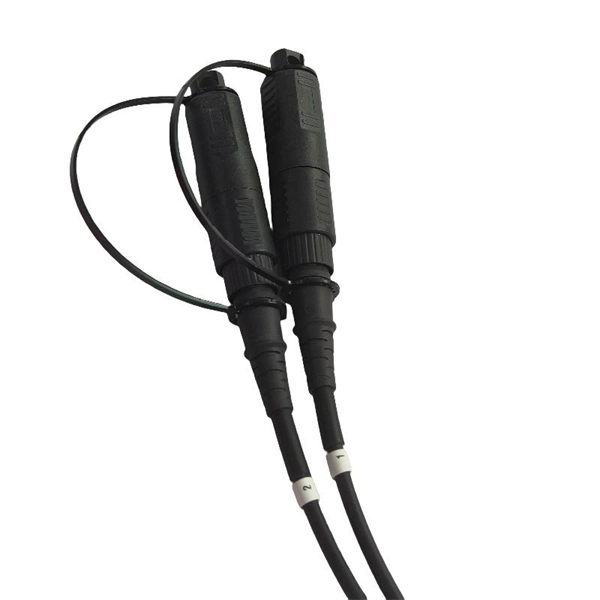
Fiber connection and distribution references
Linear Pluggable Optics – An Overview
Comparison of proposed solutions: In response, several solutions such as Linear Receive Optics (LRO), Linear Pluggable Optics (LPO) and Co-Packaged Optics (CPO) have been proposed. Fig. 1
LPO MSA Specification
It builds on IEEE 802.3 and OIF CEI-112G-LINEAR-PAM4 specifications. It enables Ethernet-like links with 1, 2, 4, or 8 lanes for data centers, using low power, high port density, low cost, and low latency
OFC 2024 200G Lane Linear Optics Workshop Ver2
Comparison to Time-Domain Model E. Chou, et al.*, "100G and 200G per Lane Linear Drive Optics for Data Center Applications", OFC 2024 W4H.3, *authors with Meta
Linear Driver | Leading High Performance and Low
Industry-leading linear drivers for 100G to 1.6T PAM4 and Coherent-based optical modules provide cutting-edge performance, quality and reliability to enable high
100G and 200G per Lane Linear Drive Optics for Data Center
Abstract: 100G/lane linear-drive pluggable optics demonstrate interoperability with over 3 dB link margin. Simulations suggest that 200G/lane linear drive requires bump-to-bump losses below
LPO MSA Announces Release of Specification for Linear Pluggable
The 100G-DR-LPO specification has been validated by extensive member interoperability testing to confirm that it meets the LPO MSA''s goal of enabling broad market adoption of linear pluggable fiber
400G, 800G, and Terabit Pluggable Optics:
Equipment and electrical serdes can evolve through 3 generations (25 Gb/s, 50 Gb/s or 100 Gb/s) without changing the optical interface that interconnects your equipment.
Single-Lambda 100G Pluggable Optics Solution
With fewer components in the pluggable module, we can scale manufacturing volume and cost to the level of today''s 10G SFP+ optics. Through
MACOM PURE DRIVE™
Linear optical designs enable a new architecture for the networking industry to optimally address SMF and MMF interconnect needs at lower power consumption, latency, and total system cost.
Co-Packaged Optics: Architecture, Status, and the Path
Co-Packaged Optics (CPO) addresses this by relocating the optical conversion function — the point at which electrical signals become photons —
400G, 800G, and Terabit Pluggable Optics:
Alternative to pluggable: Co-packaged Optics Co-packaged optics (CPO) and Linear Pluggable Optics (LPO) are two implementation variants of the same idea – reduce ASIC to optics power/DSP
Opinion: optical transceivers at the chokepoint of AI growth and supply
LPO challenges this model by removing the DSP from the module and using linear TIAs and drivers, while relying more heavily on the host ASIC and carefully controlled electrical channels.
What Is LPO Optical Transceiver Module?
2. What is LPO Optical Transceiver Module? LPO, Linear-drive Pluggable Optics, is an optical module packaging technology designed for ease of use and flexibility. In essence, LPO is
The Ultimate Reference Table for SFP & QSFP Optical Transceiver
However, for 2025-2027 deployments, pluggable optics remain the safe, flexible bet. LPO (Linear Drive Pluggable Optics) LPO is a buzzword in late 2025. It removes the DSP (Digital
Why Arista''s New Optical Transceiver Is a Big Deal
How XPO Differs from Other Techniques There''s nothing new about the struggle to design optical transceivers that are faster, denser, and more power-efficient. Linear pluggable optics
(PDF) Linear, direct-drive, un-retimed, pluggable optics -Too good to
PDF | reviews the brief history of linear pluggable optics, giving context to its sudden and surprising emergence at OFC 2023 | Find, read and cite all the research you need on ResearchGate
Marvell Optical DSPs | Powering the Future of AI Infrastructure
Discover how Marvell''s Optical DSPs enable high-speed, energy-efficient connectivity for AI workloads, data center interconnects, and cloud infrastructure.
AI Data Center Optical Transceiver Module Market 2025–2030
3.2 Linear-Drive Pluggable Optics (LPO): Eliminating DSP for Power Efficiency LPO technology removes the DSP chip from the optical module, significantly reducing power consumption while maintaining