
Fiber connection and distribution references
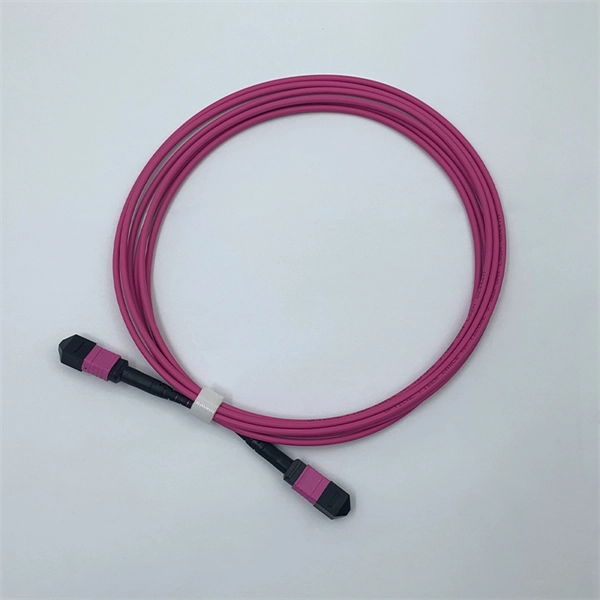
Selection of different ITU-T G.652 cabled -fibers in optical fiber networks
nuation started becoming the limiting factor in long transmission distance. This led to a resurgence of G.652 fiber types whic. is now the dominant fiber deployed in long- haul and metro -city networks.
G.652 : Characteristics of a single-mode optical fibre and cable
The file initially posted on 2 February 2017 was replaced on 11 May 2017 to update the History section.
Recommendation ITU -T G.652 (08/2024)
Recommendation ITU-T G.652 (08/2024) SERIES G: Transmission systems and media, digital systems and networks Transmission media and optical systems characteristics – Optical fibre cables
Differences Between G.652, G.655, and G.657 Fiber
Technical comparison of G.652, G.655 and G.657 fibers including refractive profiles, bending performance, dispersion, and application use cases.
G.652 Fiber: Differences and Applications of Each
G.652 fiber is the earliest type of single-mode optical fiber used and is currently the most widely used optical fiber in communication networks. Whether
Fiber Optic & Cable Standards Guide | FiberMania
This article introduces and explains the scope, application, and practical relevance of the eight most widely used fiber and optical cable
ITU-T Rec. G.652 (04/97) Characteristics of a single-mode optical fibre
This Recommendation covers the geometrical and transmissive properties of single-mode optical fibres and cables whose dispersion and cut-off are not shifted from the 1310 nm wavelength region.
ITU-T G.652: Single-Mode Optical Fiber Characteristics
ITU-T G.652 Recommendation details single-mode optical fiber and cable characteristics, including geometrical, mechanical, and transmission attributes.
G.652 vs G.655 Single Mode Fiber Comparison
G.652 is the standard single-mode fiber used in access and metro networks, optimized for 1310 nm transmission with normal dispersion at 1550
G652D vs G657 Fibers: Key Differences in Bend
Compare G652D, G657A1/A2, and G657B2/B3 single-mode fibers: bend radius, attenuation, and ideal uses. Weunion''s solutions for FTTH, data
Optical Fiber Types
NZ-DSF supports high-power signals and longer distances, as well as closely spaced DWDM (dense WDM) channels at rates of 10 Gbits/sec or higher. G.655 is optimized for WDM and long-distance
Characteristics of G.652 Optical Fiber
G.652.D is similar to G.652.B, but the allowed wavelength range is extended from 1360 nm to 1530 nm. When revising the G.652 optical fiber standard, it is hoped that the characteristics of the
G652 and G655 Single mode Fiber Optics guide
There are two primary sources of the specification of single-mode optical fiber. One is the ITU-T G.65x series, and the other is IEC 60793-2-50.
What is G652D Fiber Optic?
In summary, for long transmission distances exceeding 100 km (like LAN and MAN) and with cable curvature radii greater than 25 mm, the G652D
The difference between G.654 and G.652 optical fiber
G.654 optical fiber jumpers have lower attenuation than G.652 optical fiber jumpers, which makes them ideal for long-distance transmission of
Standard single-mode fiber introduction and classification
G.655B and G.655C the basic requirements are the same fiber, but G.655C fiber fiber optic cable PMD link design value of more stringent requirements, so G.655C fiber has a longer
ITU-T Rec. G.652 (03/2003) Characteristics of a single-mode optical
Summary This Recommendation describes the geometrical, mechanical, and transmission attributes of a single-mode optical fibre and cable which has zero-dispersion wavelength around 1310 nm. This
Single Mode Fiber Type: G652 vs G655 Fiber
With the increasing demand for greater capacity over long distance transmission, single mode fiber optic cable is designed with various versions.
Related Video Reference
This video was associated with the source search result. Verify technical details against current product documentation and project requirements.