
Fiber connection and distribution references
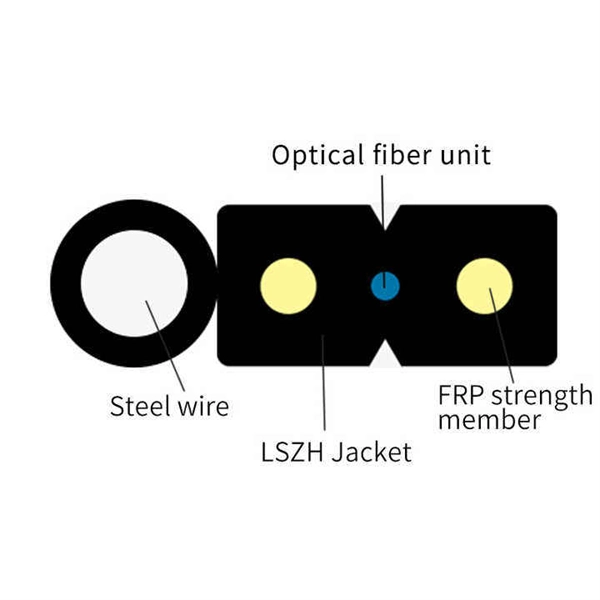
How Many Cores Do You Need in Your Fiber Optic Cable?
One key factor is the number of cores, which impacts how much data you can transmit. This post will guide you through understanding fiber optic cores and selecting the perfect cable for...
How to choose the number of fiber cores?
Common fiber cores include 1 core, 2 cores, 6 cores, 8 cores, etc., and there are many types. This article will focus on the number of fiber cores, introducing their respective characteristics
How Many Fibers Do You Need? Guide to Choosing Fiber Count
Learn how to choose the right fiber count for data centers, campuses, FTTH and backbone projects. Practical rules, sizing tips, and future-proof planning.
Selection of Fiber Type and Number of Cores
Experience: In the wiring room (horizontal wiring cabinet) of each floor, there is one optical fiber, generally six cores: two cores are used, two cores are reserved, and two cores are
Fiber Optic Cable Core Count – Types & Applications Guide
How many cores are in a fiber optic cable? Learn common fiber counts such as 1, 2, 12, 24, 48, and 144 cores and how they are used in FTTH and data centers.
How Many Cores Does a GYTA Cable Have? A Practical Guide for 2025
GYTA cable core count guide: Range from 2–576 cores. Learn core count selection for FTTH, custom options & how to pick the right GYTA core count for your network.
How Many Ethernet & Fiber Cables Fit Inside a Conduit? Updated
Even though fiber optic cables are typically thinner than Ethernet cables, it''s essential to plan for at least one fiber optic cable per destination to accommodate future bandwidth needs and
How does fiber optics work?
An easy-to-understand introduction to fiber optics (fibre optics), the different kinds of fiber optic cables, and how light travels down them.
How To Master Fusion Splicer For Fiber Optic Cables?
This comprehensive guide is designed to equip both novices and experts with the knowledge and techniques required for precise and stable fiber
How Much Temperature Can Optical Fiber Withstand? A Complete
Optical fiber transmits data via light pulses through a glass or plastic core, and its performance is highly dependent on environmental conditions—temperature being one of the most
The FOA Reference For Fiber Optics
High Fiber Count Cables may not be for everyone. Maybe only for a very few. A single cable that has as many fibers as 12-144 fiber cables (1728 fibers) in a
The FOA Reference For Fiber Optics
Fiber optic joints or terminations are made two ways: 1) splices which create a permanent joint between the two fibers or 2) connectors that mate two fibers to create a temporary joint and/or connect the
PDF document
PDF document PDF document Read this PDF document online, download the original file, and browse related details on device.report. Additional coding instructions can be found in the Article File chapter
How Deep is Fiber Optic Cable Buried: Installation Guide
Author: Hayden How Deep is Fiber Optic Cable Buried: Insights to Enhance Network Durability In an increasingly interconnected world, fiber optic
Fibre Optics: The Backbone of Modern Telecommunications
Answering the question: why fibre is today''s telecom backbone? Since the early 2000s, global telecommunications networks have steadily replaced traditional copper cables with fibre optic
The FOA Reference For Fiber Optics
Many high fiber count cables today are made from ribbons of fibers, usually 12 fibers per ribbon. Splitting all those fibers out to splice individually would be time
What Is a Ribbon Fiber Fusion Splicer? Complete Guide + Top Models
As fiber optic networks scale to meet the demands of 5G, hyperscale data centers, and FTTH mass deployments, ribbon fiber fusion splicers have become indispensable tools for network
13,824-Core Fiber Optic Cable: Furukawa Electric
Furukawa Electric''s Lightera begins mass production of the world''s highest-class 13,824-core ultra-high-density fiber optic cable. Learn how this
Related Video Reference
This video was associated with the source search result. Verify technical details against current product documentation and project requirements.