
Fiber connection and distribution references
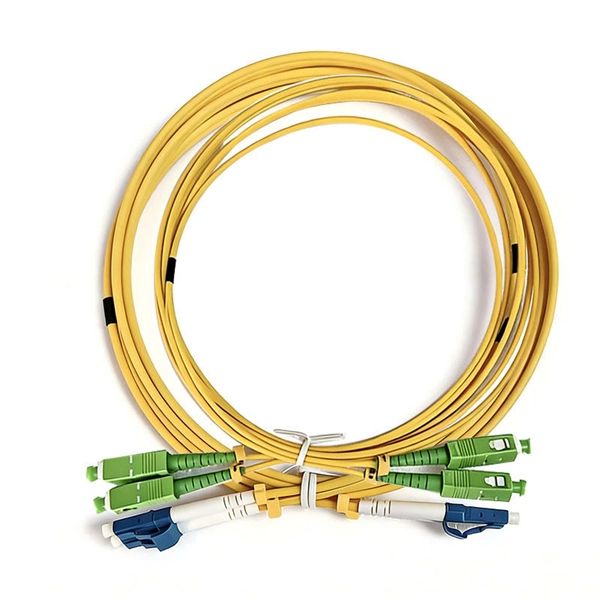
Fiber Optic Polarity 101: A-B Polarity
A duplex patch cord with A-B polarity carries a "straight-through" position, as seen in the example below. When facing an open port in the "Keyup" position, "B" will
Fiber Polarity Basics | Fluke Networks
An A-B duplex patch cord has a physical straight-through connection of two fibers between receiving (B) and transmitting (A) connectors. Because of this B to A and A to B connection,
Polarity Basics
In (A-B) polarity, the transmit signal on one end (fiber A) aligns with the receive signal on the opposite end (fiber B). This straight-through connection allows data to flow seamlessly between devices, and
MPO Polarity A, B, and C Explained for Data Center
Technical explanation of MPO polarity Types A, B, and C, including fiber mapping, key alignment, lane routing, and migration for 40G/100G/400G
Everything You Need to Know About Multimode Fiber Cable
Q: How does multimode fiber compare to single-mode fiber? Multimode fibers have larger core diameters, support multiple light modes, and are generally less expensive for short
What is MTP®/MPO Fiber Polarity and Do You Know the Polarity
Understanding Three Polarity Types of MTP®/MPO Cables The TIA-568 standard defines three distinct methods, Method A, Method B, and Method C, to ensure correct fiber polarity in
Multi-mode optical fiber
Multi-mode optical fiber is a type of optical fiber mostly used for communication over short distances, such as within a building or on a campus. Multi-mode links can be used for data rates up to 800 Gbit/s.
The Ultimate Guide to Multimode Fiber Optic Cable
Therefore, this guide focuses on the technical characteristics, areas of use, and advantages of multimode fiber optic cables to systematically
Multimode Fibers – optical glass fiber, large-core fibers,
We discuss various aspects of multimode fibers: their main parameters, launching light into multimode fibers, output beam profiles, graded-index designs and others.
Fiber Optic Cable Types – Multimode and Single Mode
Application Fiber Optic connectors and cables are present in nearly every communications project that we might sell into, be it a DAS installation or a Base Station with wireless backhaul, you can be
Multimode Fiber Optic Cable Types: OM1 vs OM2 vs OM3 vs OM4 vs
Multimode fiber optic cable types OM1, OM2, OM3, OM4 and OM5 compared for core size, bandwidth, speed, distance & applications in modern networks.
Multimode Fiber Types: OM1 vs OM2 vs OM3 vs OM4 vs OM5
How Many Types of Multimode Fiber? Identified by ISO 11801 standard, multimode fiber optic cables can be classified into OM1 fiber, OM2 fiber, OM3 fiber, OM4 fiber and newly released
Fiber Optic Cable Types | Omnitron Systems Guide
Conclusion Understanding fiber optic cable types, fiber core sizes, and proper installation methods is essential for building high-speed, reliable fiber networks.
Single Mode vs Multimode Fiber: A Complete Comparison Guide
Understand the difference between fibers: single mode offers long-distance, high bandwidth, while multimode suits short runs and lower costs.
Understanding Fiber Optic Cable and Connector Colors
Remember the fiber tip at some point will connect or mate with another fiber assembly or a piece of equipment. With all this being said, the industry uses colors to help identify the connector
Understanding Fiber Optic Cables and Connectors
Fiber Optic Cable Types and Attributes 2.2 Singlemode (SMF) vs. Multimode (MMF) Fiber Optic Cables As bandwidth demand increases, a large number of data
Fiber Polarity: Everything you Need to Know
Successful installation of a fiber-optic network employing multi-fiber push on (MPO) cables and connectors relies on several considerations, one of the most important of these is fiber
Fiber Optic Basics
For multimode fibers, with their large cores, optical fiber positioners can achieve good coupling efficiency. Single-mode fibers require more elaborate couplers with submicron positioning resolution,
Related Video Reference
This video was associated with the source search result. Verify technical details against current product documentation and project requirements.