KENHARDT OPTICALNetworks across Africa Talk through a project
Fiber systems / Technical reading Optical reference library

High Voltage Relay Protection Scheme

Inside this technical reference
Source context

AI source overview

High voltage relay protection technology safeguards electrical systems by detecting faults, isolating affected sections, and ensuring reliable operation through electromechanical, digital, and hybrid relays.

Overview of High Voltage Protection

High voltage systems, typically operating above 1,000 volts, are critical for power transmission and industrial applications but are vulnerable to faults such as short circuits, current surges, and voltage transients caused by lightning or switching operations. Effective protection mechanisms are essential to prevent equipment damage, power outages, and safety hazards. Relays serve as the primary devices for detecting anomalies and initiating isolation of faulted sections to maintain system stability.

Principles of Protective Relaying

Protective relays operate based on several key principles: Selectivity: Only the faulty section is disconnected, leaving the rest of the network operational. Sensitivity: Detects minor abnormal conditions before they escalate into major faults. Speed: Rapid operation minimizes damage and reduces fault clearance time.

Reliability: Ensures correct operation without unnecessary tripping. Simplicity and Economy: Relays must be easy to configure and maintain while providing optimal protection.

Types of High Voltage Relays

Overcurrent Relays: Operate when current exceeds preset thresholds, commonly used for general protection. Distance (Impedance) Relays: Measure line impedance to detect fault location, ideal for long transmission lines. Differential Relays: Compare currents at two ends of a protected zone; used for transformers, generators, and busbars.

Directional Relays: Detect the direction of power flow, useful in meshed networks and backup protection. Pilot Relays: Coordinate protection over long lines using communication channels like fiber optics or PLC.

Modern Relay Technologies

Digital Relays

Digital relays use computational algorithms to process signals from current and voltage sensors, converting analog inputs into digital data for real-time fault detection. They offer: Programmability: Customizable protection schemes for specific operational requirements. Fast Response: Quicker fault detection and isolation compared to electromechanical relays.

Integration: Seamless connection with SCADA systems for remote monitoring and control.

Hybrid Relays

Hybrid relays, such as the HVR10, combine electromechanical contacts with semiconductor technology to provide arc-free, wear-free switching. They can handle high currents and voltages (up to 2,000 A/1,000 V) and include self-monitoring functions to signal critical operating conditions, enhancing reliability and endurance.

Electromechanical High Voltage Relays

Traditional high voltage relays are heavily insulated electromechanical devices designed for voltages up to 70 kVDC and currents up to 1,000 A. They feature vacuum or ceramic-enclosed contacts to prevent arcing and maintain low, stable contact resistance over their lifecycle.

Protection Schemes

Primary and Backup Protection: Primary relays act closest to the fault, while backup relays provide redundancy. Zone Protection: Transmission lines are divided into zones (Z1, Z2, Z3) for selective fault clearance.

Unit and Non-

Unit Protection: Unit protection uses differential principles within a defined zone; non-unit protection relies on distance or overcurrent methods.

Pilot-

Aided Schemes: Use high-speed communication to coordinate protection across long lines.

Standards and Communication

Modern high voltage protection systems adhere to standards such as IEC 60255 and IEEE C37 series, ensuring interoperability and reliability. Communication protocols like IEC 61850 enable faster, smarter, and standardized relay interactions within the network.

Conclusion

High voltage relay protection technology integrates electromechanical, digital, and hybrid relays to detect faults, isolate affected sections, and maintain system stability. Advanced digital and hybrid relays enhance speed, reliability, and monitoring capabilities, while protection schemes and standards ensure selective, sensitive, and coordinated operation across complex high voltage networks.

Research context

Reference summary

Protective Relaying in High Voltage Networks: Explore principles and configurations of protective relaying in high voltage systems. Ensure fast, selective.

From reference to enquiry

Questions for your project

Use these editorial prompts alongside the linked excerpts. They identify items to confirm for your project.

Detailed reading / connection to installation

Fiber connection and distribution references
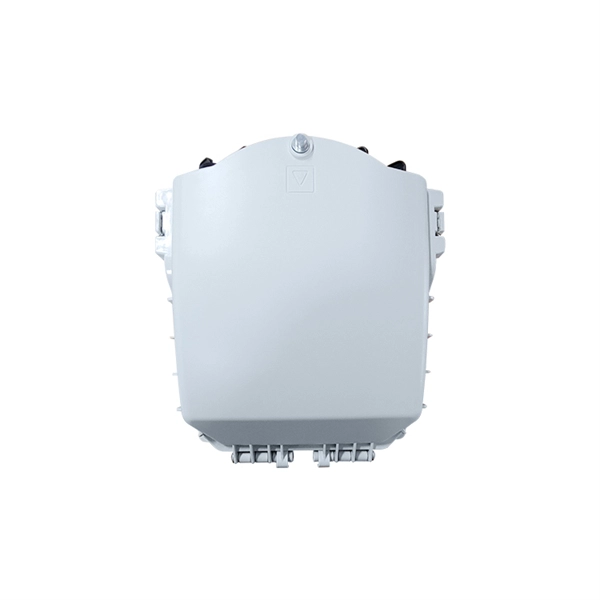
High Voltage Relay Protection Scheme
Equipment illustration / verify against the selected product

Protective Relaying in High Voltage Networks:

Explore principles and configurations of protective relaying in high voltage systems. Ensure fast, selective fault clearance per IEC/IEEE standards.

Power System Protective Relays: Principles & Practices

Abstract: Protective relays and devices have been developed over 100 years ago to provide “last line” of defense for the electrical systems. They are intended to quickly identify a fault and isolate it so the

Protective Relaying in High Voltage Networks: Principles and

This article delves deeply into the principles, types, and configurations of protective relaying in HV networks, aligning with global standards like IEC 60255 and IEEE C37 series.

Relay Protection in HV/MV Substations: Calculations, Settings

Relay protection is essential to ensure the stability, reliability, and safety of electrical power systems. In HV (High Voltage) and MV (Medium Voltage) substations, relay protection...

Transmission Line Protection: Schemes & Relay Zones

Transmission line protection is the coordinated use of relays, instrument transformers, circuit breakers, communication channels, and backup logic to detect faults on high-voltage lines and

Protection Schemes for Electrical Power System

Then moved forward to the discussion on the factors that need to consider when designing a relay-based protection scheme. Then we introduced Overcurrent Relays, Directional

Protective Relays: Types, Working Principle & Uses

These instrument transformers let the relay monitor high-voltage or high-current equipment using safer secondary signals. The accuracy, polarity, ratio, burden, and saturation

Basic protection relay knowledge

A fast and selective arc fault mitigation for air-insulated LV & MV switchgear and Relion protection and control relays and sensor technology protect staff and plant facilities for many years.

Protective Relays High Voltage Transmission Line Protection with

An Integrated Single Pole (or Selective Pole) Tripping Scheme utilizes the same measuring functions to perform both (a) and (b) above while a Separated Scheme would use one set of functions to

ANSI device numbers

87U - Unrestrained Differential 87V - Voltage Differential 87Z - High-Impedance Differential 88 - Auxiliary Motor or Motor Generator 89 - Line Switch 90 - Regulating Device 91 - Voltage Directional Relay 92 -

Switchgear

Typically, switchgear in substations is located on both the high- and low-voltage sides of large power transformers. The switchgear on the low-voltage side of the

SEL-751 Feeder Protection Relay | Schweitzer Engineering Laboratories

The SEL-751 Feeder Protection Relay is ideal for directional overcurrent, fault location, arc-flash detection, and high-impedance fault detection applications.

Protection Relays | Medium & high voltage power system protection

Discover protection relays for generators, motors, transformers, feeders and busbars, designed for reliable and efficient power system protection.

IEC homepage

IEC everywhere for a safer and more efficient world. The IEC is a global, not-for-profit membership organization that brings together more than 170 countries and coordinates the work of 20,000

SEL-351 Protection System | Schweitzer Engineering Laboratories

The SEL-351 Relay has built-in Ethernet and IEEE C37.118 synchrophasors, and is ideal for directional overcurrent applications. Optional Mirrored Bits® communications and power quality monitoring add

Feeder protection and control

Feeder protection, or more exactly protection for overhead lines and cables, is the most commonly used type of protection. The protection has to ensure that the power grid continues to supply energy. In

HV Project Manager at SOLV Energy

SOLV Energy is a leading provider of infrastructure services to the power industry, designing, building and maintaining utility scale solar, battery storage and high voltage substation projects

Senior Power Engineer, Utility Interconnection at DLB Associates

5+ years of progressive energy storage or power systems engineering experience, with demonstrated depth in protection & control (P&C) design (8+ years preferred). Experience supporting engineering

Related Video Reference

This video was associated with the source search result. Verify technical details against current product documentation and project requirements.

Make the connection clear

Share the fiber interfaces, termination capacity, cable route and evidence required for handover.

Send a project brief