KENHARDT OPTICALNetworks across Africa Talk through a project
Fiber systems / Technical reading Optical reference library

Fiber Optic Coupler Telecommunications

Inside this technical reference
Source context

AI source overview

Fiber optic couplers are passive devices that split, combine, or distribute optical signals, enabling efficient data transmission and network flexibility in telecommunication systems.

Overview and Function

A fiber optic coupler is a passive optical device that manages the flow of light between two or more optical fibers, either splitting a single input signal into multiple outputs or combining multiple signals into one. Unlike active devices, couplers require no electrical power and are essential for signal monitoring, redundancy, and bidirectional communication in networks. They act as the “traffic managers” of light, ensuring data is efficiently routed within fiber optic systems.

Types of Fiber Optic Couplers

Fused Biconical Taper (FBT) Couplers: Created by heating and stretching two or more fibers until they fuse, allowing light to transfer between fibers. They are cost-effective and widely used in small-scale networks. Planar Lightwave Circuit (PLC) Couplers: Utilize a flat waveguide chip to split light evenly across multiple outputs.

PL

C couplers are compact, stable, and suitable for large-scale networks requiring uniform signal distribution. Wavelength Division Multiplexing (WDM) Couplers: Combine or separate light of different wavelengths, enabling multiplexing and demultiplexing for high-capacity data transmission. Mechanical Couplers: Align fibers within a fixture to minimize signal loss, often used in temporary or adjustable setups.

Star Couplers: Centralized couplers that distribute signals from one input to multiple outputs, commonly used in local area networks.

Working Principles

Couplers operate based on optical fusion, evanescent field coupling, or waveguide design.

In FB

T couplers, fibers are twisted, heated, and stretched to create a coupling region where light can transfer between cores. The splitting ratio—the proportion of light distributed to each output—is determined by the fused length and wavelength of the light.

PL

C couplers use planar waveguides to achieve precise, wavelength-insensitive splitting, making them ideal for complex networks.

WD

M couplers rely on wavelength-selective components to combine or separate signals efficiently.

Applications in Telecommunication Networks

Fiber optic couplers are integral to telecommunication and data networks, including: Passive Optical Networks (PON): Distribute signals from a central office to multiple subscribers, such as in fiber-to-the-home (FTTH) systems.

CAT

V and Internet Services: Split signals to deliver television and broadband services to multiple endpoints. Signal Monitoring and Redundancy: Enable network operators to tap signals for monitoring without disrupting service. Multiplexing and Demultiplexing: WDM couplers allow multiple wavelength channels to share a single fiber, increasing network capacity.

Key Considerations

When selecting a coupler, network designers must consider: Insertion Loss: Lower insertion loss ensures minimal signal degradation. Return Loss: High return loss prevents signal reflection and interference. Splitting Ratio: Determines how the input signal is divided among outputs, e.g., 50: 50 or 90: 10.

Fiber Type: Single-mode fibers allow long-distance transmission with minimal modal dispersion, while multimode fibers are suitable for shorter distances and cost-effective LED sources. Fiber optic couplers are thus critical components that enhance network flexibility, efficiency, and scalability, making them indispensable in modern telecommunication infrastructure.

Research context

Reference summary

Fiber Optic Couplers | Fiber Optical ST Couplers for Sale | RSFiber Optic Couplers Whether you're building a high-capacity data center or maintaining a loc.

From reference to enquiry

Questions for your project

Use these editorial prompts alongside the linked excerpts. They identify items to confirm for your project.

Detailed reading / connection to installation

Fiber connection and distribution references
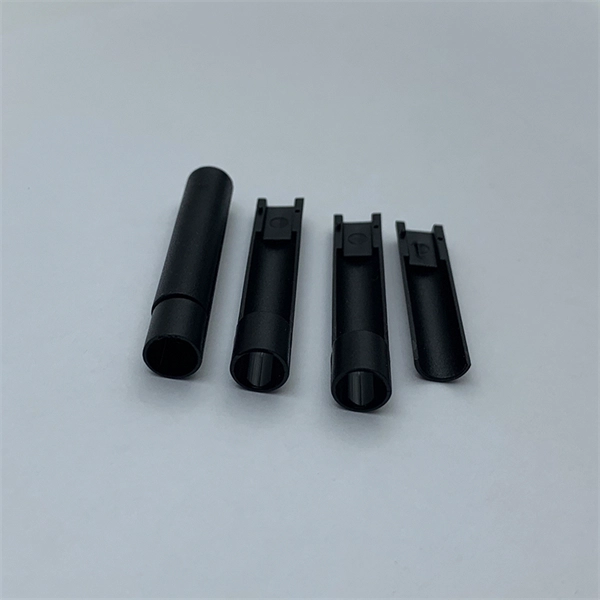
Fiber Optic Coupler Telecommunications
Equipment illustration / verify against the selected product

Fiber Optic Couplers | Fiber Optical ST Couplers for Sale | RS

Fiber Optic Couplers Whether you''re building a high-capacity data center or maintaining a local telecommunications hub, selecting the right fiber coupler maintains signal integrity and minimizes

Demystifying the Fiber Optic Coupler: The Unsung Hero

A fiber optic coupler splits or combines light signals in optical networks, improving data flow, reliability, and network flexibility for various

Fused Fiber Optic Couplers / Splitters

Thorlabs offers a varied selection of single mode (SM), polarization-maintaining (PM), multimode (MM), and double-clad fiber couplers, as well as 1x8 and 1x16 SM PLC splitters; 1x4, 1x8, and 1x16 PM

Fiber optic coupler types, specs, and applications

Fiber optic coupler types, specs, and applications explained, including port configurations, insertion loss, and how to select the right coupler for your

Variable Fiber Optical Couplers: $250M by 2025, 12% CAGR Analysis

The Variable Fiber Optical Couplers market is projected to reach $250 million by 2025, expanding at a 12% CAGR. Analyze market drivers, key segments, and strategic insights.

Multimode Fiber Optic Couplers | Fiber Optic Couplers

Newport''s Fiber Optic Coupler family has been developed using fused fiber technology. These multimode fiber optic couplers allow bi-directional coupling

G&H Fiber Optics | Components And Modules

G&H''s line of active and passive fiber optics components and modules offer performance and reliability, whether you want a customized or off the shelf product.

Prism Coupler Market: Size, Status & Forecast (2026-2033)

The Prism Coupler market has seen significant growth due to advancements in optical technologies and increasing demand in telecommunications and sensing applications.

Iran Fiber Optic Component Market (2025-2031) | Trends, Outlook

Market Forecast By Component Type (Fiber Optic Connectors, Fiber Optic Couplers, Fiber Optic Splitters, Fiber Optic Transceivers, Others), By Application (Telecommunications, Industrial

Sierra Leone Fiber Optic Component Market (2025-2031) | Trends,

6Wresearch actively monitors the Sierra Leone Fiber Optic Component Market and publishes its comprehensive annual report, highlighting emerging trends, growth drivers, revenue analysis, and

SC-SC Simplex Fiber Flange Coupler Fiber Optic Adapter Carrier

Description SC-SC Simplex Fiber Flange Coupler Carrier Grade Flange Connector Fiber optic Adapter Description L-com''s single-core and dual-core plastic LC couplers are specially designed to be

FIBER OPTICAL COMMUNICATIONS (R17A0418)

Historical Development First developed in the 1970s, fiber-optics have revolutionized the telecommunications industry and have played a major role in the advent of the Information Age.

Types of Optical Fibers: Single-Mode vs. Multimode, Applications and

Types of optical fibers, their applications and future trends is the topic of this blog article. Optical fibers are among the most transformative technologies in modern photonics, quietly enabling

A Comprehensive Guide to Fiber Optic Adapters – VCELINK

Fiber optic adapters are available in various types to accommodate different kinds of fiber connectors. They are widely used in optical distribution frames, fiber optic telecommunications,

fiber optic adaptors | B2B companies and suppliers | europages

33 Companies and suppliers for fiber optic adaptors Find wholesalers and contact them directly Leading B2B martketplace Find companies now!

Overview of Optical Fiber Connector Market 2026-2033: Growth

The optical fiber connector market is set for substantial growth between 2026 and 2033, bolstered by technological advancements, rising data consumption, and the increasing importance of

Fiber Couplers/Splitters/Combiners

We offer a full line of fiber optic couplers and splitters supporting SM, MM, PM, large core, and double-clad fibers across 300–2000 nm, with power handling up to 100 W and operating temperatures up to

How a Fiber Coupler Works: From Physics to Manufacturing

Fiber couplers are components across diverse technological sectors that rely on light-based communication and sensing. In telecommunications, they form the backbone of Passive

Related Video Reference

This video was associated with the source search result. Verify technical details against current product documentation and project requirements.

Make the connection clear

Share the fiber interfaces, termination capacity, cable route and evidence required for handover.

Send a project brief