KENHARDT OPTICALNetworks across Africa Talk through a project
Fiber systems / Technical reading Optical reference library

Fiber Optic Communication Fault Points

Inside this technical reference
Source context

AI source overview

Fiber optic faults commonly occur at physical breaks, splices, connectors, bends, and areas exposed to environmental or mechanical stress.

Physical Fault Points

Fiber breaks are the most critical fault points, where optical continuity is interrupted, preventing light from propagating through the fiber. These breaks often occur in areas of mechanical stress, such as where the cable changes direction, enters a new environment, or is improperly handled near splice trays. Repeated maintenance or excessive pressure from clamps and ties can also create localized weaknesses that eventually lead to breaks.

Splice points and connectors are frequent fault locations. Poorly executed splices, contamination, or connector misalignment can cause signal attenuation or intermittent loss. Even minor surface contamination on connectors can significantly degrade performance.

Environmental and Installation-

Related Faults

Fiber optic cables are sensitive to environmental factors. Outdoor deployments may experience temperature extremes, moisture ingress, or physical impacts from construction or wildlife. High-altitude or harsh environments can exacerbate stress on splices and fiber strength, increasing the likelihood of faults.

Bends and kinks in the fiber, especially sharp bends beyond the fiber's minimum bend radius, can cause microbending or macrobending losses, leading to signal degradation over time.

Hardware and Network-

Related Faults

Faults can also arise from hardware failures, such as faulty transceivers, switches, or routers. Configuration errors, firmware bugs, or IP conflicts may mimic physical faults by causing signal loss or high bit error rates.

Detection and Localization

Faults are typically detected using Optical Time Domain Reflectometers (OTDRs), which measure signal reflections and losses along the fiber to pinpoint the exact location of breaks or high-loss points. Visual fault locators (VFLs) and fiber optic testers are also used for identifying visible breaks, bends, or connector issues. Advanced techniques, including wavelet transforms and digital signal processing, improve fault detection accuracy in long or high-altitude fiber links.

Summary

In fiber optic communication, fault points are concentrated at physical breaks, splices, connectors, bends, and areas exposed to environmental or mechanical stress. Proper installation, regular maintenance, and the use of diagnostic tools like OTDRs are essential to minimize faults and maintain network reliability.

Research context

Reference summary

White Paper: Troubleshooting Fiber Problems within a fiber link can occur due to a wide variety of reasons. A very common problem is that a connector is no.

From reference to enquiry

Questions for your project

Use these editorial prompts alongside the linked excerpts. They identify items to confirm for your project.

Detailed reading / connection to installation

Fiber connection and distribution references
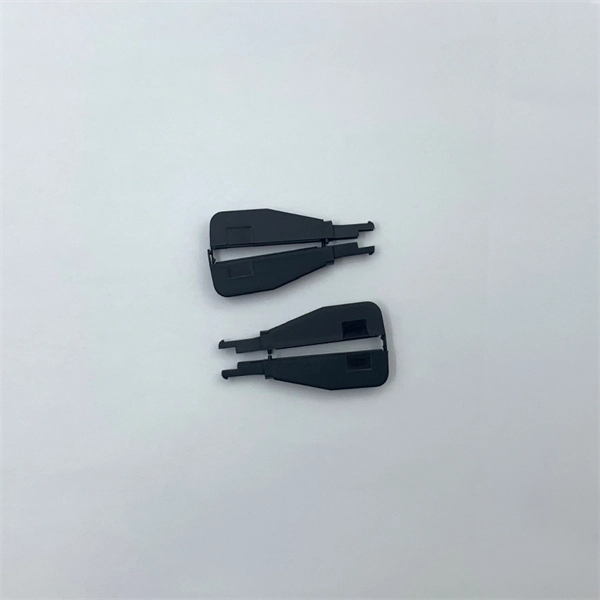
Fiber Optic Communication Fault Points
Equipment illustration / verify against the selected product

White Paper: Troubleshooting Fiber

Problems within a fiber link can occur due to a wide variety of reasons. A very common problem is that a connector is not fully engaged - often hard to notice in

Fiber Network Troubleshooting – Common Issues & Fixes

Learn how to troubleshoot fiber networks. Identify common issues like high loss, dirty connectors, and signal drops, with practical solutions for optical links.

Fiber Optic Cable Series Troubleshooting

The table below presents the primary faults of fiber optic cables. By employing an enumerative method based on the collected fault information, the fault can be comprehensively determined.

Troubleshooting Fiber

In fact, contamination remains the leading cause of fiber failures—dust, fingerprints and other oily substances cause excessive loss and sometimes permanent damage to connector end faces. The

Fiber Optic Troubleshooting Guide: Problems, Tools & Solutions

Learn how to troubleshoot fiber optic cables with common problems, a step-by-step process, essential tools, and proven solutions for stable network performance.

A Fault Location Analysis of Optical Fiber Communication Links

The proposed technology detects fiber optic faults in high-altitude environments, with an average measurement accuracy improvement of 9.8%. The maximum distance for detecting fiber

Common Fiber Optic Cable Problems And How To Troubleshoot Them

Most real-world faults are prevented or fixed by neat cable management, clean end-faces and a disciplined, documented test workflow. Stick to that sequence and you''ll resolve the majority of

A Fault Location Analysis of Optical Fiber Communication Links

Breakage and damage of fiber optic cable fibers seriously affects the normal operation of fiber optic networks, and it is important to quickly and accurately determine the type and location of

Optical Fibre Communication Feature Analysis and Small Sample

To solve the problems of a few optical fibre line fault samples and the inefficiency of manual communication optical fibre fault diagnosis, this paper proposes a communication optical

What are the most common fiber optics problems?

Fiber optic communication uses pulses of light to transmit data along thin strands of glass or plastic. Because the technology is reliable and supports

Fiber Optic Troubleshooting: Expert Guide for Common Issues

Fiber optic troubleshooting is an essential skill for network administrators, technicians, and engineers responsible for maintaining and repairing fiber optic systems. These high-speed, high

A comprehensive analysis of common faults in communication fiber optic

Communication fiber optic cables are the backbone of modern telecommunication networks, enabling high-speed data transmission over long distances. However, these cables are

Joint break-point localization sensing based on OFDR

Through intensity modulation, communication information is modulated onto the optical signal, thereby enabling the concurrent realization of optical fiber communication based on intensity

Study of Fault Detection Techniques for Optical Fibers

In optical fiber communication, optical time domain reflectometry (OTDR) is a commonly used technique for characterization and fault location of optical fiber transmission systems.

Fiber Optic Network Problems: Causes and Fixes

Identifying and Diagnosing Fiber Optic Issues To effectively diagnose these problems, network professionals typically use a range of tools, including Optical

Optical Fibre Line Failure Detecting

Fibre-optic cable is the channel for signal transmission. It is an important component in the entire fibre-optic network. Once the fibre-optic cable fault happened, the entire communication system would be

Fault summary of fiber optic transceivers

Fiber optic transceivers are essential components in modern network infrastructures, facilitating the conversion and transmission of data between

Fiber Optic Troubleshooting Guide: Problems, Tools & Solutions

Fiber optic networks are the backbone of modern data centers and communication systems, valued for their high bandwidth, low latency, and reliable connectivity. However, faults can

Related Video Reference

This video was associated with the source search result. Verify technical details against current product documentation and project requirements.

6 questions about “Fiber Optic Communication Fault Points”

How can one identify a broken fiber optic cable?

To identify a broken fiber optic cable, start by performing a visual inspection for any physical signs of damage, such as bends, cracks, or breaks...

What methods are used to test fiber optic cables without a tester?

There are several methods to test fiber optic cables without a tester. One method is using a visual fault locator (VFL), as mentioned earlier, to v...

What are the causes of intermittent fiber optic connections?

Intermittent fiber optic connections can be caused by a variety of factors, including: Poorly terminated connectors or splices that result in unsta...

How does end face contamination impact fiber optic performance?

End face contamination negatively impacts fiber optic performance by increasing signal loss, reflection, and scattering. Contaminants such as dirt,...

What factors contribute to fiber optic degradation?

Fiber optic degradation can be caused by several factors, such as: Physical stress on the cable, including bending, twisting, or crushing, which ma...

How can I resolve issues when my fiber internet is not functioning?

When your fiber internet is not functioning, follow these steps to resolve the issue: Verify that all connections are secure and properly seated, i...

Make the connection clear

Share the fiber interfaces, termination capacity, cable route and evidence required for handover.

Send a project brief