
Fiber connection and distribution references
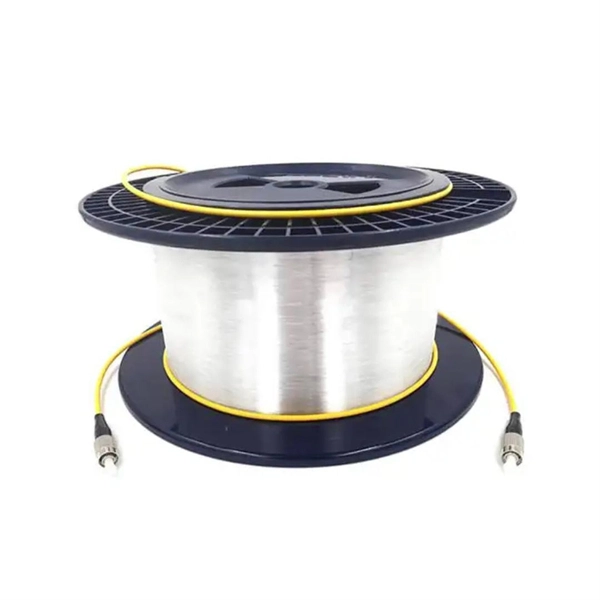
Fiber Optical Variable Attenuators
We offer the industry''s most extensive selection of fiber variable optical attenuators (VOAs), addressing all application scenarios with best-in-class performance and
Fiber Optic Attenuators: Wiki, Types, When and How to Use
Learn what fiber optic attenuator is, how it reduces the power level of an optical signal, different types of optical attenuators, and when and how to use them.
Attenuators | OZ Optics Ltd.
OZ Optics offers a broad range of both variable and fixed attenuators having key competitive advantages. All of our attenuators operate over the two standard wavelength bands, the C-Band and
Fiber Optic Attenuation Calculator | Fiberopticx
This calculator helps you estimate the total attenuation (signal loss) in a fiber optic cable link. Here are the details and instructions about each field and how they contribute to the calculation:
Optical attenuator
An optical attenuator, or fiber optic attenuator, is a device used to reduce the power level of an optical signal, either in free space or in an optical fiber. The basic types of optical attenuators are fixed, step
Fiber-optic Attenuators – fixed or variable attenuation,
Fiber-optic attenuators adjust optical signal power levels, for example in fiber-optic links. The degree of attenuation may be fixed or variable.
MPS-2500
The MPS-2500 from Microwave Photonic Systems is a Fiber Optic Attenuator with Attenuation >40 dB, Insertion Loss -70 dB, Operating Wavelength 1260 to 1650 nm. More details
Attenuators
VIAVI offers the industry''s most complete range of optical attenuators for installation and maintenance of singlemode and multimode fibers and advanced, photonic-layer solutions for lab and production
Understanding Fiber Optical Attenuators: Functions And Guidelines
Therefore, fiber optical attenuators play a crucial role in optical communication systems. So, what is an fiber optical attenuators? And what is its function?
Everything You Need to Know About Fiber Attenuators
A Fiber Attenuator is a device used in the field of optical communications, specifically designed to reduce the power level of an optical
Electronic Variable Optical Attenuators (EVOAs) with
In-Line Fiber Optic Power Monitor for 1310 nm, 1550 nm, or User-Calibrated Wavelength Maximum Attenuation of >25 dB Input Power up to 200 mW FC/APC
MPS-2500 Singlemode Variable Optical Attenuator
This ensures optimum system return loss and attenuation vs. wavelength flatness. Our Variable Optical Attenuator offers multi-wavelength capability to support WDM, CWDM and DWDM network
Optical Signal Attenuation and Dispersion | Springer Nature Link
Among the optical devices that may use a specialty fiber are light transmitters, light signal modulators, optical receivers, wavelength multiplexers, light couplers and splitters, optical amplifiers,
Fiber Optic Attenuators Information
Fiber Optic Attenuator Methods of Attenuation Fiber optic attenuators use several methods of attenuation including air gaps, microbends, acousto-optic
Choosing the Right Fiber Optic Attenuator
Helpful buying guide for fiber optic attenuators. Compare fixed and variable options, understand key parameters to consider and learn application-specific selection tips. Get insights on
Electronic Variable Optical Attenuators, Voltage Controlled
The optical fiber built into each device is single mode over the specified operating wavelength range. Driving voltages of 0 to 5 V control optical transmission, which decreases with applied voltage.
Fiber Attenuators
Product PortfolioAMS Technologies carries a broad range of fiber attenuators that provide fixed or variable attenuation of optical signals in optical fibers. Variable attenuators are available for manual
GoPhotonics Features Fiber Optic Attenuators for Accurate Photonics
GoPhotonics showcases a comprehensive selection of high-performance fiber optic attenuators engineered for precise and reliable optical power control across key telecommunication