KENHARDT OPTICALNetworks across Africa Talk through a project
Fiber systems / Technical reading Optical reference library

Electric Optical Cable Relay

Inside this technical reference
Source context

AI source overview

An electric optical cable relay is a protective and control device that uses fiber-optic cables to transmit signals, providing electrical isolation, interference immunity, and precise monitoring in power systems.

Overview

Electric optical cable relays combine relay protection functions with fiber-optic communication to monitor, control, and protect electrical equipment. Unlike traditional copper wiring, optical fibers are immune to electromagnetic interference (EMI) and high-voltage hazards, making them ideal for harsh electrical environments. These relays detect abnormal electrical conditions, such as overcurrent, ground faults, or insulation failures, and can rapidly trip circuit breakers to prevent equipment damage and ensure personnel safety.

How They WorkFiber-optic relays operate by transmitting electrical measurements, such as current or voltage, through optical fibers rather than metallic conductors. For example, resistance temperature detectors (RTDs) embedded in motors can connect to a motor-protection relay via fiber-optic cables, ensuring that any insulation failure does not propagate damaging currents to the relay or control system. In differential protection schemes, the relay compares current magnitudes and phase angles at both ends of a cable feeder, operating only when a fault is detected within the protected zone.

Advantages

Electrical Isolation: Optical fibers prevent induced voltages and ground potential rise from affecting the relay or control system.

Interference-

Free Signaling: Fiber optics eliminate noise from longitudinal induction or differential mode coupling, ensuring accurate fault detection. Enhanced Safety: Reduces risk to personnel by isolating high-voltage circuits from monitoring equipment. Reliable Communication: Supports real-time data transfer, event reporting, and diagnostics without interrupting relay service.

Substation Modernization: Fiber-optic relays can replace long copper runs in substations, reducing construction costs and improving protection and monitoring capabilities.

Applications

Electric optical cable relays are widely used in: High-voltage cable protection: Differential relays with fiber-optic pilot wires protect buried or overhead cables. Substation automation: Relays communicate with control houses and process bus networks over fiber-optic cables, enabling digital monitoring and control. Motor and generator protection: Fiber-optic links connect RTDs and other sensors to relays, providing safe and accurate monitoring.

Harsh environments: Optical relays are suitable for areas with high EMI, lightning exposure, or extreme temperatures.

Conclusion

Electric optical cable relays integrate fiber-optic communication with protective relaying, offering high-speed fault detection, electrical isolation, and reliable monitoring. They are essential in modern power systems, substations, and industrial applications where safety, accuracy, and immunity to interference are critical.

Research context

Reference summary

A submarine communications cable is a cable laid on the between land-based stations to carry across stretches of ocean and sea. The first submarine communications cables were laid beginning in the 1850s and carried traffic, establishing the first instant telecommunications links between continents, such as the first which became operational on 16 August 1858. By 1872 all the continents.

Additional context

Source notes

A submarine communications cable is a cable laid on the between land-based stations to carry across stretches of ocean and sea.
The first submarine communications cables were laid beginning in the 1850s and carried traffic, establishing the first instant telecommunications links between continents, such as the first which became operational on 16 August 1858. By 1872 all the continents …

From reference to enquiry

Questions for your project

Use these editorial prompts alongside the linked excerpts. They identify items to confirm for your project.

Detailed reading / connection to installation

Fiber connection and distribution references
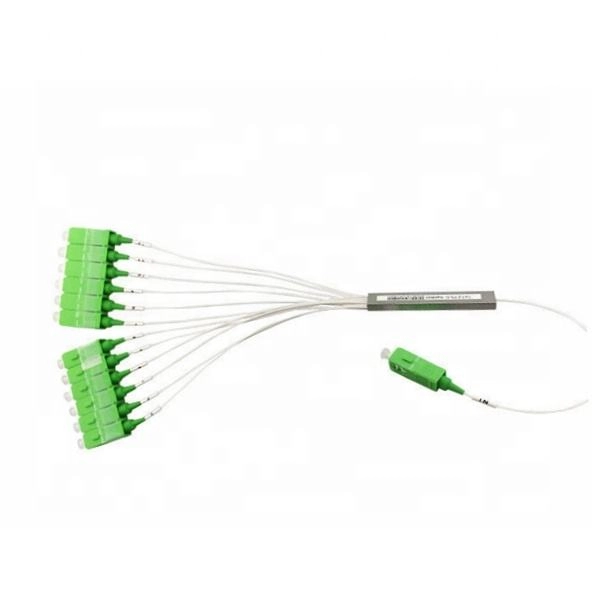
Electric Optical Cable Relay
Equipment illustration / verify against the selected product

How Optical Fiber is Used in Electrical Power Systems

A RTD has built-in fiber optic ports to connect to a motor-protection relay using a fiber optic cable. If insulation of the motor winding fails, damaging currents can

Submarine communications cable

OverviewEarly history: telegraph and coaxial cablesModern historyImportance of submarine cablesVulnerabilities of submarine cablesEnvironmental impactSee alsoFurther reading

A submarine communications cable is a cable laid on the seabed between land-based stations to carry telecommunication signals across stretches of ocean and sea. The first submarine communications cables were laid beginning in the 1850s and carried telegraphy traffic, establishing the first instant telecommunications links between continents, such as the first transatlantic telegraph cable which became operational on 16 August 1858. By 1872 all the continents

Products

Use arc-flash detection cables with SEL-751 and SEL-751A Relays to protect people and equipment from arc-flash events. Safely connect SEL fiber-optic

LCB II Current Differential Relay (with DIN Connectors) Instruction

The user cuts the cable in half for splicing to his cable bundle or connects directly with the appropriate optical connector. All external connec-tions to the relay are made to terminal blocks

Contact Closure Over Fiber Converter | Dry Contact /

The Thor Fiber Contact Closure over Fiber Converter enables reliable transmission of dry contact (relay), GPIO, and alarm signals over long distances using fiber

send a direct closed command via fiber optic cable

Schneider Electric support forum about Protection Relays, Substation Controllers & RTUs, Arc Flash Devices & Systems in Medium Voltage and Low Voltage. A place to get support on

Interface Relays and Optocouplers

Environmentally friendly, cadmium-free and lead-free, ABB interface relays and optocouplers meet RoHS requirements. Complete versions consisting of a relay,

Optical Relay: A Comprehensive Review and Guide for Tool

This blog explains what an optical relay is, how it works using an optical coupler, and its role in providing electrical isolation. It covers selection criteria, installation steps, common issues, and benefits in

SEL-9220 Fiber-Optic Adapter for SEL-300 Series Relays

Convert the EIA-485 port of an SEL-300 series relay to a point-to-point fiber-optic port. Improve safety, signal integrity, and reliability by using two optical fibers instead of wire to transfer bidirectional serial

What Is ADSS Cable? Complete Guide to Self-Supporting Fiber Optic Cable

For utilities operating in high-voltage environments, ADSS fiber optic cable offers a practical solution for establishing long-distance communication networks while minimizing installation

ITPro Today, Network Computing, IoT World Today combine

ITPro Today, Network Computing and IoT World Today have combined with TechTarget . The page you are looking for may no longer exist.

Heading 8536

Electrical apparatus for switching or protecting electrical circuits, or for making connections to or in electrical circuits (for example, switches, relays, fuses, surge suppressors, plugs, sockets, lamp

Single-mode optical fiber

In fiber-optic communication, a single-mode optical fiber, also known as fundamental- or mono-mode, is an optical fiber designed to carry only a single mode of light - the transverse mode.

Electrical Engineering Guides – IEE Business

Free expert guides on power systems, circuit design, and electrical troubleshooting. Stay updated with industry trends from IEE Business.

SEL Cables

SEL manufactures high-quality cables for connecting a variety of devices. You can order cables to specific lengths to meet your needs. Each cable is quality tested to ensure reliability and proper

How does fiber optics work?

An easy-to-understand introduction to fiber optics (fibre optics), the different kinds of fiber optic cables, and how light travels down them.

How Optical Fiber is Used in Electrical Power Systems

Electric motor manufacturers embed resistance temperature detectors (RTDs) in their motors to sense the temperature of the electrical windings. A RTD has built

FIBER OPTIC COMMUNICATIONS FOR UTILITY SYSTEMS

INTRODUCTION In terms of modern science, fiber optics is one of the newer technologies to appear on the scene. It is prob-ably the first technology that has been used for communications that has such

Make the connection clear

Share the fiber interfaces, termination capacity, cable route and evidence required for handover.

Send a project brief