KENHARDT OPTICALNetworks across Africa Talk through a project
Fiber systems / Technical reading Optical reference library

Distinctions on optical power meters

Inside this technical reference
Source context

AI source overview

Optical power meters differ primarily by sensor type, measurement range, wavelength sensitivity, and application, with photodiode-based meters suited for low-power measurements and thermal sensors for high-power applications. Sensor Types and Measurement PrinciplesPhotodiode-based meters use semiconductor sensors such as Silicon (Si), Germanium (Ge), or Indium Gallium Arsenide (InGaAs) to detect light and convert it into an electrical signal. They are highly sensitive, ideal for low-power measurements, and commonly used in fiber optic communications.

These meters often require wavelength selection to ensure accurate readings, as their response is wavelength-dependent. Thermal sensors (thermopiles or pyroelectric detectors) measure the heat generated by absorbed light, making them robust for high-power or broadband light measurements. They are less sensitive to wavelength variations and can handle higher optical powers without damage.

Optical energy meters are specialized for pulsed lasers, measuring pulse energy rather than average power, which distinguishes them from standard optical power meters.

Measurement Range and Accuracy

Optical power meters vary in power range, from picowatts to watts, and in accuracy, typically influenced by sensor type, calibration, and wavelength setting. Photodiode meters are precise for low-power signals but may saturate at high powers, whereas thermal meters can measure high-power beams but with slightly lower sensitivity. Wavelength calibration is critical: most meters are calibrated for specific wavelengths, and incorrect wavelength settings or spurious light can lead to inaccurate readings.

Form Factor and Integration

Optical power meters are available as handheld, bench-top, or integrated systems. Some are combined with light sources to form Optical Loss Test Sets (OLTS) for measuring fiber optic link loss, while others are integrated into permanent systems as optical power monitors. Modern meters may feature USB interfaces, automated calibration, and data logging for enhanced usability.

Specialized FeaturesFiber-coupled meters: Designed for telecommunications, allowing direct connection to fiber optic cables. Integrating sphere sensors: Measure highly divergent or diffuse light, such as from LEDs, which standard meters cannot accurately capture. Meterless sensors: Embedded in systems for continuous monitoring without a separate display unit.

Applications

Optical power meters are essential in fiber optic communications, laser testing, optical component characterization, and optical sensing. They ensure signal integrity, measure losses, and verify system performance across industries ranging from telecommunications to laboratory research. Summary of Key DistinctionsFeaturePhotodiode MeterThermal Sensor MeterOptical Energy MeterPower RangeLow (pW–mW)High (mW–W)Pulsed laser energyWavelength SensitivityHigh, requires calibrationLow, broadbandDepends on pulse wavelengthResponse TimeFastSlowerPulse-specificTypical UseFiber optics, low-power lasersHigh-power lasers, broadband lightQ-switched or mode-locked lasersForm FactorHandheld, benchBench, robustBench, specializedThese distinctions help users select the appropriate optical power meter based on signal type, power level, wavelength, and application requirements.

Research context

Reference summary

Mastering Optical Power Meters Discover the ultimate guide to Optical Power Meters in Optical Sensors, covering key concepts, applications, and best practi.

From reference to enquiry

Questions for your project

Use these editorial prompts alongside the linked excerpts. They identify items to confirm for your project.

Detailed reading / connection to installation

Fiber connection and distribution references
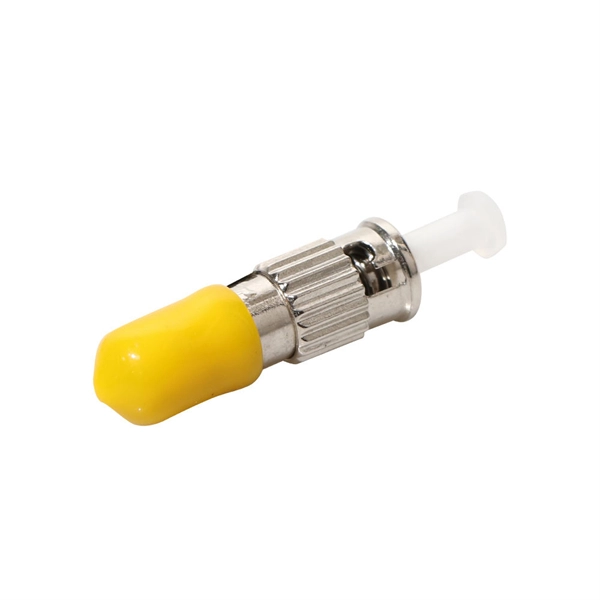
Distinctions on optical power meters
Equipment illustration / verify against the selected product

Mastering Optical Power Meters

Discover the ultimate guide to Optical Power Meters in Optical Sensors, covering key concepts, applications, and best practices for accurate power measurement.

Optical Power Meters – optical power measurement

Optical power meters are indispensable instruments for testing and maintaining modern fiber optic communication and other systems. Learn all

Optical Power Meter Use Guide: How to Measure Optical Power

Learn how to use an optical power meter for fiber, laser and photonics testing. Understand wavelength setting, dBm/W/dB readings, detector selection and common measurement steps.

Optical Power Meter Basics

Introduction An optical power meter measures the photon energy in the form of current or voltage from an optical detector such as a semiconductor, a thermopile, or a pyroelectric detector. Newport''s

Optical power meter

An optical power meter (OPM) is a device used to measure the power in an optical signal. The term usually refers to a device used for measuring the average power in fiber optic systems.

Optical Power Meter

An optical power meter is defined as an instrument used to measure power or energy from narrow band sources, such as lasers, without a dispersing element and with broad band sensitivity.

An Introduction to Optical Power Meters

Optical power meters play a vital role in this process by providing precise measurements of optical power for various applications. This article aims

Demystifying Optical Power Meters: A Comprehensive Guide

Optical power meters are essential tools for measuring the power of optical signals in fiber optic communication systems. In this section, we will delve into the fundamentals of optical

What Is Optical Power Meter and Why It Matters for SFP Testing

Learn what an OPM optical power meter is, how it measures optical power and loss, and why it matters for optical modules, SFP, and QSFP testing.

Physics:Optical power meter

An optical power meter (OPM) is a device used to measure the power in an optical signal. The term usually refers to a device for testing average power in fiber optic systems. Other general

The Difference Between OTDR & Optical Power Meter

An optical power meter measures the received optical power, while an optical time domain reflectometer (OTDR) uses backscattered reflection to provide length

Optical Power Meter : Everything You Need to Know

The power meter''s main function is to display the incident power on the photodiode. Features found on more sophisticated power meters may

Optical Power Meter Selection and Usage Guide

The power range that an optical power meter can measure has a significant impact on the accuracy of the measurement results. In general, the

Fiber Optic Power Meters Information

Features Fiber optic power meters can use single-mode and/or multi-mode optical cable. Single-mode cable allows only one mode to propagate and features very

Optical power meter | Description, Example & Application

An optical power meter is an essential tool for measuring the output power of optical signals. It is widely used in the telecommunications industry.

From OTDR to Optical Power Meters: Essential Fiber Testing

This is why fiber testing tools like Optical Time Domain Reflectometers (OTDRs) and Optical Power Meters (OPMs) are not just gadgets—they''re lifelines.

The FOA Reference For Fiber Optics

Typically both transmitters and receivers have receptacles for fiber optic connectors, so measuring the power of a transmitter is done by attaching a test cable to the source and measuring the power at the

Optical Power Meters – optical power measurement

Optical power meters are instruments for optical power measurements, based on heating of an absorber structure, for example, or on a photodiode.

Related Video Reference

This video was associated with the source search result. Verify technical details against current product documentation and project requirements.

Make the connection clear

Share the fiber interfaces, termination capacity, cable route and evidence required for handover.

Send a project brief