KENHARDT OPTICALNetworks across Africa Talk through a project
Fiber systems / Technical reading Optical reference library

Customization Process for Energy-Saving Passive Components for IDC Data Centers

Inside this technical reference
Source context

AI source overview

Customizing passive components for energy-efficient IDC data centers involves selecting materials, testing for thermal and chemical compatibility, and integrating advanced cooling designs like two-phase or immersion systems.

Material Selection and Compatibility Testing

The first step in customization is selecting materials that can withstand the operational environment of the data center. For immersion cooling systems, passive components must be compatible with non-conductive coolant liquids to prevent chemical reactions and maintain electrical reliability over prolonged exposure. Companies like TDK conduct conformity and compatibility tests to ensure components such as capacitors, resistors, and inductors remain stable in immersion liquids, providing test reports to guide customer-specific customization requests.

Thermal Management IntegrationEnergy-saving passive components are often integrated into advanced thermal management systems. Intelligent Data Centers (IDCs) use digital twin platforms to monitor real-time temperature distributions and optimize cooling strategies. Passive components can be customized to work with Deep Q-Learning Network (DQN)-based thermal management, ensuring hotspots are efficiently cooled while minimizing Power Usage Effectiveness (PUE),.

This integration allows components to contribute to overall energy efficiency without active power consumption.

Advanced Cooling Designs

Customization also involves designing passive components for specific cooling methods: Two-phase cooling: Components are designed to facilitate phase-change heat transfer, removing heat without pumps or fans. 3D-printed passive cooling elements have been developed to achieve high cooling capacities (e.g., 600 W) while enabling heat reuse for district heating or industrial applications. Immersion cooling: Components must be chemically and electrically compatible with immersion fluids, and their geometry may be optimized for direct contact with coolant to maximize heat transfer.

Cold plates and direct-to-chip solutions: Passive components can be integrated into cold plate assemblies or thermal interface materials (TIMs) to enhance heat dissipation at the micro-level, supporting high-TDP chips like GPUs and AI accelerators.

Testing and Validation

After design, rigorous testing ensures reliability and energy efficiency: Thermal cycling and stress tests simulate operational conditions. Chemical compatibility tests verify long-term immersion stability. Performance benchmarking evaluates energy savings and cooling efficiency against standard metrics like PUE.

Iterative Customization Process

The customization process is iterative: Define operational requirements (power density, cooling method, environmental conditions). Select materials and passive component types. Design geometry and integrate with cooling systems.

Conduct compatibility and thermal performance tests. Refine design based on test results and digital twin simulations.

Deploy in ID

C prototype and monitor real-time performance for further optimization.

Conclusion

Customizing energy-saving passive components for IDC data centers requires a holistic approach combining material science, thermal design, and intelligent system integration. By leveraging immersion or two-phase cooling, digital twin simulations, and rigorous testing, data centers can achieve significant energy efficiency improvements while maintaining component reliability and supporting high-performance computing workloads.

Research context

Reference summary

Towards energy-efficient data centers: A comprehensive review of. In summary, this paper provides an overview and guide to DC energy-consumption issues.

From reference to enquiry

Questions for your project

Use these editorial prompts alongside the linked excerpts. They identify items to confirm for your project.

Detailed reading / connection to installation

Fiber connection and distribution references
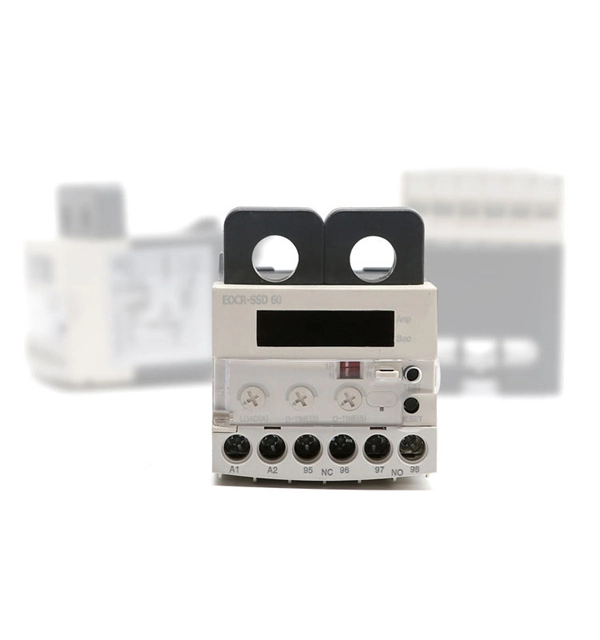
Customization Process for Energy-Saving Passive Components for IDC Data Centers
Equipment illustration / verify against the selected product

Towards energy-efficient data centers: A comprehensive review of

In summary, this paper provides an overview and guide to DC energy-consumption issues, emphasizes the importance of implementing passive and active design strategies to reduce DC

Best Practices Guide for Energy-Efficient Data Center Design

This guide provides an overview of best practices for energy-efficient data center design which spans the categories of information technology (IT) systems and their environmental conditions, data center

Passive components applicable to immersion cooling systems for data

This article introduces our company''s efforts regarding passive component products for AI accelerator systems using this immersion cooling method.

Effective energy use and passive cooling in data centers using heat

This study proposes a novel passive cooling and thermoelectric power generation system for data center applications, integrating thermoelectric generators (TEGs), phase change materials

OCP ACS Passive TCS Guidelines Document R1

This document serves as a comprehensive guide for data center operators and engineers, covering essential components such as evaporators, quick disconnects, manifolds, heat

Activate Radiative Cooling Technology for Data Center Cooling and

In this study, we designed radiative coolers for data center cooling systems to enhance efficiency, and then proposed an RC system integrating these structures and analyzed its energy

Energy Efficiency in Data Centers

Best Practices Guide for Energy-Efficient Data Center Design Revised for 2024, FEMP''s design best practices provide efficiency benefits for a variety of data center scenarios.

Thermal Management for Data Centers 2025-2035: Technologies,

The report conducts a cost analysis on the supply chain and evaluates the potential supply chain consolidation opportunities, as well as outlines crucial factors that companies need to consider when

An Intelligent Thermal Management Strategy for a Data Center

In this work, a digital twin system of an Intelligent Data Center (IDC) prototype is designed to be capable of real-time monitoring the temperature distribution.

Best Practices Guide for Energy-Efficient Data Center Design 2025

This guide delves into comprehensive best practices for designing and operating energy-efficient data centers, focusing on key areas such as IT systems, environmental conditions, air

A Detailed Guide to Enhancing Data Center Energy Efficiency

Learn how to optimize data center energy efficiency through IT load management, electrical powertrain optimization, cooling system selection, monitoring, and DCIM.

Cooling Technologies for Internet Data Center in China

The highlighted energy consumption of Internet data center (IDC) in China has become a pressing issue with the implementation of the Chinese dual carbon strategic goal. This paper

Best Practices Guide for Energy-Efficient Data Center

As the demand for data processing continues to grow, adopting energy-efficient design principles is not just a cost-saving measure but a

Towards Energy-Efficient Data Centers A Comprehensive Review of Passive

With the rapid growth of cloud computing, the number of data centers (DCs) continuously increases, leading to a high-energy consumption dilemma. Cooling, apart from IT equipment, represents the

Data Center Cooling & Energy Optimization: The Ultimate Guide

Data center optimization is one of those never-ending tasks. Just when you think you''ve hit the sweet spot, the demands on your infrastructure shift again. Today, the goal isn''t just to keep

A comprehensive guide to data center power and how it works

Curious about data center power? This article covers everything you need to know, from how it''s generated to why it''s essential for functioning data centers.

Energy-efficient optimization method for air conditioning terminal

Abstract The increasing energy consumption of air conditioning terminal systems (ACTS) in Internet data centers (IDCs) has become a critical global issue. This study presents an energy

Best Practices Guide for Energy-Efficient Data Center

This guide concludes with a section on metrics and benchmarking values by which a data center and its systems'' energy efficiency can be evaluated. No design guide

Related Video Reference

This video was associated with the source search result. Verify technical details against current product documentation and project requirements.

Make the connection clear

Share the fiber interfaces, termination capacity, cable route and evidence required for handover.

Send a project brief