KENHARDT OPTICALNetworks across Africa Talk through a project
Fiber systems / Technical reading Optical reference library

Core Switch Egress Traffic Distribution

Inside this technical reference
Source context

AI source overview

Core switch egress traffic is distributed using high-speed uplinks, link aggregation, and routing strategies to ensure balanced, low-latency delivery to distribution switches and downstream networks.

Core Switch Role in Traffic Distribution

Core switches act as the high-speed backbone of a hierarchical network, connecting multiple distribution switches and aggregating traffic from various access layers. Their primary function is to forward large volumes of traffic efficiently while minimizing latency and avoiding bottlenecks. Egress traffic from a core switch typically flows toward distribution switches, data centers, or other core nodes, depending on the network topology.

Methods for Egress Traffic Distribution

Link Aggregation (Port Channels) Core switches often use link aggregation (e.g., LACP) to combine multiple physical links into a single logical link. This approach balances traffic across multiple paths, increases bandwidth, and provides redundancy in case of link failure. For example, traffic from a core switch to a distribution switch can be split across multiple 10G or 40G links to prevent congestion.

Routing Protocols and Path Selection Core switches typically operate at Layer 3, using routing protocols such as OSPF, EIGRP, or BGP to determine optimal paths for egress traffic. The routing decisions ensure that traffic is distributed efficiently across available links and that failover occurs automatically if a path becomes unavailable. Load Balancing Across Multiple Distribution Switches In large campuses or multi-building networks, core switches may connect to VSS pairs or multiple distribution switches.

Traffic is distributed based on hashing algorithms that consider source/destination IP, MAC addresses, or VLANs, ensuring even utilization of uplinks and preventing single-link saturation.

Segmentation and VLA

N Termination Core switches often aggregate VLANs from distribution switches. By terminating VLANs at the distribution layer, the core can focus on high-speed transit rather than processing Layer 2 broadcasts, which improves egress traffic efficiency.

Best Practices

Use Redundant Uplinks: Ensure multiple physical paths to distribution switches to prevent single points of failure. Implement Port Channels: Aggregate multiple links to increase bandwidth and provide automatic failover. Optimize Routing Protocols: Configure equal-cost multipath (ECMP) where supported to balance traffic across multiple routes.

Minimize Layer 2 Processing: Keep the core primarily Layer 3 to reduce broadcast and multicast overhead. Monitor Traffic: Use NetFlow, SNMP, or telemetry to track egress utilization and adjust link distribution as needed.

Summary

Core switch egress traffic distribution relies on a combination of high-speed uplinks, link aggregation, Layer 3 routing, and VLAN segmentation to ensure that traffic flows efficiently to distribution switches and downstream networks. Proper design and monitoring prevent congestion, provide redundancy, and maintain ultra-low latency across the network backbone.

Research context

Reference summary

Core Switch vs. Distribution Switch vs. Access Switch Comprehensive guide to Core, Distribution, and Access Switches.

Roles in the network and important pa.

From reference to enquiry

Questions for your project

Use these editorial prompts alongside the linked excerpts. They identify items to confirm for your project.

Detailed reading / connection to installation

Fiber connection and distribution references
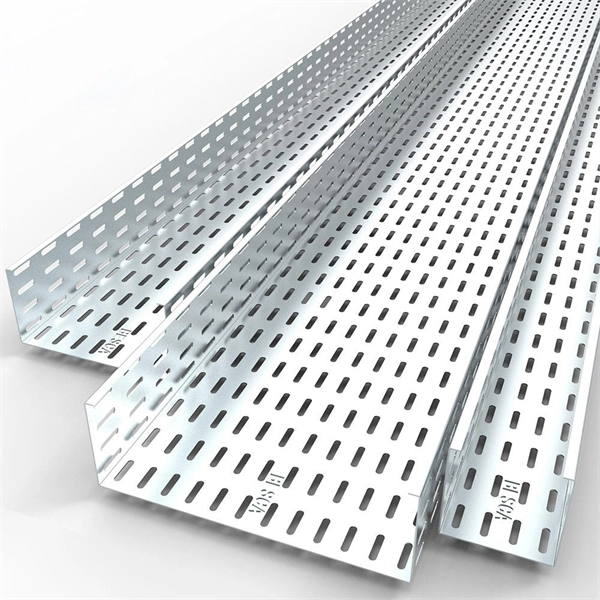
Core Switch Egress Traffic Distribution
Equipment illustration / verify against the selected product

Access vs. Distribution vs. Core Switch Comparison Guide

This guide provides a comprehensive comparison of Access, Distribution, and Core switches, detailing their functions, characteristics, and deployment scenarios.

Core vs Distribution vs Access Switch: Architecture Guide

Failing to properly categorize and deploy switches according to their designated tier leads to broadcast storms, routing loops, and severe physical

Access VS Distribution VS Core Switch

Edge = connects the internal network to the external WAN/Internet. Access vs Distribution: Access = user/device connectivity. Distribution = aggregates access, applies policies,

Routing at the distribution layer AND the core?

Rather than interconnect each distribution switch to every other distribution switch, I use VSS pairs of core switches to aggregate traffic at each campus. I''m blessed with access to dark fiber

Access, Distribution, and Core Layers Explained

This tutorial provides an overview of the access, distribution, and core layers and explains two-tier and three-tier campus LAN designs.

Core, Aggregation, or Access Switches? Choose the

Discover the crucial differences between core, aggregation, and access switches. Find out which type can best transform your network''s

Quality of Service Configuration Guide

A default policy is always present for the device. This policy sets the traffic class and discard class. Without QoS, the device offers a best effort service for each packet, irrespective of its

SMB Network Design: Core vs. Distribution vs. Access Switches

Don''t overspend on network hardware. Our expert guide explains core, distribution, and access switches so you can design the right network for your SMB.

Ingress vs Egress: Understanding and Controlling Your Network Flow

Learn how Ingress and Egress traffic works, their differences, benefits, security concerns, and strategies to optimize network performance efficiently.

Core, Distribution, and Access Layer Explained with

Small business implementations: Collapsed core Small to medium businesses don''t need the same scale, but they can still benefit from the

Core Switch vs Access Switch | Definitions and Key Differences

This article focuses on the hierarchical internetworking and core switch vs access switch differences. We also discussed the core switches type and built a basic understanding of how a

What is a Core Switch | Functions and Difference over Normal Switch

What is a core switch and how it works? This article builds the basics of this kind of switch for the ones who don''t know anything about it. What is a Core Switch? It is a powerful

Modular QoS Configuration Guide for Cisco NCS 5500 Series

Explore concepts related to egress traffic management to apply QoS policies to egress traffic successfully. Learn more about the two-pass traffic forwarding model, local and global VOQs,

Understanding the Core Switch: Key Differences and Uses

The distribution switches manage the data flow between the access and core switches. As core switches provide the utmost performance and

Switching Design with Access, Distribution and Core Level

Hi Support, I read that in the Campus architecture, we have 3 levels, Access (connected and users and desktops), Distribution (Connected access

Routing at the core versus routing at the distribution layer

46 votes, 77 comments. Quick background of my network: Four 6509s at the core. Roughly 700 distribution and access layer switches. Around 8

Routing at the distribution layer AND the core?

I use Layer 3 switches to aggregate my user, datacenter and other local traffic within buildings. These devices provides routing and security between those networks. Rather than

Cisco Catalyst 6880-X Series Extensible Fixed Aggregation Switch

The Cisco ® Catalyst ® 6880-X Series Switch (Figure 1) is an extensible fixed aggregation switch that delivers a best-in-class Cisco Catalyst 6500 feature set in a small form factor.

Make the connection clear

Share the fiber interfaces, termination capacity, cable route and evidence required for handover.

Send a project brief