
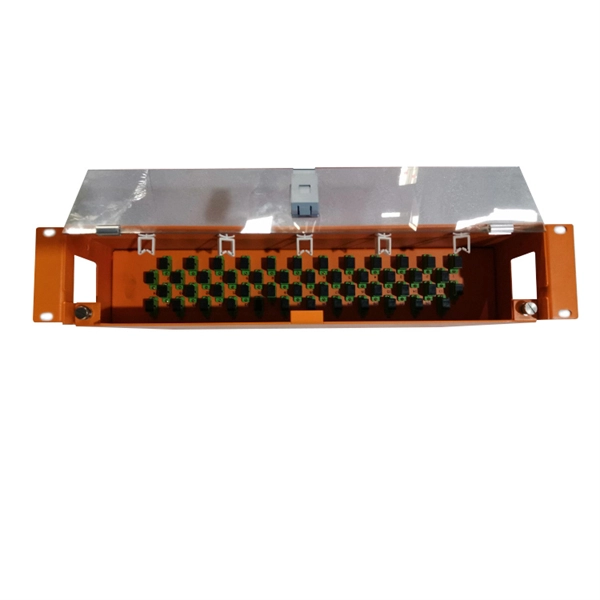
Fiber connection and distribution references
Automatic Power Control for Laser Diodes Using LMH13000 (Rev
This enhances reliability and optimizes performance in applications which require precise control of the optical output. This article presents the design and implementation of an Automatic Power Control
Controlling a 5V Laser Diode with Raspberry Pi Pico W
Learn how to safely control high-power components like a 5V laser diode using the Raspberry Pi Pico W and a simple transistor circuit. Find this and other hardware
Raspberry Pi Pico W 5V Laser Diode: Safe GPIO
In this project, you use a Raspberry Pi Pico W to control a 5V laser diode module and blink it on and off with MicroPython, using an NPN transistor
Controlling a 5V Laser Diode with Raspberry Pi Pico W
In this tutorial, we''ll explore how to connect a 5V laser diode to the Raspberry Pi Pico W and control it using GPIO pins. The Raspberry Pi Pico W,
Laser Diode Drivers – current control, constant power
We offer pulsed diode drivers for pumping different types of diode-pumped solid-state lasers based on crystal (Nd:YAG and similar lasers), microchip, fiber, or
Laser Diode Control Fundamentals
Since laser diodes generally emit light from both ends of their cavity, monitoring the rear facet output beam of the laser diode using a photodiode allows one to
CTL101 User Guide
Set the TPROT switch ON. Plug the laser diode on the ZIF socket. Make sure there is a good thermal connection between the laser case and the
AN-LD18 Optimizing Laser Diode Control
This application note will provide a practical step-by-step guide to optimizing laser diode control with rule of thumb approximations that work with most laser diodes. This will show the recommended
Compact Laser Diode Driver with Touchscreen Display
These drivers offer precise control over laser diode current and laser temperature in a compact package. This innovative LD driver ensures the stable operation of
Raspberry Pi Pico W 5V Laser Diode: Safe GPIO
Project Build a Raspberry Pi Pico W 5V laser diode switch using an NPN transistor and MicroPython for safe GPIO control, with parts available from
Laser ON/OFF switch using NPN transistor
How to hookup a laser module to an Arduino, using an NPN transistor to control it. Calculation, based on 20mA typical operating current draw from the laser module.
AN-LD18 Optimizing Laser Diode Control
Laser diodes are compact and reliable. Extremely low noise and stable output wavelength can be achieved with laser diodes using the proper techniques and design. Laser system integrators must
How to Use Laser Diode: Examples, Pinouts, and Specs
Learn how to use the Laser Diode with detailed documentation, including pinouts, usage guides, and example projects. Perfect for students, hobbyists, and
Understanding Drivers, Switches, Laser Diodes | DigiKey
The gate-switch FET turns crisply on and off to control the laser diode''s current flow. The laser diode creates independent, non-overlapping
Laser Diode Control Fundamentals
Fundamentals of Laser Diode Control Laser Diode Characterization To assess the quality, performance, and characteristics of laser diodes, manufacturers often
Automatic Power Control for Laser Diodes Using LMH13000 (Rev
Automatic power control (APC) in laser drive systems is designed for a stable and efficient laser operation by continuously regulating optical output power of the laser. Fluctuations in temperature,
Laser Diode Driver Circuit – A Beginners Guide – Flex
Switching Transistor: A transistor is used to switch the laser diode on and off rapidly, enabling pulsed operation for applications like data transmission
Laser driver diode design for fast switching times which can be
0 I am trying to create a laser driver circuit that can allow me to drive a laser with relatively low operating current and voltage with fast switching times and can be controlled via a pulse blaster
Related Video Reference
This video was associated with the source search result. Verify technical details against current product documentation and project requirements.