KENHARDT OPTICALNetworks across Africa Talk through a project
Fiber systems / Technical reading Optical reference library

Classification and Working Principle of Optical Modules

Inside this technical reference
Source context

AI source overview

Optical modules are devices that convert electrical signals into optical signals and vice versa, classified by function, form factor, data rate, wavelength, fiber type, and transmission distance.

Functional Classification

Optical modules are primarily divided into transmitters (TOSA) and receivers (ROSA).

The Transmitter Optical Sub-

Assembly (TOSA) converts electrical signals into optical signals using a laser diode (LD) or LED, with an automatic optical power control (APC) to maintain stable output power.

The Receiver Optical Sub-

Assembly (ROSA) converts incoming optical signals back into electrical signals using photodetectors such as PIN diodes or avalanche photodiodes (APD), along with a trans-impedance amplifier (TIA) and post-amplifier to produce a digital output signal.

Package/

Form Factor Classification

Optical modules come in various form factors that determine physical size and compatibility with network equipment: GBIC: Early, larger modules.

SF

P (Small Form-factor Pluggable): Widely used, supports 1 Gbps. SFP+: Enhanced SFP, supports 10 Gbps. SFP28: Supports 25 Gbps.

QSFP/QSFP+: Supports 40–100 Gbps. QSFP28/QSFP56: High-speed data center applications (100–200 Gbps). OSFP/OSFP-DD: Ultra-high-speed modules (200–800 Gbps) for AI, cloud, and big data networks.

Data Rate Classification

Optical modules are categorized by transmission speed: 100 Mbps: Legacy systems. 1 Gbps: Standard enterprise networks. 10 Gbps: High-performance networks and data centers.

25/40/100 Gbps: Modern data centers. 200/400/800 Gbps: Emerging ultra-high-speed applications.

Wavelength and Multiplexing

Modules can be classified by wavelength and multiplexing technology: Conventional wavelength: Standard single or multimode fiber.

CWD

M (Coarse Wavelength Division Multiplexing): Wider wavelength spacing, cost-effective for short to medium distances.

DWD

M (Dense Wavelength Division Multiplexing): Narrow spacing, suitable for long-distance, high-capacity networks.

Fiber Type and Mode

Optical modules are designed for: Single-mode fiber (SMF): Long-distance transmission, typically yellow-coded. Multimode fiber (MMF): Shorter distances, typically orange-red-coded.

Transmission Distance

Modules are also classified by reach: Short-range (SR): Up to 300 meters. Medium-range (MR): Up to 2 km. Long-range (LR): Up to 10 km or more.

Extended-range (ER) and ultra-long-range (ZR): For high-capacity, long-distance networks, often using DWDM. Interface and UsabilityHot-pluggable modules: GBIC, SFP, XFP, XENPAK. Non-hot-pluggable modules: 1*9, SFF.

Connector types: FC, SC, ST, LC, MU, MTRJ, with LC and SC being most common for modern networks.

Key Characteristics

Optoelectronic conversion: Core function enabling high-speed data transmission. Compact design: Facilitates integration into switches, routers, and servers. Automatic power control: Ensures stable optical output. High sensitivity receivers: APDs improve signal detection for long-distance or high-speed links. Scalability: Supports network upgrades from 1 Gbps to 800 Gbps. In summary, optical modules are versatile components classified by function, form factor, data rate, wavelength, fiber type, and transmission distance, with each type optimized for specific network applications ranging from enterprise networks to ultra-high-speed data centers. Proper selection ensures network efficiency, reliability, and cost-effectiveness.

Research context

Reference summary

The Most Comprehensive Guide Of Optical ModulesIn the upcoming sections, we will delve into the classification of optical modules, future trends, and guide.

From reference to enquiry

Questions for your project

Use these editorial prompts alongside the linked excerpts. They identify items to confirm for your project.

Detailed reading / connection to installation

Fiber connection and distribution references
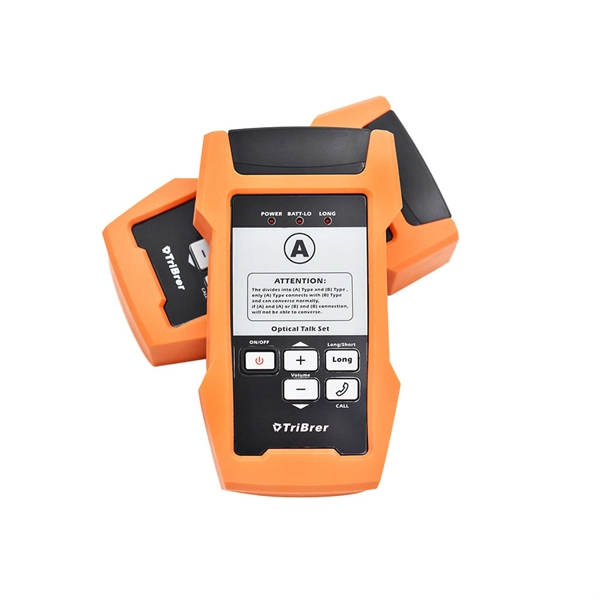
Classification and Working Principle of Optical Modules
Equipment illustration / verify against the selected product

The Most Comprehensive Guide Of Optical Modules

In the upcoming sections, we will delve into the classification of optical modules, future trends, and guidelines for selecting the appropriate optical module for your network.

Understanding Optical Modules: Working Principles, Structures, and

Explore the working principles, structures, and performance metrics of optical modules, essential components of optical fiber communication systems. Learn about key indicators such as

Comprehensive Guide to Optical Transceiver Classifications and

Understanding their classifications and types is essential for selecting the appropriate module for specific networking requirements. This guide covers the most common classification

Optical Module Working Principle | SFP Transceiver Technical Guide

Understanding the working principle of optical modules—especially SFP transceivers—is critical for network engineers, data center operators, and telecom professionals tasked with building

What is an Optical Module?

When it comes to optical modules, I''m sure everyone is quite familiar with them.With the rapid development of optical communication,many scenarios in our work and life have now achieved "fiber

Optical Module Guide: Demystifying Optical Modules and Their Uses

Optical modules are compact devices that convert electrical signals into optical signals and vice versa. They are used in fiber optic communication systems to transmit data over long

Optical Module Guide: Demystifying Optical Modules

Optical modules are compact devices that convert electrical signals into optical signals and vice versa. They serve as the interface between

Classification and basic principles of optical modules

According to the transmission mode of light in the optical fiber, the optical fiber can be divided into two types: single-mode optical fiber and multi-mode optical fiber.

Understanding Optical Modules: Types, Parameters, and | BestHub

This comprehensive guide explains optical modules—including their basic concept, classifications, physical principles, key parameters, fiber and connector type

What is the Working Principle of Optical Modules?

In summary, the working principle of the optical module can be summarized as: Through the above three links, the optical module achieves seamless connection

What is the basic principle of an optical module? | Sopto

Transmitting: The optical signal input module of a certain code rate is converted into an electrical signal by the photodetecting diode, and the electrical signal of the corresponding bit rate is

First acquaintance with optical modules: classification of

Speaking of optical modules, many people who have used optical modules must be very clear that there are many types of optical modules, but

Understanding Optical Modules: A Comprehensive Guide

Optical Module Basics: Understanding the Core ConceptsOptical modules are compact devices that convert electrical signals into optical signals and vice versa. They are used in fiber optic

What is the working principle of the optical transceiver?--ETU-LINK

Learn the working principle of optical transceiver,including its structure,classification,and role in photoelectric conversion. ETU-Link offers various optical modules like

Introduction to the knowledge and principle of optical modules

Any optical module has two functions of sending and receiving, performing photoelectric conversion and electro-optical conversion, so that the optical modules are inseparable from the

Everything You Need to Know About Optical Modules

Optical modules are electronic devices used in communication systems to transmit optical signals. These modules convert electrical signals into optical

Working Principle of Optical Modules-

Optical modules are crucial components in fiber optic communication systems, responsible for performing optoelectronic conversions during the transmission of optical signals.

The Key External Components of Optical Modules

An optical module serves as the backbone of modern fiber-optic communication. Its appearance often resembles a compact rectangular device, designed to fit seamlessly into

Related Video Reference

This video was associated with the source search result. Verify technical details against current product documentation and project requirements.

Make the connection clear

Share the fiber interfaces, termination capacity, cable route and evidence required for handover.

Send a project brief