
Fiber connection and distribution references
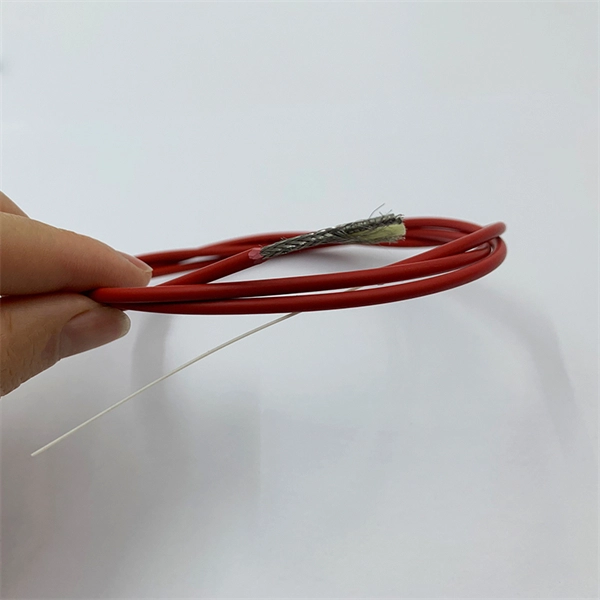
Fiber Optic cable Series-
1. Overview2.3 Fault Handling Tools and Instruments3.2 Confirm the Scope and Type of the Fault3.3 Fault Localization3.4 Fault Exclusion3.5 Confirm If the Fault Has Been RectifiedThis document presents a troubleshooting guide for fiber optic cables once deployed and in regular use. It also includes a list of common fault location items. Maintenance personnel can refer to this document for step-by-step troubleshooting when dealing with faults arising from the following sources.See more on resource.fs ntt-review.jp
Fault Cases and Countermeasures for Optical Fiber Cables in Optical
This article introduces case studies of failures that have occurred in optical fiber cables as well as some countermeasures against such failures. This is the twenty-third of a bimonthly series on the theme of
Cable Fault Maintenance and Troubleshooting Method Based on
Abstract: Optical fiber communication is the core support for information transmission in power systems, and the accurate location of its optical cable faults is the key to operation and maintenance.
Optical Fiber Cable Maintenance Guide | PDF
Periodic testing and fiber degradation testing are important for preventive maintenance of optical fiber cables to monitor fiber health and detect issues early. If an outage occurs, restoration requires
Certifying 5G equipment vendors | Case study | EXFO
A VividOptics representative recently accompanied a Chorus technician in action on an FTTH troubleshooting case to restore a customer''s Internet connexion with the EXFO OX1.
February 2025 Flashcards in Roshann KN''s MCQs: UPSC
Study February 2025 flashcards with questions like: Which of the following is not a common characteristic of Ultra-Processed Foods (UPFs)?
What Is an Optical Distribution Network (ODN)? – The Ultimate Guide
An Optical Distribution Network is a passive optical transmission system composed of optical fibers, splitters, distribution frames, and connectors. Its role is to transmit optical signals
The Market Intelligence – Worldwide Market Research Report,
The Market Intelligence is the leading player in the market research industry, with having top publishers reports which help decision-makers in their business-related planning.
Distributed Fiber Optic Sensing for in-well hydraulic fracture
Abstract This study presents the results from in-well hydraulic fracture monitoring within a horizontal well in an unconventional reservoir utilizing Distributed Fiber Optic Sensing (DFOS).
NYT Connections archive
Every NYT Connections puzzle ever published is listed here, organised by date, with all four category groups and their sixteen words. The NYT only offers the current day''s puzzle for free,
ITPro Today, Network Computing, IoT World Today combine
ITPro Today, Network Computing and IoT World Today have combined with TechTarget . The page you are looking for may no longer exist.
How Much Do Fiber Optic Temperature Sensors Cost?
Fiber optic temperature sensors have revolutionized temperature monitoring across critical industrial applications with their exceptional accuracy,
IJERT – International Journal of Engineering Research & Technology
International Journal of Engineering Research & Technology is a peer-reviewed, open access and multidisciplinary engineering, technology and science journal that publishes original research &
Study of Fault Detection Techniques for Optical Fibers
One of the major challenges in fiber optics communication links is the maintenance of steady or uninterrupted network which include localization and identification of cable fault or break.
Fiber Optic Cable Maintenance Guide | PDF | Optical Fiber
This document provides study material on fiber optic cable maintenance. It covers topics including the history and basic principles of fiber optics, fiber optic networks, fiber optic splices and connectors,
Maintenance of Access Network Optical Fibers
1. Introduction The huge growth in the number of subscribers with FTTH installations requires different maintenance methods than used previously. This article explains maintenance of the “last one mile”
FIBER OPTIC NETWORK TROUBLESHOOTING Maintenance
All the fiber networks faults can be categorized into two major types: - Fiber cable cuts and - Low power on the optical link. These two types of faults are described in detail and the appropriate
Vibration analysis for predictive maintenance of optical fiber cable
In this study, for the purpose of fault detection the actual operational device on the fiber optic cable manufacturing line was selected since the idea was to implement a condition monitoring on the
Related Video Reference
This video was associated with the source search result. Verify technical details against current product documentation and project requirements.