KENHARDT OPTICALNetworks across Africa Talk through a project
Fiber systems / Technical reading Optical reference library

Case Study on Fiber Optic Cable Fault Location

Inside this technical reference
Source context

AI source overview

Fiber optic cable faults can be rapidly located using Distributed Acoustic Sensing (DAS) and Optical Time Domain Reflectometry (OTDR), improving accuracy and reducing downtime.

Overview of Fault Detection Methods

Distributed Acoustic Sensing (DAS) uses fiber optic cables as sensors to detect acoustic signals generated by faults, such as flashovers or third-party intrusions.

DA

S can be installed permanently for continuous monitoring or temporarily during fault investigation campaigns. It allows precise localization of faults without mobilizing extensive field crews and reduces the inaccuracies associated with traditional electronic fault-finding methods (AP Sensing case study). Optical Time Domain Reflectometry (OTDR) is a widely used method for locating faults in optical fiber cables.

OTD

R sends light pulses through the fiber and measures backscattered signals to identify reflections caused by breaks, bends, or splices. Proper configuration of pulse width, index of refraction, and use of dummy fibers ensures accurate fault localization, even in long or complex cable routes.

Real-

World Case Studies

Subsea HV Power Cable Fault Detection (Europe) A high-voltage subsea cable experienced an unknown fault. Five flashover tests were conducted while a DAS system was temporarily installed. The acoustic signals generated at the fault location were captured in frequency band energy plots, allowing precise identification of the fault site.

Lower frequency signals consistently indicated the fault location across multiple tests. Urban Underground Power Network (Indianapolis, USA) Indianapolis Power & Light implemented DAS to monitor a 1. 6-mile underground cable route.

Traditional “thumping” methods required repeated high-voltage pulses and extensive field deployment, which risked further cable damage.

DA

S enabled rapid detection and localization of faults, reduced manhours, and minimized additional stress on the cables. Optical Drop Cable Damage (NTT, Japan) During installation of a new metallic cable, an optical drop cable was damaged in a conduit. Investigation revealed severe bends and jacket splits at specific points.

This case highlights the importance of careful installation practices and the need for accurate fault detection to maintain service continuity.

High-

Altitude Fiber Links Wavelet transform-based OTDR analysis was applied to ultra-long optical fiber links in high-altitude areas. This method improved measurement accuracy by 9. 8% and allowed fault detection over distances up to 250 km, demonstrating the effectiveness of advanced signal processing in challenging environments.

Key Considerations for Fault Location

Cable Design and Excess Fiber: Optical fibers are manufactured with excess length in buffer tubes to prevent stress during installation. Accurate fault location requires accounting for this excess.

Pulse Width and OTD

R Settings: Short or medium pulse widths are chosen based on cable length to optimize trace resolution. Vertical and horizontal scales must be adjusted to maintain clear OTDR traces. Environmental Factors: High-altitude, subsea, or urban environments can affect fiber performance and fault detection accuracy.

DA

S and advanced OTDR techniques help mitigate these challenges. Preventive Monitoring: Permanent DAS installations allow real-time monitoring, early fault detection, and tracing of third-party interference, reducing downtime and maintenance costs.

Conclusion

Fiber optic cable fault location has evolved from traditional thumping and visual inspection to advanced DAS and OTDR-based methods, enabling precise, rapid, and minimally invasive detection. Case studies from subsea, urban, and high-altitude environments demonstrate the effectiveness of these technologies in reducing downtime, improving network reliability, and supporting proactive maintenance strategies. Proper configuration, installation practices, and environmental considerations are critical for achieving accurate fault localization.

Research context

Reference summary

Case_Study_Cable_Fault_Detection_2021-03_EN A cable fault occurred on a HV subsea power cable in Europe, at an unknown location. To identify where the faul.

From reference to enquiry

Questions for your project

Use these editorial prompts alongside the linked excerpts. They identify items to confirm for your project.

Detailed reading / connection to installation

Fiber connection and distribution references
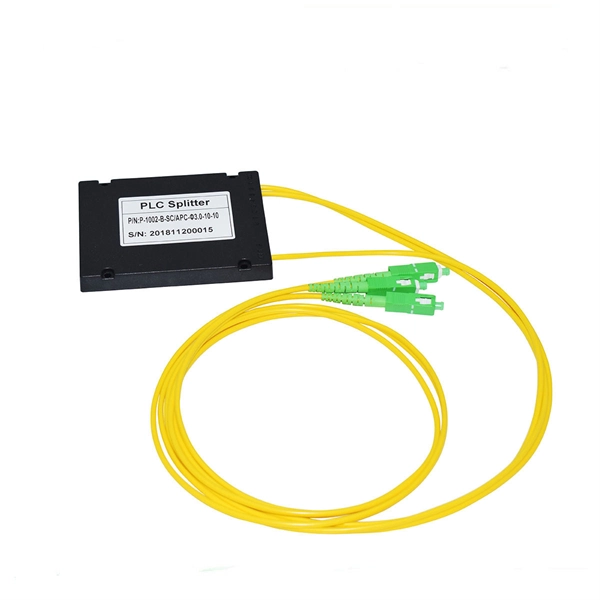
Case Study on Fiber Optic Cable Fault Location
Equipment illustration / verify against the selected product

Case_Study_Cable_Fault_Detection_2021-03_EN

A cable fault occurred on a HV subsea power cable in Europe, at an unknown location. To identify where the fault was located, five flashover tests were completed on the cable, while a DAS system was

Fiber Optic Cable Series Troubleshooting

The table below presents the primary faults of fiber optic cables. By employing an enumerative method based on the collected fault information, the fault can be comprehensively determined.

Power Cable Fault Detection & Location Analysis

A cable fault occurred on a HV subsea power cable in Europe, at an unknown location. To identify where the fault was located, five flashover tests were completed on the cable, while a DAS

The Research and Implementation of Optical Cable Fault Location

To meet the pressing need for cost reduction, this paper introduces an innovative optical cable fault location method, leveraging automation and artificial intelligence technology.

Intelligent Identification and Fault Location of Optical Cable Network

In this paper, based on the working principle of optical fiber coding technology, when the optical cable network is running normally, the reflection spectrum of optical fiber coding can be received in real time.

Fiber Optic cable Series-

The table below presents the primary faults of fiber optic cables. By employing an enumerative method based on the collected fault information, the fault can be comprehensively determined.

Fault Cases and Countermeasures for Optical Fiber Cables in Optical

This article introduces case studies of failures that have occurred in optical fiber cables as well as some countermeasures against such failures. This is the twenty-third of a bimonthly series on the theme of

Optical Fiber Cable–Fault Location Detection Procedure

This document helps in finding out the most accurate sheath distance where fault has occurred in the cable. The method is suitable for all types of optical fiber cables and is independent of index of

(PDF) Remote fault detection and location of power fiber optic cable

The paper reviews the factors limiting the accuracy of locating a fiber optic cable fault when using an optical time domain reflectometer (OTDR) and describes an error estimation method...

A Fault Location Analysis of Optical Fiber Communication Links

Breakage and damage of fiber optic cable fibers seriously affects the normal operation of fiber optic networks, and it is important to quickly and accurately determine the type and location of

Travel Fault Locator Systems Market in Canada | Report

Travel Fault Locator Systems comprise portable and benchtop instruments used to pinpoint breaks, shorts, splices, and impedance anomalies in metallic and optical cables. Within

2X Fiber Optical Power Meter Visual Fault Locator -916 VFL REF FC

Optical power frequency test: can identify light sources with 270Hz, 1KHz, and 2KHz frequencies.2. Cable Continuity Testing: Used to detect line sequence, short circuit, open circuit, crossover, etc. of

Travel Fault Locator Systems Market in the United States | Report

Travel Fault Locator Systems are portable or vehicle-mounted test instruments used to identify and characterize faults in metallic and optical cables across telecommunications networks,

Fiber Optic Tool Kits | Termination, Splicing & FTTH

Professional Fiber Optic Tool Kits for field termination and splicing. Rugged hard-shell cases containing precision fiber strippers, cleavers, and testing tools for

The FOA Reference For Fiber Optics

Fiber optic cables, especially those used for backbone cables, may contain many fibers that connect a number of different links going to several different locations with interconnections at patch panels or

Fiber Optic Attenuation Fixes and Loss Budget Tips

Fix fiber optic attenuation with cleaning, bend checks, and loss budget tips. Improve signal quality and network reliability with proven troubleshooting steps.

Ansys | Engineering Simulation Software

Ansys engineering simulation and 3D design software delivers product modeling solutions with unmatched scalability and a comprehensive multiphysics foundation.

The FOA Reference For Fiber Optics

The frequency of problems caused by fiber optic tools is high: their poor design, improper use, poor condition or the unfamiliarity with their use are all sources of

Make the connection clear

Share the fiber interfaces, termination capacity, cable route and evidence required for handover.

Send a project brief