
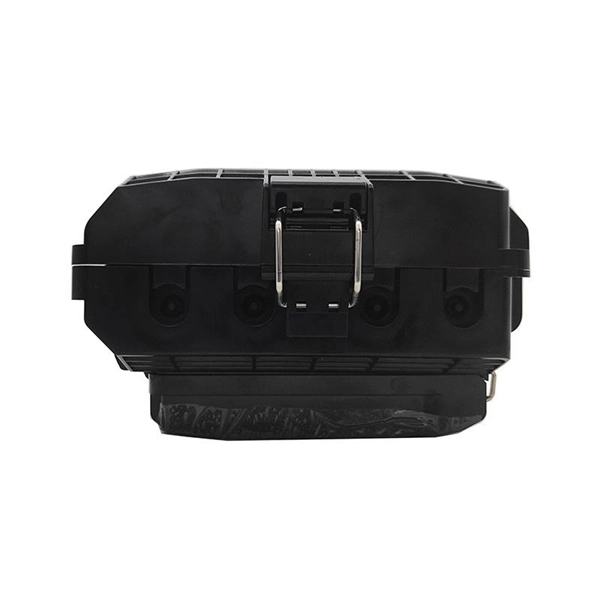
Fiber connection and distribution references
Meeting the Demanding Energy Needs of AI Servers with Advanced
Explore how innovations in power devices, gate drivers, and DSP-based controllers tackle AI servers'' high energy demands, optimizing efficiency in data centers.
Meeting the Demanding Energy Needs of AI Servers with Advanced
AI servers are the backbone of modern data centers, driving advanced tasks such as deep learning, machine learning, large language models and real-time analytics. These servers
Addressing the Energy Demands of AI Servers | DigiKey
AI servers, which are integral to processing vast amounts of data, require substantial energy to operate efficiently. This surge in energy demand poses a challenge for data centers, which
AI''s Electricity Problem or What the Latest Data Actually Shows
What does the IEA''s latest report say about AI energy consumption and demand? Breakdown of the latest findings on consumption, cooling, and server utilisation.
AI''s Energy Demand: Challenges and Solutions for a
A look at AI''s rising energy demands, the infrastructure that powers it, and what steps are necessary to align artificial intelligence with sustainability.
Green AI techniques for reducing energy consumption in AI systems
By surveying current approaches and developments in AI energy efficiency, we map how Green AI can shrink the carbon footprint of AI technologies and clarify pathways toward
AI, Energy and the Future of Efficient Data Center Operations
Rising AI workloads are expected to drive higher data center energy use, costs and emissions. Some experts even predict data center energy consumption could double by 2030,
AI has high data center energy costs — but there are solutions
AI has high data center energy costs — but there are solutions AI workloads have sent data center emissions skyrocketing. An MIT expert details ways to reduce energy use and promote
AI-driven cooling technologies for high-performance data centres:
Abstract The increasing computational demands of artificial intelligence (AI), high-performance computing (HPC), and hyperscale cloud platforms are placing significant thermal and
Saving Power And Space In AI Servers
The power chip helps AI servers save energy, stay cool, and fit in small spaces, making data centres more efficient and eco-friendly.
About: Better policies for better lives | OECD
Better Policies for Better Lives Artificial intelligence How to apply effective governance to harness the benefits of A.I. and mitigate its risks Climate mitigation and net-zero transition Analysis and insights
AI''s energy dilemma: Challenges, opportunities, and a
AI''s energy consumption AI presents opportunities and challenges in the energy landscape. With around 72% of surveyed companies leveraging AI
AI''s environmental costs threaten water, land and climate
Artificial Intelligence is not only responsible for worrying amounts of earth-warming greenhouse gases: the technology''s environmental footprint is also expanding at a pace that could
How Much Water Does AI Use? The Real Numbers for 2026
Google used 6.4 billion gallons for data centers in 2023. Training GPT-4 took 13.4 million gallons per month. Real AI water use numbers by company, 2026.
Economy | The 2025 AI Index Report | Stanford HAI
5. AI is beginning to deliver financial impact across business functions, but most companies are early in their journeys. Most companies that report financial impacts from using AI within a business function
How Energy-Efficient Computing for AI Is Transforming Industries
Explore how industries are using energy-efficient computing to scale AI, improve products and services, and reduce emissions and operational costs.
Green AI techniques for reducing energy consumption in AI systems
As a result, AI energy efficiency—reducing power use while maintaining or improving performance—has become a central design objective. Recent work highlights Green AI as a key
New SmartThings Energy Features Take Home Energy Management
More Intelligence with AI Optimizing home energy use is the first step to taking action. Within SmartThings Energy, AI Energy Mode is a power-saving feature that helps people get the
Related Video Reference
This video was associated with the source search result. Verify technical details against current product documentation and project requirements.